
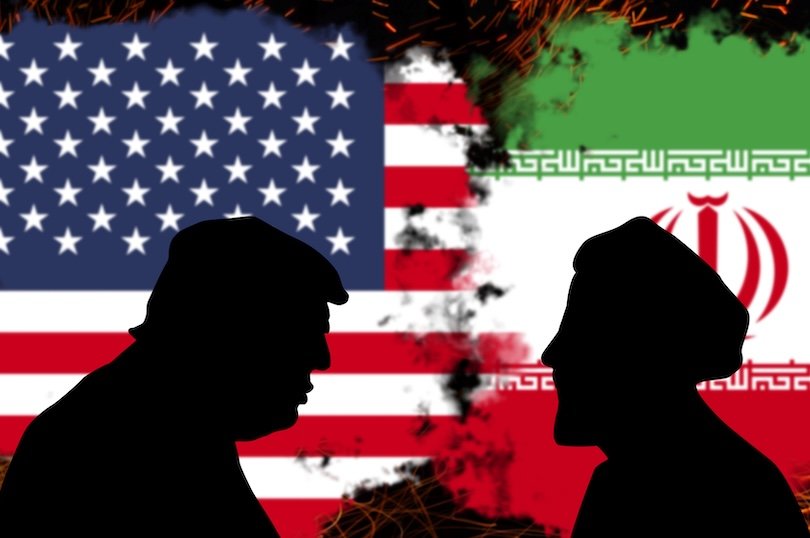
Two months after US President Donald Trump initiated the US-Israeli war against Iran on February 28, the costs of the war are mounting, particularly due to the closure of the Straits of Hormuz. Before the war started, the Strait of Hormuz handled about 20 per cent of worldwide oil transportation and a large share of natural gas shipments. The disruptions to these energy supplies are leading to increased fuel prices, higher electricity costs, rising transportation expenses across the world – and even endanger semiconductor production due to disruptions in the supply of helium following damage to key facilities in Qatar. The Middle East is also a significant producer of fertilisers. In 2024, up to 30% of global fertiliser trade passed through the Strait of Hormuz from the Persian Gulf to export markets worldwide. Disruptions to this supply have severely affected African nations (among others) which rely heavily on imported fertiliser.
The war’s economic impact has been particularly severe in the Asia-Pacific region, which depends heavily on Middle Eastern oil imports. Over 80 per cent of crude oil and LNG passing through the Strait of Hormuz goes to countries in this region, such as China, South Korea and Japan. In 2025, Pakistan, India, and Bangladesh primarily obtained LNG from Qatar and the United Arab Emirates, while Pakistan, Japan, and the Philippines each relied on over 90% of their crude oil imports from the Persian Gulf. Fuel prices in key Indian cities have surged, with petrol and diesel costs rising by approximately 10-15 per cent over just a few weeks. In Indonesia, nickel producers have reduced output by at least 10 per cent due to shortages of natural gas and sulphur, which are essential for reaching the high temperatures required to extract and refine the metal. Additionally, garment factories in Bangladesh are experiencing severe production disruptions due to shortages of polyester and nylon, which are fossil-fuel byproducts used in clothing manufacturing. Another important impact arises from the disruption of remittances send home by the millions of workers from South Asia and Africa who work in the Gulf region.
Many observers put the blame for this war on Trump’s personality. Trump II’s foreign policy does not mark a full break from previous policies. The foundation was established by earlier Democratic and Republican governments. The global landscape has significantly evolved over the past thirty years. As a result of the rising economic success of emerging powers and the slowdown of the core economies of Western Europe, the previous world order under US/Western Europe’s hegemony has visibly weakened. This ongoing fundamental power shift towards the global East and the decline of the Anglo-American core since the late 1960s lie at the root of the increasingly aggressive policies of US leadership.
By all indications, the age of dominance by any single hegemonic power, first experienced by European colonial powers and then by the US, seems to be coming to an end. The impact of new powers is so significant that the centre of gravity of the global economy has already shifted away. Despite the slowing down experienced by China, India and other emerging economies, the emerging world of the global East is still growing substantially, outpacing much of the rest of the world, not racing ahead fast, but with a more balanced growth.
The 2026 US-Israeli war on Iran, just like the wars of the War on Terror early in the century, is not helping to solve the problems of US power. All these wars are accelerating the end of the American century by draining US resources and creating a power vacuum, allowing China to expand its influence through pragmatic diplomacy, secure energy supplies, and observation of US military tactics. While the US faces economic strain, China gains influence by presenting itself as a non-interventionist partner, leveraging the conflict to advance its global economic interests and reshape the geopolitical order.
Several observers agree that the joint US-Israel military intervention in Iran has been characterised as the most detrimental foreign policy endeavour in the history of the United States and as the imperial overreach that marks the end of the American Century and the beginning of a prolonged decline in US hegemony. Political developments since 2001 have clearly illustrated that the superior military forces of the United States and its allies have been unable to retain control over the oil resources of Iraq, Libya, and other Middle Eastern countries. Far from preventing the decline of US economic and financial hegemony, ongoing military aggression and arrogance may instead compel its regional and European allies to distance themselves from its strategic objectives. This development prompts an essential inquiry for the oil-abundant nations of the Gulf: if the United States cannot adequately safeguard them from attacks, and if having US military bases indeed increases their susceptibility, should they reconsider the wisdom of their dependence on the United States in the Middle East?
Gulf states are increasingly questioning their reliance on Washington. China entered this region around the early 2000s with strategic patience and diplomatic ambition. As of early 2026, Saudi Arabia exports more oil to China than to any other nation. The UAE has incorporated Huawei technology into its critical infrastructure. Chinese firms are building ports, railways, 5G networks, and smart cities across the Gulf. In March 2023, Beijing supported the Saudi-Iranian normalisation deal, highlighting China’s rise as a key mediator in the Middle East. That year, Saudi investment minister Khalid al-Falih stated that a multipolar world had formed and emphasised the important role of Gulf-Chinese cooperation. As the US is seen as an increasingly unreliable protector, the Gulf states might pursue increased security and economic ties with other powers.
By obstructing the Strait to hostile nations and selling its oil in alternative currencies, Iran is actively challenging the United States’ financial supremacy—the global dominance of the US dollar, which has historically dictated that most of the world’s oil is priced and transacted in US dollars. Iran is now contesting the dollar’s exclusive role by informing countries that, to pass through the Strait of Hormuz, they must cease supporting US-Israeli military aggression against Iran and agree to sell oil not in US dollars but in China’s currency, the yuan. The petrodollar system has been a geopolitical tool that has allowed the US to maintain a strong grip on the world economy and financial markets by ensuring the dollar remains the world’s primary reserve currency. The system creates a constant external demand for US dollars and Treasury bonds, which allows the US to run large trade deficits while keeping domestic interest rates low. The dominance of the dollar is not just a financial matter, but also something deeply rooted in the geopolitical role of the United States. It appears that Iran fully understands the implications of this challenge for US hegemony, the significance of the dollar system, and the petrodollar, which explains Iran’s direct targeting of this system.
The current war has exposed significant weaknesses in US power, often described as a “strategic paradox” in which overwhelming US-Israeli military superiority has failed to produce stable political outcomes or meet key strategic objectives. Despite achieving tactical successes in striking Iranian infrastructure and military leadership, the coalition has not forced Iran into submission. Instead, it has pushed the conflict into a long, uncertain war of attrition. Experts argue that even a US military victory could be Pyrrhic, leading to a fractured alliance network and a global economy gradually aligning more with Beijing’s leadership.
For over seventy years, the United States has maintained its position as the cornerstone of the global order, not solely through military strength but also via the institutions, regulations, and economic frameworks that have shaped the post–Second World War international system. To navigate this strategic environment, the United States established a security and energy framework that has become integral to its worldwide influence. The February 2026 strike on Iran has raised significant questions regarding both the credibility and sustainability of the United States’ leadership. China has used the US-Israel war on Iran to present itself as the more responsible of the world’s two superpowers, and as one that often prefers to stay in the background rather than be out front and centre. Beijing has positioned itself as a voice of reason thanks to its longstanding policy of “noninterference” in other countries’ internal affairs, a cornerstone of its foreign policy since 1955, and its working relationships with all players in the war on Iran. The war in Iran is viewed in Beijing as validation that the US-centred liberal international order is eroding, reinforcing China’s conviction that a multipolar world is emerging, in which its influence can expand.
Whether the current ceasefire signals a permanent end to the conflict remains uncertain, but the result of this ill-advised war is clear: the US, as a global superpower, is now weaker than before. While the strikes inflicted heavy damage on the Iranian military, command, and infrastructure, the conflict has failed to achieve its core objectives of swift regime change or total ballistic disarmament. Instead of strengthening the United States, Trump’s military move has given the world an impression of an unstable, untrustworthy, and aggressive military power, aiding China’s efforts to present itself as a responsible global leader.  
Further Reading on E-International Relations
