
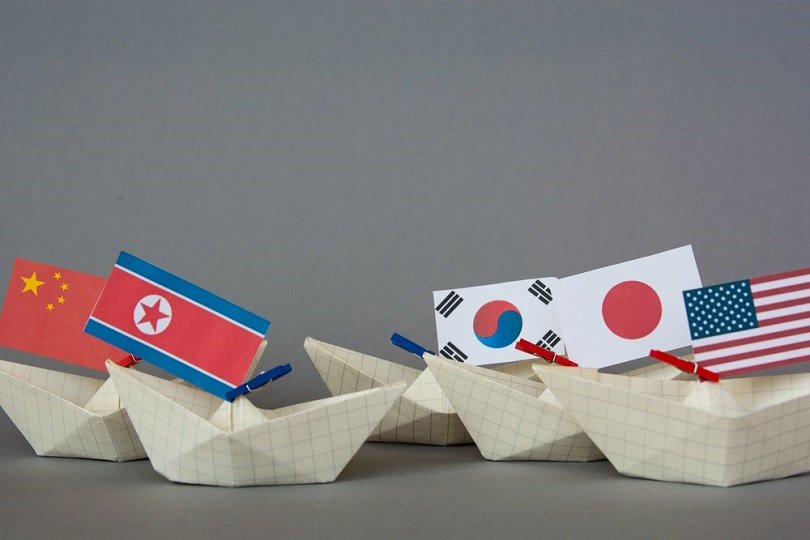
Contemporary debates on Indo-Pacific security often begin with an implicit assumption: that credible deterrence necessitates a formal alliance structure—either a bilateral one or collective defense system like NATO. In Northeast Asia, such an assumption is translated into a question of whether Japan and South Korea could effectively deter regional spoilers even without a mutual defense treaty. Yet the historical experience illustrates that this question might be misplaced. Deterrence has not always been dependent on legal commitments. On some occasions, it has emerged through political alignment, operational coordination, and repeated interaction during crisis situations.
The evolving relationship between Britain and France in the decade prior to WWI offers a particularly meaningful example. The First Moroccan Crisis and the Agadir Crisis tested the durability of the Entente Cordiale—later evolved into the Triple Entente in 1907—which was quite different from a formal alliance. Germany, under Wilhelm II, attempted to exploit such ambiguity. Nevertheless, the result was the opposite. Germany’s coercive diplomacy transformed a limited diplomatic understanding into a strategically credible Entente. The end result was one form of deterrence that altered Germany’s strategic calculation without the existence of a binding treaty.
Originally, the Entente Cordiale was not designed as a military pact. Instead, its primary goal was to resolve long-standing colonial disputes in Africa—evidenced by numerous events including the Fashoda Incident. However, Germany perceived this arrangement as a potential step towards encirclement and tried to disrupt it before it could deepen. The First Moroccan Crisis was triggered by Wilhelm II’s visit to Tangier in 1905, where he openly challenged France’s influence in Morocco and called for an international conference. Berlin’s objective was clear: to diplomatically isolate France and to examine whether Britain would maintain neutrality on issues that were considered peripheral colonial matters.
Germany’s strategy was grounded on an important assumption—that Britain, traditionally cautious of intervening in continental affairs, could prioritize strategic flexibility over commitment. Yet this assumption turned out to be profoundly wrong. Germany failed to isolate France at the Algeciras Conference. Alongside other great powers, Britain generally supported a framework that largely preserved French influence. More importantly, this crisis changed Britain’s perception of Germany.
However, the most important consequence unfolded beneath the official diplomacy. After the crisis, Britain and France initiated a series of military staff talks, which prepared the foundation of operational coordination. In these talks, the potential deployment of the British Expeditionary Force to the European continent in the event of war, as well as a division of naval responsibilities—Britain focusing on the North Sea and the English Channel while France concentrating on the Mediterranean—were discussed. Neither of these measures was codified as a treaty. Yet they created practical expectations for cooperation, reduced uncertainty during crisis situations, and incrementally aligned strategic planning.
The 1911 Agadir Crisis reinforced this transformation. Germany’s decision to dispatch its gunboat Panther to Agadir was intended to extract concessions and signal German resolve. On the contrary, it triggered a stronger British reaction—the Mansion House Speech made clear that Britain would oppose any attempts to coercively alter the preexisting balance of power. The political signal was unmistakable: Germany’s confrontation with France would entail British involvement even in the absence of a formal defense treaty.
By this point, Germany faced a fundamentally different strategic environment—that pressure towards France no longer remained a bilateral affair between Germany and France. The Anglo-French relationship acquired deterrence without legal codification. Germany’s misjudgment lay in its misunderstanding of ambiguity; Berlin interpreted the absence of a treaty as weakness and fragmentation. However, in reality, the combination of political alignment, operational coordination, and ‘trustworthy’ commitment—albeit not lucidly defined—created strategic uncertainty, further complicating Germany’s decision-making. Deterrence, in this case, was forged not on legal obligation but on expected behavior under crisis.
These historical experiences offer invaluable insight into contemporary Northeast Asia. Yet it is worth underscoring one structural differentiation: unlike pre-1914 Europe, Northeast Asia is not a system of independent states pursuing alignment. Instead, it is anchored by a US-centric alliance structure—and is not composed of loosely aligned actors. Japan and South Korea are formal treaty allies of the United States firmly embedded within a hub-and-spoke system. Nonetheless, these distinctions do not nullify the logic of the Entente that was demonstrated during the Moroccan Crisis; rather, they transform its function. In today’s Northeast Asia, the Entente does not replace formal alliance. Instead, it guarantees that pre-existing parallel bilateral alliances do not fragment during crisis—especially when US military power is thinned out across multiple theaters.
These distinctions become especially important in an evolving regional threat environment. China’s military aggrandizement, North Korea’s advancing nuclear and missile capacity, and deepening Russian-North Korean cooperation—thanks to Pyongyang’s decision to dispatch its troops to the European front—are collectively generating strategic pressure in the region. Although these three countries have not formed a formal alliance similar to the pre-1914 Triple Alliance, their growing coordination is undoubtedly presenting multifaceted challenges to the existing regional security structure.
Under these conditions, the central risk hinges on the possibility of fragmentation within the existing alliance system. In a dual contingency scenario—where China embarks on an all-out war against Taiwan while North Korea takes provocative activities on the Korean Peninsula simultaneously—there is a high chance that Japan would concentrate on maritime operations and Taiwan-related missions, South Korea would prioritize the defense of the Korean Peninsula, and the United States would be forced to distribute its forces across both theaters. Without prior consultation, these divisions risk incurring security vacuums, delays, and misaligned responses that could be exploited by adversaries.
Recent developments illustrate movements in remedying this problem. For example, the 2023 Camp David trilateral summit has prepared the foundation for trilateral consultation, committing the United States, Japan, and South Korea to coordination on joint responses to regional challenges. Real-time missile warning data sharing and expanded joint exercises have started to transform political commitment into operational practice. Nonetheless, these measures remain insufficient; deterrence depends not on mere alignment, but on the expectation that coordination would function rapidly and effectively under crisis conditions.
To address these challenges, and to prevent alliance fragmentation during regional contingencies, the United States, Japan, and South Korea should move towards operational integration that goes beyond symbolic cooperation. To that end, the following five measures are advisable.
First, a standing trilateral crisis coordination mechanism—that connects the US Indo-Pacific Command, Japan’s Joint Chiefs of Staff, and South Korea’s Joint Chiefs of Staff—should be established. This mechanism should include clearly defined activation triggers—ranging from North Korea’s missile launches, maritime escalation, to cyber-attacks—and function as a platform for real-time joint evaluation and coordinated decision-making. The key goal would be to ensure that alliance responses remain synchronized under time pressure.
Second, cooperation on missile defense should evolve from information sharing to real-time operational integration. This includes the cross-cueing of Japan’s Aegis-equipped combat systems and the Korean Air and Missile Defense (KAMD) architecture, which would ultimately enable rapid and efficient interception in a high-intensity situation. By reducing vulnerability against saturated missile attacks, and effectively using the finite interceptors of both Japan and South Korea, this integration would directly enhance overall deterrence.
Third, trilateral planning must explicitly address a dual contingency scenario. Through joint exercises and simulation, each country should clearly define their respective roles: Japan on maritime and Taiwan-related operations, South Korea on peninsula defense, and the United States on cross-theater force management. The goal is not a rigid division of labor, but coordinated complementarity that minimizes potential operational vacuums.
Fourth, logistics and rear-area coordination should be institutionalized. Japan’s assistance to US forces operating on the Korean Peninsula—even if the nitty gritty of existing operation plan cannot be shared to the South Korean counterparts, the big picture need to be consulted—and South Korea’s contribution to maritime security and sea lines of communication (SLOC) protection during Taiwan contingency—both in a full-scale invasion as well as naval blockade scenario—would strengthen the durability of military operations in a protracted conflict scenario. This structure would be similar to the functional division of labor that was forged between Britain and France prior to WWI.
Last but not least, strategic signaling should reinforce the expectation of coordinated response. Just as Germany revised its strategic calculations by factoring in the probability of Britain’s intervention, today’s potential regional spoilers in Northeast Asia should perceive that coercion against a single country would trigger a comprehensive and integrated response. This requires consistent trilateral cooperation through joint exercises, public messaging, and visible operational integration.
The Moroccan Crises remind us that, often, deterrence is built before it is formalized. Britain and France did not begin with a mutual defense treaty. They resolved disputes, coordinated under strain, while showcasing that external coercion can strengthen internal cohesion instead of fragmenting it. With the passage of time, such practices created a strategically effective form of deterrence without any binding legal obligation.
The lesson for Northeast Asia is clear—alliance is far from unnecessary, yet alliance alone is insufficient. In this context, Japan and South Korea do not need to replicate NATO. What is needed is a structured trilateral Entente, anchored by the United States. Within this formula, coordination is expected, responses are repeatedly rehearsed, while preventing fragmentation during crisis.
In this sense, the most important lesson of the Moroccan Crisis is how deterrence could acquire credibility. It is not written first in treaties but in the consistent integration of behavior among those who would resist regional spoilers that attempt to disrupt the status quo.
Further Reading on E-International Relations
