
The conflict between the United States and Israel against Iran continues. The Iranian regime, despite the substantial damage it has sustained, is fighting fiercely for its survival with little regard for what it must sacrifice to ensure it. The United States has risked too much economically and diplomatically, only to end up relatively alone in a war where its objectives appear too abstract and the means employed clearly insufficient to achieve them. Israel, while having clearer objectives related to the perceived existential threat posed by the Ayatollah regime, seems to have bitten off more than it can chew, overwhelmed by the aggressive Iranian response and by relative international diplomatic isolation.
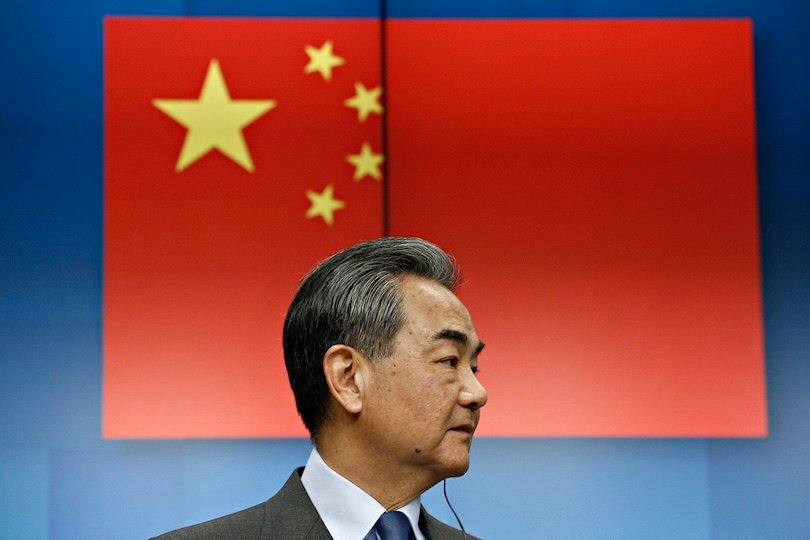
In such a stalemate, the position of non-belligerent powers carries significant weight. Iran’s closure of the Strait of Hormuz has transformed a local conflict into one with global consequences. Despite the relative caution shown by the major powers, the message from non-belligerent countries has been clear: these nations do not wish to be drawn into a conflict they did not start and in which there appear to be no clear gains, not even for the initiators. In this respect, China’s stance is quite revealing.
At first glance, China’s relatively passive attitude toward the conflict may seem somewhat perplexing. China and Iran have maintained close political and economic ties for decades. Despite the sanctions imposed, China accounts for approximately 80% of Iran’s oil exports, and the Chinese yuan has become indispensable for the survival of the Iranian regime. Iran, for its part, is a major energy supplier for China and a strategically vital point within its Belt and Road Initiative.
With this in mind, the reasons for China’s relative passivity and restraint toward the American and Israeli attempts to eliminate the Iranian regime lie in a series of deeper political and economic factors. First, in the decades since its opening to the outside world in 1979, China has developed a rather distinctive style of diplomacy based primarily on flexible strategic alliances of an economic nature, rejecting agreements that involve security commitments. The Soviet Union’s decline, partially caused by its endless pursuit of military hegemony in competition with the United States, taught China the importance of prioritizing resource allocation in areas that represent real economic growth; war (especially when initiated without clear objectives) is not one of them.
This pragmatism is also reflected in China’s stance regarding the regime’s survival. Economic and trade ties between the two nations are based on practical rather than ideological considerations. While this situation facilitated the establishment of relations between countries with seemingly very different ideologies at the time, it also determined that the Chinese government’s main objective today is not to ensure the survival of the Iranian regime itself, but rather to uphold the agreements reached with the Iranian state. The lack of clarity regarding the regime’s situation is prompting China to keep all its options open, which would theoretically allow it to maintain friendly relations with Iran in the relatively unlikely event of a complete change in political leadership.
China’s geopolitical motivations also play a significant role. China is relatively better prepared than other nations to deal with the energy consequences of the closure of the Strait of Hormuz, allowing it to position itself as a potential mediator or impartial third party in the conflict. At the same time, China can afford to allow its main rival to become economically and diplomatically weakened in a new conflict in the Middle East. This also provides China with the perfect opportunity to analyze in real time—and potentially counter—the military tactics and capabilities of the United States. Simultaneously, the mobilization of US troops from Southeast Asia to the Middle East, and the strain on the US military apparatus, constitutes a perfect opportunity for China to strengthen its presence in its own region, with potential future implications for the political situation in Taiwan.
China’s diplomatic presence in the Middle East demands caution. While China is Iran’s main trading partner, this importance is not reciprocated in terms of regional balance. Trade flows with Iran pale in comparison to those with other nations in the region, such as Saudi Arabia and the United Arab Emirates, which have been involuntarily drawn into the conflict. These countries have expressed their strong opposition to Iranian activity in the region; therefore, China cannot afford to support one ally at the expense of alienating other, more economically important partners. Ultimately, pragmatism is the primary parameter for Chinese diplomacy.
China’s historical experiences—which have shaped its unique style of diplomacy—as well as the obvious complexities of maintaining extensive diplomatic networks (some involving countries that are at odds with one another) demand caution from the Chinese government in handling the current crisis. China does not make commitments to other nations on security issues, does not send troops to solve other countries’ problems, and, at least formally, tries to keep its actions within the realm of diplomacy. Therefore, it can hardly be described as an ally that reneges on its commitments in the event of aggression against its trading partners because those security commitments never existed.
However, this same caution could prove detrimental to China in the long run. As mentioned, the Soviet experience (and the American experience itself) taught the Chinese the disadvantages of constantly trying to increase influence through military means. However, if it wishes to position itself as a viable diplomatic and commercial alternative to the United States, China must confront in a more decisively way situations that jeopardize its own trade networks. It must reassure smaller countries that, by sharing common interests, China can be a reliable ally capable of exerting the diplomatic and economic pressure that smaller countries are unable to implement. China’s tepid response to US interventions in Venezuela and Iran, while not violating existing agreements, offers little reassurance to its allies and risks emboldening aggressive actions by rivals in countries these powers consider part of their spheres of influence.
Ultimately, a more assertive diplomatic stance from China and other powers is necessary to end the current conflict. While China is better prepared in the short term to face the current energy crisis stemming from the closure of the Strait of Hormuz, in the long term, the conflict seriously threatens to hinder its growth. A sharp and sustained slowdown in global economic growth will translate into domestic overcapacity and a further decline in corporate profits, with serious consequences for the financial health of Chinese companies. Wage growth is currently at a mere 1% and could fall even further. This will exacerbate weak domestic demand in China, lead to reduced investment by relatively less profitable companies, and generate a slowdown in consumption. China has spent years strengthening its energy grid and building up reserves for situations like this. However, the enormous fragility of the international economic system—which has been profoundly disrupted by the closure of a waterway barely 33 km wide—necessitates long-term, collaborative solutions.
Further Reading on E-International Relations
