
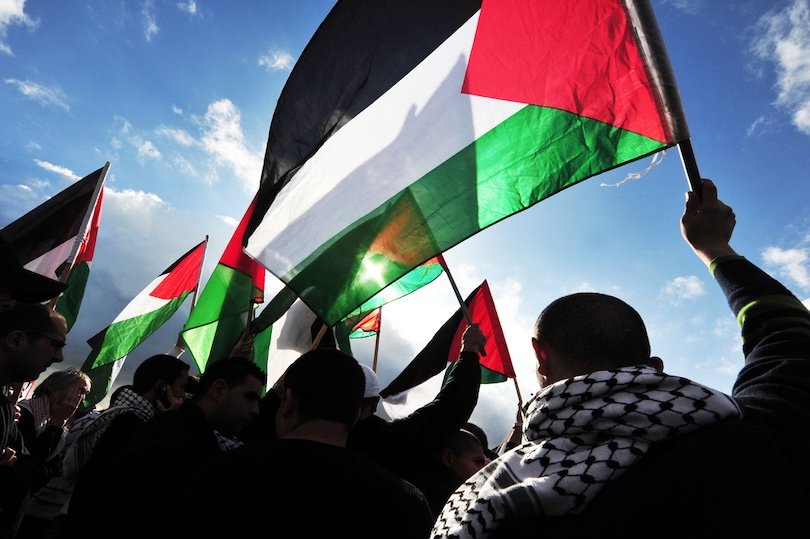
For Palestine to be recognized, a second serious struggle begins regarding the extent to which this recognition can lead to changes in institutions, publics, and power dynamics. Such a struggle is clearly visible at a time when Palestine’s right to statehood has been recognized by more than 150 UN member states. Its legal claims have been put before the United Nations, the International Court of Justice, and the International Criminal Court. Its experience of injustice has been circulated through the newsroom, campus, screen, digital sphere, and urban street with an intensity few modern political realities can match. Notwithstanding, the gap between recognition and protection remains considerable. If there has been an increase in recognition, Palestinian lives remain subject to occupation, displacement, fragmentation, and suspended governance. If there has been an improvement in the articulation of rights in legal discourse, their enforcement remains difficult. If there has been increased visibility, many people have become less materially secure. Such contradictions reveal what is perhaps the central issue of our current moment: that the institutionalization of rights has become increasingly challenged in its effectiveness.
This article argues that Palestine demonstrates the limits of recognition under conditions of mediatized international politics. For sovereignty remains anchored in law, territory, institution, and external recognition; but it also derives or loses strength through processes of visibility, narrative power, institutional performance, infrastructure development, and public credibility. I use mediatized sovereignty to name the passage through which a claim to sovereignty moves, or fails to move, from legal recognition into political force. The concept brings law, visibility, narrative authority, institutional performance and public credibility into the same field of analysis. This matters because a sovereign claim may be recognised by states, courts and diplomatic forums, yet still lose force when it travels through media systems, platforms/screens, classrooms, archives and publics without reaching protection. Therefore, mediatized sovereignty, as is used here, explores the ways sovereignty becomes legible, how it gains or loses consequence, and why recognition can remain present in language while absent in life. What I mean by this concept is to keep law and communication in the same field of analysis. A close look at the field shows how diplomatic acts create one kind of standing; a court ruling creates another. However, a video, a testimony, a university encampment, a legal archive, a press frame or a platform decision can alter how that standing is understood and whether it becomes consequential. In this context, the Palestinian case raises a question wider than Palestine itself: what happens to international legitimacy when recognition can be granted, narrated, celebrated and still left without protection?
Recognition after recognition
The significance of recognition lies in the fact that it gives legal and diplomatic form to political claims, which allows for the establishment of embassies, treaties, institutional engagement, and representation before international bodies. Within international law, recognition is inherently related to many long-standing discussions regarding statehood, capacity, territory, government, and foreign relations. In such a perspective, James Crawford’s pioneering work analyzing the law and practice of state creation is pivotal, showing how statehood is not a matter of opinion, but of legal and institutional status resulting from practice, recognition, and changing rules of international society.
The recent diplomatic history of Palestine shows just how powerful such a legal framework continues to be. As recently as in April 2024, despite widespread support within the Security Council, the Palestinian bid for membership to the United Nations had been vetoed by the U.S. Only a month later, in May 2024, UN General Assembly Resolution ES-10/23 confirmed the eligibility of Palestine for membership in the United Nations and granted it further rights and privileges of participation. Nonetheless, Palestine gained additional rights and privileges, but still without the vote. This move was a telling compromise that allowed Palestine to advance towards the status of statehood through an exclusionary structure. Indeed, it is well known that for decades, Palestinian political existence has consisted in living around various forms of recognition without acquiring actual power from it. Indeed, a state may be recognized and the peoples acknowledged, but the borders may remain under someone else’s control and their own mobility restricted. Indeed, the institutional expectations are that governance occurs, and the language of diplomacy is that of eventual statehood, although the prerequisites for a cohesive governance keep being interrupted.
Such a perspective calls for Stephen Krasner’s description of sovereignty as organized hypocrisy. Sovereignty entails the basic claim of collective self-agency, protection, and self-governance. Krasner’s argument, however, is more subtle and notes that in the international community, the sovereign norms may be affirmed selectively by those in power due to interests. International legal sovereignty (the recognition of statehood by other states) may thus be easily recognized, even as effective authority over the territory, its borders, its population, and their protection remains limited. Such is indeed the case with Palestine, whose status is marked by the discrepancy between legal international recognition and material self-governance. This condition should not lead to cynicism about recognition, as cynicism would be a mistake. Recognition can widen the space of political possibility, and weaken the claim that Palestinian statehood is merely a future reward to be granted after endless compliance. It can further affirm that self-determination is a right rather than a concession. Yet recognition becomes fragile when it remains declaratory, as it begins to look like a language of conscience rather than an instrument of consequence.
Mediatized sovereignty
Mediatized sovereignty names the struggle that begins after recognition and around it. Jesper Strömbäck’s work on mediatization shows how politics, and its role, changes when media become more than channels that transmit political messages. The media begin to shape the conditions under which political actors operate, appear credible and reach the public. Nick Couldry and Andreas Hepp go further by showing how social reality itself is increasingly constructed through mediated and digital environments. These insights matter for International Relations (IR) because sovereignty is also a social and political reality. It needs to be recognised, but it also needs to be made legible.
Legibility here moves from the public to indicate the need for a political community to be seen as the keeper of rights, as something that has evolved historically, and as something capable of giving valid testimony. This entails at least some propositions: The dead have to be considered civilians; the institution has to be seen as an institution, not as bits of administration. The classroom, the archive, and the media have to be taken as public entities, not as side sectors of society that can be left till after the struggle. Finally, the stories being told about this struggle have to be read as claims about order, legality, and accountability, not just suffering. These considerations highlight the paradox of how the Palestinians’ quest for sovereignty coincides with a struggle for meaning. Who qualifies as a civilian? How does one get defined through the lens of security? Whose pain is used as political proof, and whose sorrow is ignored as irrelevant noise? What institutions count as incapable on account of lacking power, and what institutions are incapable because of their combination of weakness through occupation, fragmentation, and domination? These questions begin as communicative ones, but they are also political questions concerning how actors worldwide apportion responsibility.
Nancy Fraser’s argument about the public sphere in a post-Westphalian world is useful here, as public opinion no longer lives comfortably inside national containers. In a post-Westphalian world, sovereignty is no longer secured only by territory and recognition; it is increasingly tested through legitimacy, visibility, institutional accountability, and the ability of a people’s claims to travel across global publics, across borders, institutions, publics and media ecologies. Palestine is argued over at the United Nations, in regional organisations, in courtrooms, in parliaments, on campuses, inside families, across TikTok and Instagram, and through the work of journalists, lawyers, students and survivors. And the result is an uneven public field in which authority is constantly produced and challenged.
Digital infrastructures only serve to heighten this field. As argued by José van Dijck, Thomas Poell and Martijn de Waal, platforms can be understood as infrastructures that penetrate public spheres and affect democratic politics. Tarleton Gillespie’s argument on content moderation further emphasizes the debate on how platforms are far from being neutral. For him, governance structures, corporate interests, and moderation practices in a politicised media landscape determine what gets circulated, what gets erased, what gets amplified, and what gets labelled as dangerous. Visibility then, is crucial for Palestinians, as it often serves as the first channel through which the issue gains international reach and recognition. Here I argue that this channel remains vulnerable, and its content can easily become distorted by platform regulation, geopolitics, algorithmic opacity, and uneven media power relations.
Mediatized sovereignty is therefore ambivalent –it acts as a double-edged sword. It allows revealing invisible truths, communicating testimony to the world beyond the checkpoints, borders, and broken institutions; it enables ordinary people to record, store, and articulate; it connects legal arguments with public consciousness. At the same time, mediatized sovereignty also has the ability to translate suffering into a flow of images that causes shock without requiring any action in response. An obliterated classroom, a delayed humanitarian convoy, a mass grave, a homeless family, and a child trapped beneath the rubble can easily find their way to the global audience within seconds. Still, such circulation fails to answer the critical question about what actions would come next.
Palestine as a test of consequence
In light of the events of 7 October 2023 and their consequences, the issue of Palestine has found itself present in various interlinked stages of international legitimacy. Diplomatically, several countries shifted their position from showing concern to formally recognizing Palestine. Legally, in July 2024, the International Court of Justice issued an important Advisory Opinion on the legal consequences of Israel’s policies and violations in the Occupied Palestinian Territory. The Court also became the main stage for South Africa v. Israel under the Genocide Convention, where provisional measures placed Gaza’s civilian destruction before the principal judicial body of the UN system.
These developments show how the long Palestinian struggle to be heard is no longer outside the institutions of international order. It is rather inside those institutions, but often in a suspended way: the law can name occupation, obligations and possible crimes, the General Assembly can also strengthen Palestine’s participation, and courts can speak with authority. Yet the lived reality of Palestinians can remain governed by force, closure, displacement, dehumanization, and above all … with political delay. The result is an expanding gap between declaratory legitimacy and lived legitimacy. At the declaratory level, there is the legitimacy of statements, votes, legal findings and recognitions. And these are all essential, because without declaration many injuries remain unnamed. The lived level, however, varies significantly: it asks whether those declarations alter the conditions of life, daily life, and to what extent. It explores this gap more directly and asks: How can people move? How can students learn? How can hospitals function? Can archives survive? Can institutions plan beyond emergency? Can a political community imagine a future without asking permission for every basic capacity of collective life? These are concrete questions that arise from the way people move around, the way schooling, hospitals, and archives work, and the way permissions are given for collective life to continue or be put on hold.
From an IR perspective, the Palestine struggle for an international recognition ––that affirms sovereign statehood–– demonstrates how wide the gap has become between two modes of legitimacy. How can international law become more specific, while enforcing politics selectively? How can one develop humanitarian concerns, while reducing political catastrophe into soft categories? How can recognition become extensive even as the recognized people remain vulnerable? This is why Palestine matters here not as an exception only, but as a concentrated case of a wider IR crisis. Recognition can travel faster than protection, and visibility can travel farther than enforcement. Not only does the widening gap hurt Palestinians and their future but it also weakens the international system and its future. A system in which rights are articulated yet not protected or enforced makes the public understand international law as moral performance rather than accountability. The larger message here is very clear for IR –the expansion of recognition without adequate protection creates a crisis that goes far beyond diplomatic rhetoric. It spreads through streets, screens, forums and accumulates like pressure building beneath a dormant political volcano.
Any thorough approach needs to address civilian misery without turning to the language of balance that would erase the structural occupation. Recognition cannot be used as an excuse for flattening the bigger legal and political picture –occupation spanning decades, Palestinian detention of mass scale, administrative detentions of Palestinians without charges or trials, detaining children, fragmentation of the land, and disrupting civilians’ life. An adequate IR discussion needs to accommodate these facts without suggesting that they all take an equally important place in history and carry the same legal significance. Issues of Palestinian political division, the crisis of representation, weakness of the Palestinian authority, the issue of Hamas, and security considerations cannot be ignored. The facts in question are not abstract: they affect each individual Palestinian every day; thus, they cannot turn into an endless mechanism for postponing Palestinians’ rights because of the settlement construction and fragmentation of land and territory.
Therefore, this argument becomes quite practical –recognition should reset the burden of proof. Once one accepts that the particular people are recognized as entitled to self-determination, international discussion will no longer regard that people’s freedom as something far away which could be attained only after overcoming all political obstacles. Hence, problems should be managed, violence should be contained, institutions need reform, and civilians should be protected on both sides of the conflict. However, the right in question cannot be postponed forever.
From visibility to accountability
This is where legitimacy becomes more than a matter of law. Jonas Tallberg and Michael Zürn argue that international organisations gain, sustain and lose legitimacy through the ways their authority is justified and accepted in world politics. Allen Buchanan and Robert Keohane similarly frame legitimacy in global governance as a public standard through which institutions can be criticised and reformed. Palestine tests these ideas sharply because the problem is not a lack of normative vocabulary–the vocabulary is abundant; the problem is the thinness of consequence. We all see how the international order knows to speak about self-determination, civilian protection, humanitarian access, accountability and the inadmissibility of acquiring territory by force. These words, however, carry historical weight, as they were meant to discipline power after the catastrophes of the twentieth century. Palestine shows what happens when these words remain available but not, or in best scenario, unevenly enforced. The result echoes beyond one conflict and creates a crisis in the credibility of the rhetoric itself.
Mediatized sovereignty is expected to deepen this crisis, as media consumers can now watch the gap almost in real time. Earlier forms of diplomatic failure could hide behind distance, slow information and restricted access. For the savvy digital generation, legal hearings are streamed, satellite images circulate, journalists and citizens publish evidence instantly, and human rights organisations archive events with growing sophistication. The world now can see more and compare official statements with images from the ground. In the time it is listening to legal arguments, it can then watch whether power responds. While this visibility creates pressure, it simultaneously creates exhaustion, when a public can become intensely aware, but still feel powerless.Worse still, institutions can become more exposed and yet continue operating according to familiar patterns. The danger is a new form of spectatorship in which global audiences witness suffering, condemn it, share it, archive it and then move on. Visibility without accountability becomes another layer of injury, latent anger, that could erupt at any moment into utter floods. Visibility without accountability says to victims that their pain was seen, believed and still left largely unprotected.
For this reason, and many others, the Palestinian struggle over narrative authorship doesn’t go unnoticed, nor is it decorative: it is central to political life. In my own work on Reclaiming narrative sovereignty, I argue that communities under domination need the capacity to examine how narratives are constructed, circulated and legitimised. That argument applies beyond classrooms, as a people also needs the capacity to defend public truth, preserve memory, produce evidence, educate its young. A people resist being reduced to the categories created by others. When the language of “conflict” flattens occupation, and “security” absorbs dispossession, then “humanitarian crisis” replaces political causation, and also “complexity” becomes a way of delaying action, legitimacy is painfully reorganised. The deeper problem is the grammar through which some realities become governable and others become deniable. In reality, Palestine’s experience shows that sovereignty is fought in that grammar as much as in formal diplomacy.
What recognition should enable
The historical lesson that emerges from every level of serious analysis asserts the need to connect statehood with protection, accountability, and longevity. Recognition should not be seen as the end point of diplomacy but as the beginning of responsibility. It would strengthen the ability of Palestinian institutions to act coherently amid fragmented geographies and defend education, archives, media, and civic engagement as components of political recovery. It would raise the question of what impact recognition has on state behaviour in fields such as trade, arms transfers, settlement, reconstruction, humanitarian access, and international accountability. To do this effectively, there needs to be clarity about the political environment in Palestine. Recognition should seek to support renewal of democracy, reform of institutions, and good governance and avoid falling into the legacy trap by which Palestinians must prove exemplary institutional capacity despite being prevented from doing so. People living under occupation are often judged by their weaknesses due to their imprisonment.
In this context, education deserves special attention, as people facing constant challenges need more than symbolic national languages. They need regular infrastructures through which political reflection takes place –schools, universities, professional associations, archives, research centres, media outlets, civil society organizations, and debates. These spaces are imbued with memory and at the same time educate individuals in how to reflect, document, organize, and imagine –thus making them inseparable from sovereignty because of their indispensable role in the latter.
Such considerations also speak to the field of IR, where recognition, legitimacy, and sovereignty are considered formal concepts. In Palestine, one is prompted to explore infrastructures of these formal concepts. For example, who preserves the record when archives get destroyed? Who instructs when classrooms get demolished? Who verifies witness accounts when journalists get murdered or prevented from reporting? Who provides public debate when platforms encourage speed, emotionality, and performance over reason? Above all, who defends the infrastructure without which the people cannot be visible as a sovereign political subject rather than a humanitarian population? These questions point to an intersection of legality, institutional design, public debate, and physical defence. The concept of mediatized sovereignty can help analyse this intersection. It shows that recognition must travel through the channels that allow it to reach audiences and produce effects. Whether such effects arise or recognition becomes another piece of history of unfulfilled promises depends on the infrastructures through which it travels.
Conclusion
In its tragedy, Palestine serves as a warning signal to the international community. The idea of an international system capable of recognizing a people but unable to protect them —as seen elsewhere— renders recognition void of its meaning. The idea of a set of institutions capable of recognizing the violation of their principles but incapable of stopping the violation warns the world of the difference between declaratory legitimacy and actual legitimacy. An international system capable of recognizing the extent of the suffering but unable to translate the recognition into consequences risks turning the act of witnessing into a substitute for responsibility. Screens have become a means of transferring legitimacy from formal institutions to actions in the streets.
Sovereignty includes the flag, the seat at the table, the borders, and the passport. Sovereignty also includes the less visible capacity of a people to survive, remember, learn, judge, and make political decisions despite attempts to thwart them. In that sense, Palestinians have been asking for more from the international community than recognition for decades. They have been asking the world to assess whether recognition loses its meaning when separated from legitimacy. Through the First Intifada, the al-Aqsa Intifada, the events of 7 October 2023 and their tragic aftermath, Palestinians have been returning the international community to one simple question: does recognition matter when legitimacy is detached from protection? It is time for the world to wake up and say it clearly: the fate of Palestinian sovereignty depends not only on law, politics, and diplomacy but also on the ability of some parties to tell the truth, build institutions, translate visibility into consequences and, above all, preserve the link between recognition and legitimacy. This is the lesson of mediatized sovereignty. Recognition initiates the struggle that really counts, the struggle for a meaningful legitimacy.
Further Reading on E-International Relations
