
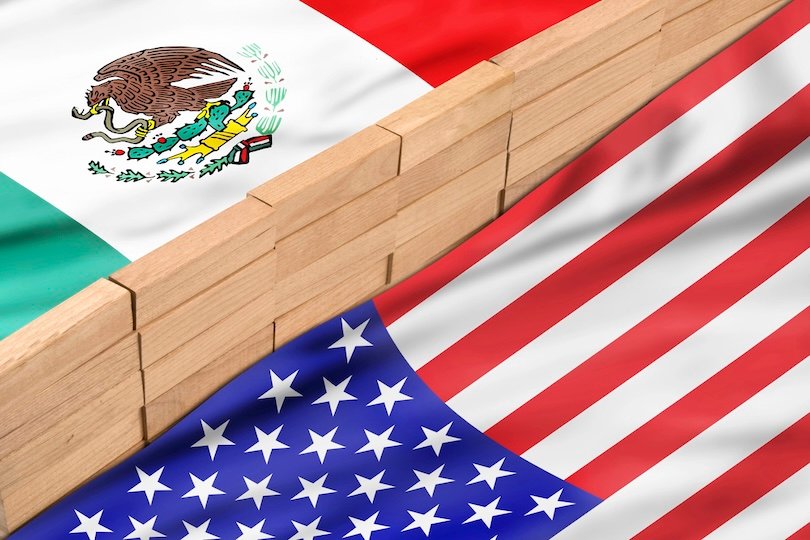
Historically, Latin America and the Caribbean (LAC) has occupied a relatively peripheral position on the global geopolitical chessboard. Its history is characterized by a precarious balance between the imperialist ambitions of great powers and its own internal political instability. This pattern appears to repeat throughout the region, despite the varying degrees of difference between the economies and societies of the countries south of the Rio Grande.
The 20th century marked the period of the United States’ near total and undisputed hegemony over the continent. Under the pretext of combating the supposed dangers of the communist threat, the presence of its powerful northern neighbor resulted in constant political and economic intervention across LAC. In this context, a series of seemingly unrelated events fundamentally altered the dynamics of U.S. relations with the region. The fall of the Soviet Union forced the United States to rethink the justification for its global policing role. The struggle against communism was replaced by the defense of democracy and human rights as the primary American paradigm. Subsequently, the War on Terror, launched after the 9/11 attacks, completely reconfigured U.S. international relations, further shifting its strategic focus toward the Middle East. Collectively, this marked the beginning of an apparent and relative withdrawal from LAC by the United States.
However, history teaches that power thrives in a vacuum. The global rise of a China hungry for new markets and natural resources since the turn of the century has led to an aggressive increase in the Asian power’s presence in the region. Predictably, this has alarmed the American political elite. Regardless of the administration in power, containing Chinese influence has become a strategic priority for both Republicans and Democrats. Ironically, the materialization of these fears regarding Chinese supremacy in the LAC region has been exacerbated during the leadership of the president who has pursued the most aggressive foreign policy in recent years.
For decades, much of the United States’ global influence stemmed not only from its military and economic might but also from subtler factors. These included its immense capacity to project soft power, its dense network of political and economic alliances, and its self-imposed role as a global defender of democracy. In this light, the radical shift in U.S. foreign policy under President Trump is not only counterproductive to the very interests it seeks to defend; it also reveals a profound misunderstanding of evolving global politics and China’s diplomatic and economic capabilities in Latin America. The relative US neglect of Latin America over the last three decades has evolved during the Trump era into extremely aggressive regional rhetoric. The underlying message suggests that Latin America offers nothing of value except its natural resources, and that regional governments are obligated to maintain U.S. interests intact within their borders. This is expected without any reciprocity, other than the opportunity to continue governing without the threat of U.S. military intervention.
The so-called Donroe doctrine outlined in the U.S. government’s 2025 National Security Strategy, represents a return to 19th-century gunboat diplomacy. It divides the world into spheres of influence and declares Latin America an area of exclusive interest for the United States. It completely ignores the evolution of global politics over the last 100 years and advocates a return to a world that, due to the enormous degree of interconnection it presents, no longer exists and will not return in the short term.
The defense of democracy and the purported desire for continental development have been replaced by the mere pursuit of natural resources and political conditioned markets. Trump’s political strategy is generally driven by instinct and impulse, the targeting of perceived ‘internal enemies’, and the pursuit of immediate political gains at the expense of ties forged over decades by previous administrations. While Trump’s inflammatory rhetoric and unpredictability have already strained international alliances, their full harmful effects will not be immediately apparent; they will be gradual and, in many ways, irreversible.
In contrast, China has strengthened its regional presence over the past two decades through much quieter, yet highly effective, strategies. While Beijing’s willingness to contribute to Latin American development is by no means altruistic, it provides tangible value to the participants involved. The continuous injection of FDI, technical and economic assistance for major engineering projects, and access to loans without the political conditions imposed by the U.S. or the EU have made China the region’s second-largest trading partner. This growth persists despite relative disadvantages, such as a deep trade deficit (heavily favoring China) and concerns regarding the sustainability of LAC debt levels. Beijing identifies the region as a strategic destination for its exports. Specifically, Mexico and much of South America serve as outlets for surplus production in sectors the Chinese government considers strategic, such as electric vehicles and clean energy. While this commercial dynamism has boosted regional GDP, the extractive nature of this economic model and the displacement of local industry have generated diplomatic tensions. Aware of this unease, the Chinese government committed in a 2025 document to proactively mitigating these trade frictions. Only time will tell if those good intentions translate into real political consequences.
While China continues to build influence through the strategic application of soft power, the ‘Donroe’ Doctrine will have the opposite effect. Regardless of U.S. military power, China’s diplomacy and deep pockets have achieved far better results in securing its interests in LAC. The political situation within LAC countries has also prevented them from exerting joint pressure. The chaotic and populist nature of domestic politics is a recurring regional trait, and a weak multilateral framework hinders effective collective action. Consequently, the most realistic and beneficial recourse for these countries is to seek alternatives to multilateralism without abandoning it entirely. To mitigate price instability, mechanisms such as cooperation schemes and agreements (e.g. OPEC), redesigned to focus on stabilization rather than profit-seeking could be essential tools for Latin America in the short and medium term. Despite the aggressive tenets of the 2025 National Security Strategy, recent global events – particularly in the Middle East – have once again diverted U.S. attention away from Latin America. This could benefit the region, providing valuable time to establish new long-term political and economic strategies and to diversify trading partners, making it more difficult for any single hegemon to exert dominance.
To achieve this, the majority of countries in the region must overcome their own limitations and inefficiencies. Relations between the LAC region and the U.S. have been defined by decades of close ties between regional elites and the U.S. economy. Regardless of whether these relationships benefit their respective countries, they make it difficult for local politicians to risk Washington’s ‘wrath’. Conversely, the relationship with China is often characterized by improvisation and the pursuit of immediate gains by Latin American leaders. This hinders the transition of China-LAC trade toward more sustainable, less extractive dynamics.
Latin America has historically been a coveted prize for powers seeking to exploit its natural resources. Firm and decisive action will be required from regional leaders to prevent the perpetuation of detrimental political and economic dynamics. However, historical experience suggests a need for caution, and perhaps pessimism, regarding the possibility of achieving this without profound systemic changes.
Further Reading on E-International Relations
