
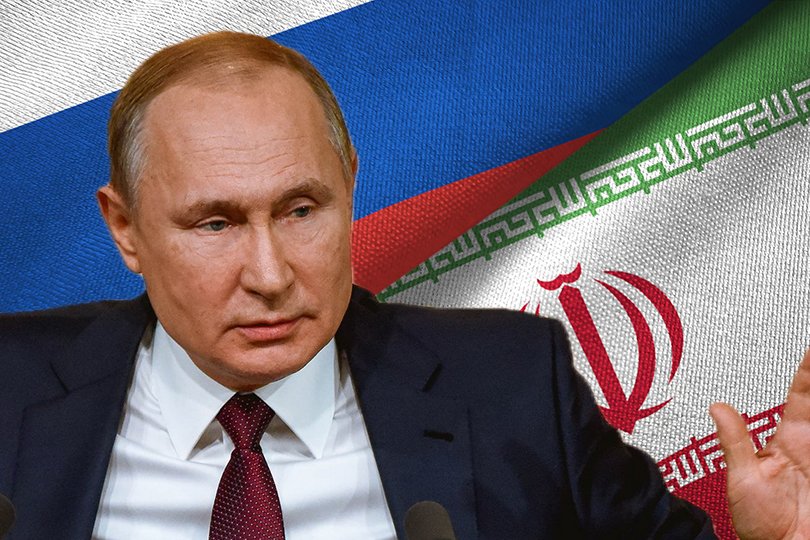
Overthrowing the status quo has long been considered the true nature of imperialism. Hans J. Morgenthau, in his monumental work Politics Among Nations: The Struggle for Power and Peace, argued that “when a nation is engaged in war with another nation, it is very likely that the nation that anticipates victory will pursue a policy that seeks a permanent change of the power relations with the defeated enemy.” This is precisely what Israel and the United States are trying to achieve with the ongoing war against Iran, ominously labelled Operation Epic Fury, which began on February 28. 2026.
Tel Aviv and Washington are both anticipating a victorious war that will not only dismantle the 47-year-old clerical regime in Iran but also shift power relations with Tehran in their favor. Morgenthau, describing such conflicts as imperialistic, suggested that major powers seek to replace the prewar status quo with a postwar order in which “the victor becomes the permanent master of the vanquished.”
History provides numerous examples of victorious wars that permanently altered the preexisting status quo. Recent cases include Russia’s 2022 war against Ukraine and the Second Nagorno-Karabakh War of 2020-2023. In both instances, the prewar order was replaced with a new arrangement that benefited the authoritarian, centralized regimes of Russia and Azerbaijan. Although this process is still ongoing, with both Moscow and Baku continuing to pursue territorial gains in Ukraine and Armenia, the peace settlements currently being negotiated indicate the dominant regional positions of Russia and Azerbaijan.
Tehran, despite publicly supporting peace and opposing regional territorial changes, backed both wars. When Azerbaijan, supported by Turkey, attacked the unrecognized Republic of Nagorno-Karabakh in September 2020, Iran promptly adjusted its previous stance on the dispute and endorsed Baku’s argument for territorial integrity. Yerevan was left alone by its allies, Iran and Russia, in attempting to rebuke, albeit unsuccessfully, a joint Azerbaijani-Turkish military aggression against a breakaway state.
Armenia, with its centuries-long historical and cultural ties to Iran, has been an important trade and economic partner. The country, which shares a 44-kilometer border with Iran along the Araks River, is a member state of the Moscow-led Eurasian Economic Union (EAEU), where Tehran holds observer status. This partnership provides Iran with valuable access to regional markets of some 200 million consumers and the ability to evade Western sanctions. In turn, Iran supplies Armenia, a landlocked country, with a critical route to the Persian Gulf and international waters.
Unsurprisingly, Yerevan anticipated extended deterrence from Tehran in the months leading up to the outbreak of the Second Nagorno-Karabakh War. This would have required Iran to discourage Azerbaijan and Turkey from attacking a breakaway state adjacent to its territory. For example, during the First Nagorno-Karabakh War, fearing Baku’s irredentist agenda (about 24% of Iran’s population is ethnic Azeris), fueled by pan-Turkic views of the first post-Soviet president, Abulfaz Elchibey, Tehran extended its diplomatic, political, and economic support to Armenia.
In 2020, Iran experienced a change of heart in its regional politics, not due to pressure from ethnic Azerbaijanis, as some experts suggest, but because of Russia’s strategic partnership with Turkey. While the clerical regime had no reservations about violently suppressing its opponents, the Russia-Iran cooperation remained the cornerstone of its foreign policy. Thus, Moscow’s shift in its grand strategy in the Caucasus contributed to a geopolitical alignment between Tehran, Baku, and Ankara. The establishment of an authoritarian system of power in the region has become a self-preservation mechanism for the Khamenei regime.
When states consistently refuse to adhere to international law, they are considered untrustworthy and are often labeled rogue states. In geopolitics, acquiring a reputation for lawbreaking can lead to the loss of trade and investment from other states and multinational corporations. This happened to Russia when it invaded Ukraine in 2022; it faced unprecedented, wide-ranging international sanctions on its financial system, energy sector, and military-industrial complex. At the time of writing, 547 international companies had completely exited the Russian market. The sanctions also targeted individuals close to Putin’s inner circle, including government officials, oligarchs, and their family members.
Nevertheless, Russia was able to withstand the pressure thanks to the aid of its allies, Turkey, China, Iran, and many others. Since October 2021, Tehran has unilaterally sent Russia $2.7 billion worth of missiles, including air-defense and ballistic missiles. Additionally, Iran supplied Shahed-136 kamikaze drones and shared technology that enabled Russia to begin local production of the Geran-2. This assistance allowed Russia to stay afloat, both economically and militarily, to the point that the West is pressuring Ukraine to accept a peace framework that includes significant territorial concessions.
The Kremlin advocates for a dog-eat-dog international system in which each state’s leaders must prioritize protecting their vital interests, political independence, and territorial sovereignty at all costs. The primary goal is not a truly multipolar system; one characterized by the presence of more than two major actors in the international system. Instead, Moscow seeks to establish a systemic alignment in which each authoritarian bloc wields decisive influence over the fate of weaker states within its respective region. Iran backed this arrangement, provided that it did not threaten its own security. Unfortunately, imperialism does not discriminate: for every great power, there are even greater powers.
Further Reading on E-International Relations
