
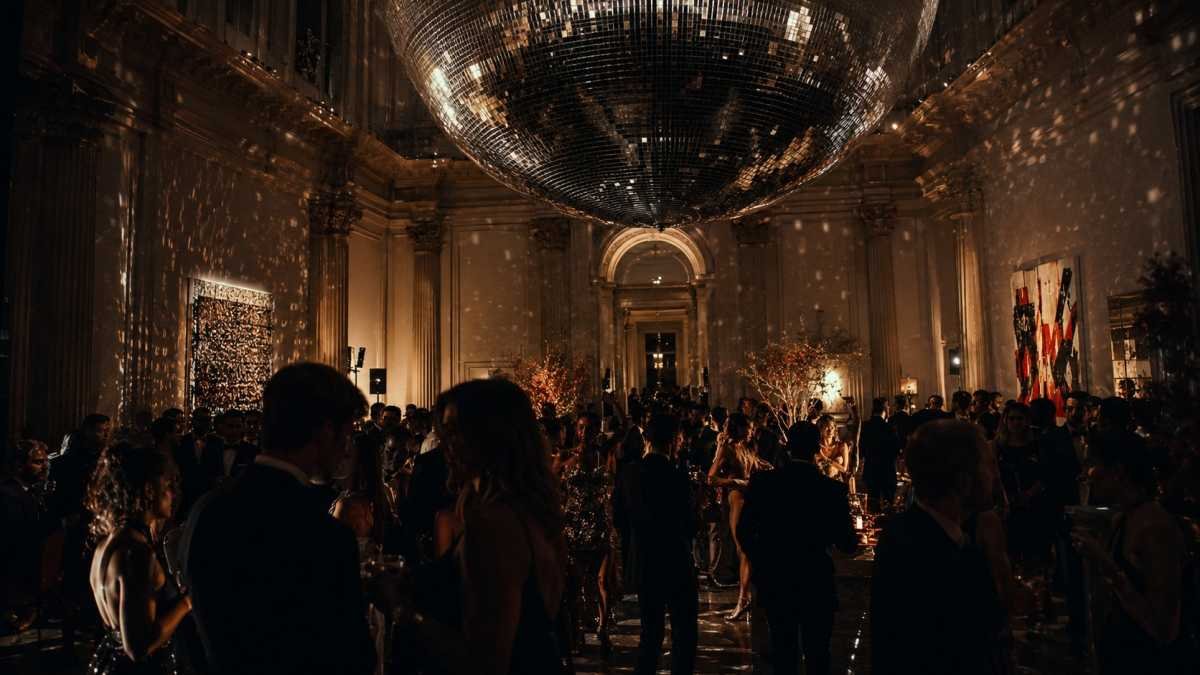
Beneath the hard glitter of a disco ball, in the fevered choreography of New York Art Week, when the city seems to run on champagne, ambition, private previews, whispered collector conversations, impossible dinner reservations, and the exquisite ache of heels worn slightly too long, Pen + Brush offers something far more seductive than another stop on the cultural circuit. It offers a place to exhale, gather, look, toast, move, and perhaps most importantly, remember that art has never belonged solely to hushed institutional rooms or the transactional glare of fairs. Art has always belonged to the body as much as the mind, to the dance floor as much as the gallery wall, to the private thrill of recognition as much as the public act of support.
There is, admittedly, a new longing for the 90s pulsing through culture, though some of us have always carried it like perfume on the wrist. It was a time, at least in collective mythology, when nightclubs did not close until the sun was already settled into the morning sky, when artists lived in abandoned warehouses and made beauty from cracked concrete, stolen electricity, sweat, smoke, urgency, and almost no cash. Yes, gasp! Beauty still required funding. Before every kiss, outfit, breakdown, revelation, and dance-floor epiphany was captured minute by minute on light-speed cell phones, nightlife still had mystery. Art still had danger. The city still had corners where one could disappear and return changed.
Perhaps that is why the Pen + Brush 2026 Benefit Party, held Wednesday, May 13, from 6 to 10PM at 29 East 22nd Street, feels so deliciously necessary. Art Week has its own glamour, of course: fairs, openings, dinners, silk-blazered acquisition theater, and the beautiful exhaustion of being everywhere at once. Yet one of New York’s most underrated cultural gems is offering something more intimate, electric, and alive: a celebration, nay, a revolution, in which a 132-year-old institution becomes a dance floor, late-night exhibition viewing, glamorous gathering place, and radiant argument for why creativity still matters enough to dress up for, show up for, pay for, and move through.

This is the kind of night that should not be politely penciled into the calendar. It should be circled in lipstick.
Pen + Brush will throw open its doors to a spiked-heel, generously boozed, art-cascaded affair that understands pleasure as philosophy and patronage as seduction with consequence. There will be music, cocktails, beauty on the walls, artists in the room, collectors in motion, and that rare New York feeling that something meaningful is happening without having to announce itself too loudly.
The 90s dance party carries a particular charge. It is not nostalgia for nostalgia’s sake, nor some lazy costume of the past. It is a desire for a less sterilized kind of glamour, a nightlife with texture, friction, and a little divine irresponsibility. It is a return, however temporary, to the belief that the body can still be a site of intelligence, that dancing can still be a form of refusal, that a room full of people moving together beneath art might be one of the last remaining antidotes to cultural fatigue.
With this in mind, Emma Goldman’s beloved line, “If I can’t dance, I don’t want to be part of your revolution,” feels less like a quotation than a philosophy in motion. At Pen + Brush, the revolution does not arrive grim-faced and severe. It arrives beautifully dressed, laughing at the bar, glass in hand, surrounded by women, gender-expansive artists, writers, collectors, and cultural leaders. It arrives beneath the disco ball. It arrives with bass, lipstick, intelligence, and the kind of glamour that knows joy is not the opposite of seriousness. Joy is often what gives seriousness its staying power.
Pen + Brush was founded in 1894, long before women were granted the full civic, economic, and artistic agency they deserved, and long before the art world learned to make exclusion sound refined. Women were too often expected to create quietly, publish under male names or initials, surrender authority to husbands, fathers, editors, patrons, and dealers, and accept the brutal diminishment of being made secondary to their own brilliance. Against that machinery, Pen + Brush built a platform, a room, a lineage, and, in many ways, an argument that women’s creative lives were not ornamental, but essential.

That history should make us rush to its side.
Support the Met. Support MoMA. Support the Whitney. Support the Guggenheim. Of course. Yet support Pen + Brush with the same fervor, the same seriousness, the same silk-gloved devotion. This unicorn of an institution has been doing the quieter, harder, more intimate labor of cultural correction for 132 years, holding space for artists who were too often asked to wait their turn in a line designed to keep them waiting forever.
Guests can expect a 90s dance party with DJ Ashu Rai, resident DJ of Sholay Events’ long-running South Asian LGBTQ+ dance party, Desilicious, alongside an open bar, artists, collectors, cultural leaders, and late-night viewing of Pen + Brush’s current exhibitions. Come before your next opening, sweep in after dinner, stay for one glass or until your feet surrender; with tickets beginning at an almost absurdly accessible $100, 70% tax-deductible, admission becomes more than entry into a fabulous room. It becomes participation in a lineage, a vote for artists, and a gesture toward the world we keep claiming we want to build.
On May 13, in the high shimmer of New York Art Week, Pen + Brush is giving the city something it badly needs: a dance party with history, a benefit with bite, a celebration with purpose, and a revolution generous enough to come with cocktails.
We should all be there.
