
Young voters helped reshape New York City politics in 2025, turning out at record rates and helping power Zohran Mamdani’s victory in the mayoral race. But a new analysis suggests the Democratic primary in New York’s 12th Congressional District may be decided by a much older electorate.
The report, commissioned by AARP New York and conducted by Gotham Polling & Analytics, projects that voters age 50 and older will make up 65% to 75% of the electorate in the June 23 primary in the Manhattan district, which is choosing a successor to retiring U.S. Rep. Jerry Nadler. It projects an overall Democratic turnout of 70,000 to 85,000 voters.
That would mark a sharp contrast with the dynamics of last year’s city elections. The city’s Campaign Finance Board’s 2025 Voter Analysis Report found that young voters turned out at record levels, with turnout among voters ages 18 to 29 rising to 41.9% in the general election from 11.1% in 2021. The report said the city’s average voter age fell from 55 to 50.
The CFB report also said Mamdani’s campaign focused on affordability and mobilized young voters and first-time participants through social media, helping fuel an upset victory in the Democratic mayoral primary.
Hizzoner has not endorsed any of the candidates in this year’s NY12 primary. The race to replace Nadler has drawn a crowded Democratic field, including Assembly Members Alex Bores and Micah Lasher; attorney and anti-Trump commentator George Conway; Jack Schlossberg, the grandson of President John F. Kennedy; civil rights lawyer Laura Dunn; public health researcher Nina Schwalbe; software engineer Chris Diep; litigator Patrick Timmons; and entrepreneur Micah Bergdale.
The congressional analysis from AARP argues that the youth dynamic is less likely to carry into NY-12. It found that voters 50 and older made up 72% to 74% of turnout in recent congressional primaries in the district and said the electorate tends to revert to an older baseline after higher-salience mayoral elections.
It also found that only 9.7% of active Democratic voters ages 18 to 29 in the district have ever voted in a congressional-cycle primary, compared with 63.6% of voters 65 and older.
NY-12 debate sees focus on familiar Democratic issues

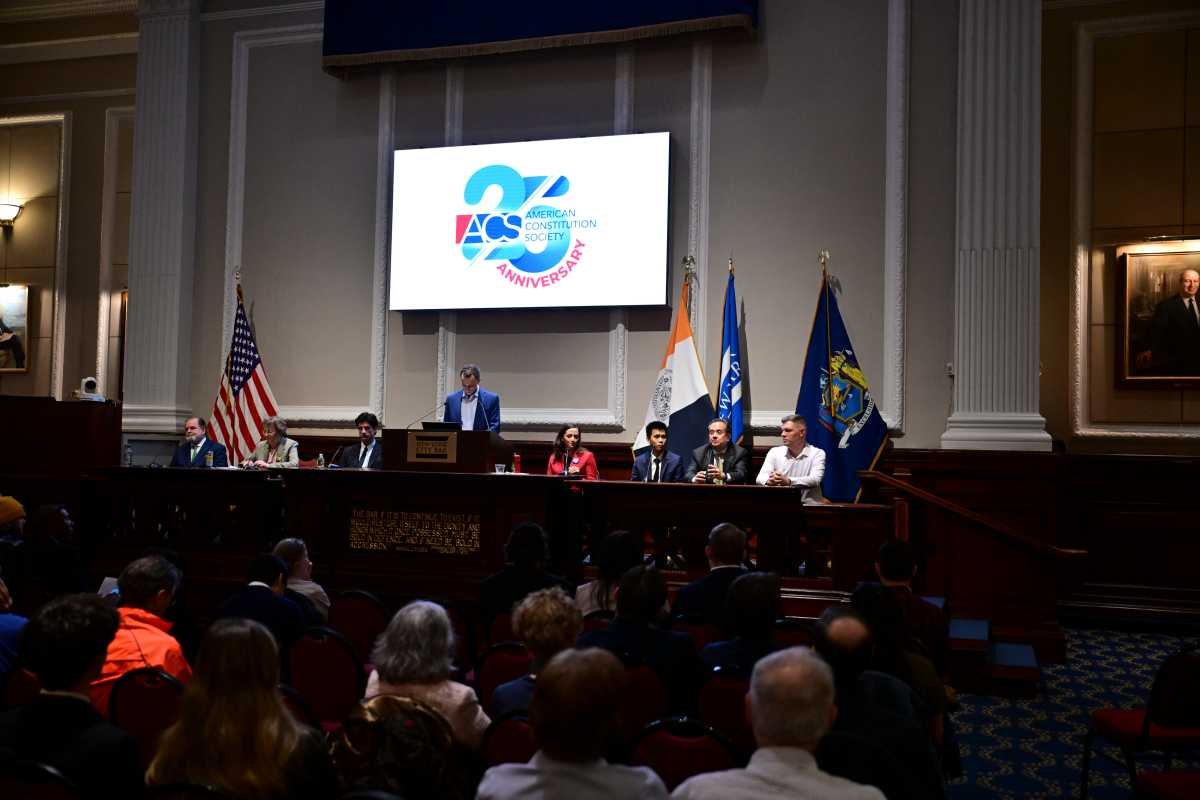
When some candidates convened last week, the topics were mostly the familiar ones of a Manhattan Democratic primary: housing, health care, transit, democracy reform and foreign policy.
Older voters were not an explicit focus of the event. But some of the issues that surfaced — affordability, accessibility, public safety and health care — overlapped with the concerns of the electorate now expected to dominate the June 23 primary. Schwalbe made that connection most directly when she pointed to the Americans with Disabilities Act and the Older Americans Act while arguing that many subway stations in the district still lack elevators and that basic street infrastructure remains inaccessible.
The seven candidates onstage offered sharply different versions of what kind of messenger the race demands. Jack Schlossberg made campaign finance the centerpiece of his pitch, saying his campaign does not accept money from super PACs, corporate PACs, AIPAC or major AI technology companies, and using the forum to criticize outside spending tied to absent rivals. Later, he called for overturning Citizens United and passing the John Lewis Voting Rights Act.
But because there was more room in the forum, without Bores and Lasher, Schlossberg also had to fill in some of the gaps around his own candidacy.
When moderator Ben Max pressed him on experience after he cited the campaign itself as his top public accomplishment, Schlossberg responded by pointing to work at the State Department under John Kerry, environmental policy work around the Our Ocean conference, involvement with the JFK Library, his role campaigning for Biden and Harris, and his local volunteer work. He also said he passed the bar in the top 1% nationally.

Conway offered a more traditional rule-of-law sell and said he would pledge to serve no more than two terms because he was there for a “very special purpose.” He said Trump “needs to be impeached and removed,” cast himself as an experienced lawyer suited to that fight, and later argued that Congress must reassert itself through investigations, spending power, and impeachment.
Asked about his shift from Republican to Democrat, Conway said he was still “a conservative in the sense that I want to conserve things.”
Dunn struck a more openly anti-establishment tone. In her opening statement, she described herself as a civil rights attorney who sued Trump in his first administration over Title IX and LGBTQ rights.
Later, she backed congressional and Supreme Court term limits and restrictions on stock trading by public officials, and she delivered the night’s sharpest intra-party attack when she went after Schlossberg by referring to him as “a trust fund candidate,’ as well as Speaker emerita Nancy Pelosi’s endorsement of his candidacy.
Schlossberg answered by defending Pelosi as “a hero of mine” and “the backbone of the Democratic Party.”

Schwalbe leaned heavily on executive and public health experience. She said she had delivered billions of vaccines, worked in more than 100 countries, negotiated with governments including Russia, North Korea, and India, and lowered the cost of cervical cancer vaccines by 65%. She proposed what she called the American Health Security Act, tying health care, housing, and accessibility together in her case for the district’s needs.
Timmons presented himself as a “radical pragmatist,” highlighting his background as a former Bronx assistant district attorney and longtime litigator.
He said he opposed impeaching Trump and abolishing ICE and used the forum to promote an immigration “blue card” proposal for undocumented immigrants who had lived in the country for 10 years, contributed to society and stayed out of trouble.
Micah Bergdale made transit and structural reform central to his case. He said Congress lacks people with real transportation expertise, pointed to his work helping launch what became NYC Ferry and electric vehicle programs in the South Bronx, and proposed increasing the size of the House so districts would be smaller and campaigns more local.

Diep, a software engineer, framed his candidacy around economic anxiety and fading upward mobility. He said he was running because he saw the American dream that worked for his refugee father becoming harder to reach.
The clearest policy split came on foreign policy, especially Israel and Iran. Bergdale said the U.S. “cannot subsidize” Benjamin Netanyahu’s government. Dunn said the U.S. should end ongoing support for Israel unless it recognizes Palestine and abides by international law.
Schlossberg said opposing the war in Iran means opposing funding for it, including offensive military assistance to Israel.
Conway said Israel should be held accountable for violations of international law, but added, “Israel is our ally” and “I would not abandon them.”
