
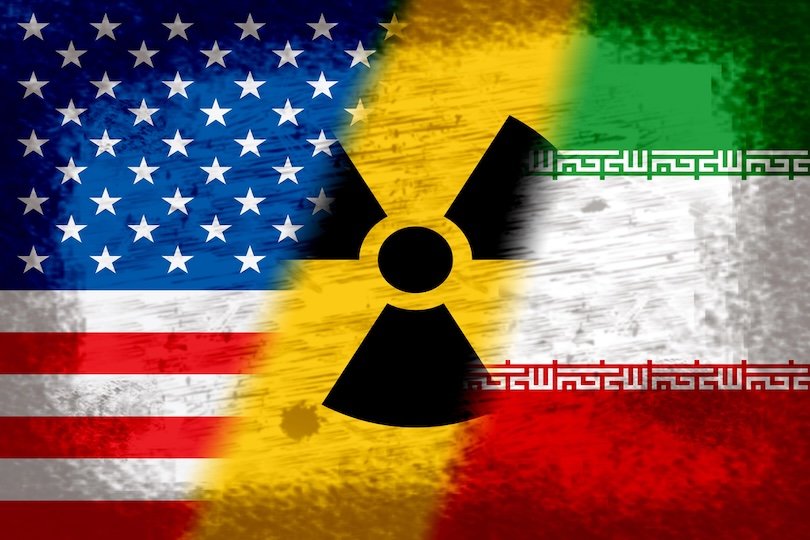
One of the most significant obstacles to any durable agreement between the Islamic Republic of Iran and the United States is the divergence of their strategic red lines. While Washington has, over the past two decades, consistently sought to make Iran’s missile capabilities, military capacity, and regional influence part of the negotiation agenda, Tehran has considered these areas non-negotiable components of national security and deterrence, refusing to discuss them. The result has been a persistent deadlock, one that has not only hindered broader agreements but, particularly over the past year, has contributed to heightened tensions and even the risk of military confrontation. The central question, therefore, is whether a pathway exists to overcome this deadlock—one that neither requires Iran to compromise its core red lines nor ignores the concerns of the other side.
The answer may be found in the historical experience of arms control among major powers. During the Cold War, despite unprecedented ideological, political, and military rivalry, the United States and the Soviet Union gradually recognized that an unchecked arms race could threaten both parties’ security. Consequently, a series of arms control agreements emerged, among the most notable of which were the Strategic Arms Limitation Talks (SALT), the Intermediate-Range Nuclear Forces Treaty (INF), and the Strategic Arms Reduction Treaty (START). These agreements were not designed to eliminate the opposing side’s military capabilities but rather to strike a balance between maintaining deterrence and curbing the uncontrolled escalation of the arms race. In essence, the fundamental principle was that sustainable security is achieved not through eliminating the adversary’s power but through regulating competition and managing disputes.
This experience can offer valuable lessons for Iran-U.S. relations. While the Middle Eastern strategic environment differs significantly from the global context of the Cold War, the underlying principle remains: it is possible to engage in discussions regarding military capabilities without relinquishing deterrence. In such a framework, negotiations would focus not on the existence of military power itself but on its scope and limits. Just as arms control agreements among major powers concentrated on two domains—quantity and quality of weaponry—any prospective mechanism between Iran and the United States could similarly address quantitative and qualitative indicators. Quantity refers to the number of systems and platforms, while quality encompasses features such as range, accuracy, destructive power, and other technical characteristics. Crucially, these limitations only make sense if two foundational principles are preserved: sustained deterrence and the maintenance of regional power balance.
For Iran, these two principles are particularly critical. Over the past decades, Iran’s missile capabilities have become its primary instrument of national deterrence. These capabilities were developed in an environment of restricted access to advanced weapons systems and the pervasive U.S. military presence in the surrounding region. Therefore, any discussion of potential limitations must be premised on preserving Iran’s deterrence. Equally, the regional power balance must not be disrupted. Limitations designed so that only one party bears costs while the other reaps benefits would not only be unsustainable but could become a source of new instability.
A central challenge arises from how the United States perceives the negotiation process. A significant portion of Washington’s strategic calculations appears influenced by a logic described in game theory as the “Chicken Game.” In this scenario, each side attempts to convince the other to back down at the last moment by escalating pressure. Success is achieved not through compromise but through demonstrating greater willingness to endure risk. U.S. behavior toward Iran in recent years can largely be interpreted through this lens. Even during periods of ongoing negotiations, Washington has simultaneously implemented new sanctions, intensified economic pressures, increased military presence in the region, and strengthened deterrent alliances against Iran. This approach reflects an underlying assumption in parts of U.S. decision-making: that the Islamic Republic will ultimately yield on some red lines to prevent the escalation of crisis.
The problem with this perception is that it can lead to miscalculations. If both parties assume the other will back down at the final moment, the risk of unintended confrontation increases. Cold War experience demonstrated that strategic stability arises not from unilateral pressure but from mutual recognition of power realities and limitations. Accordingly, the simultaneous application of military and economic pressure alongside negotiations conveys that the aim is coercion rather than reaching a balanced and sustainable agreement. In this context, a proposed mechanism based on mutually agreed military limitations could offer several advantages for Iran. First, it could prevent negotiation deadlocks. When the other side insists on raising missile and security issues, Tehran could respond not by outright rejection but by presenting an alternative framework—one that preserves deterrence while keeping channels for dialogue open. Second, such an initiative could enhance Iran’s international standing. Historically, arms control agreements have been negotiated primarily among major powers. Iran’s participation in such dialogues, regardless of the final outcome, would signify recognition of its strategic weight in regional security calculations.
Nonetheless, this approach is not without challenges. The most significant is ensuring compliance. The U.S. withdrawal from the Joint Comprehensive Plan of Action (JCPOA) demonstrated that even formal agreements can be affected by domestic political developments. Hence, any new mechanism must incorporate enforceable guarantees and effective monitoring arrangements. Furthermore, before presenting any proposal, internal consensus among Iran’s political, diplomatic, and military leadership on the scope and limits of engagement is essential. Decisions about which areas can be subject to limitations and what concessions should be demanded are not merely technical—they are directly tied to national security and long-term interests.
Ultimately, the success of any diplomatic initiative depends on two fundamental conditions: domestic consensus and alignment with international realities. If these conditions are met, a viable option exists that goes beyond absolute resistance and unilateral concession—one rooted in managing competition, preserving deterrence, and maintaining balance. Historical experience demonstrates that even the deepest security disputes do not render dialogue impossible. The key question is not whether Iran and the United States disagree, but whether both sides are willing to define rules for managing those disagreements rather than attempting to force the other to yield. If such a willingness exists, overcoming the deadlock of red lines moves from aspiration to a tangible possibility in international politics.
Further Reading on E-International Relations
