
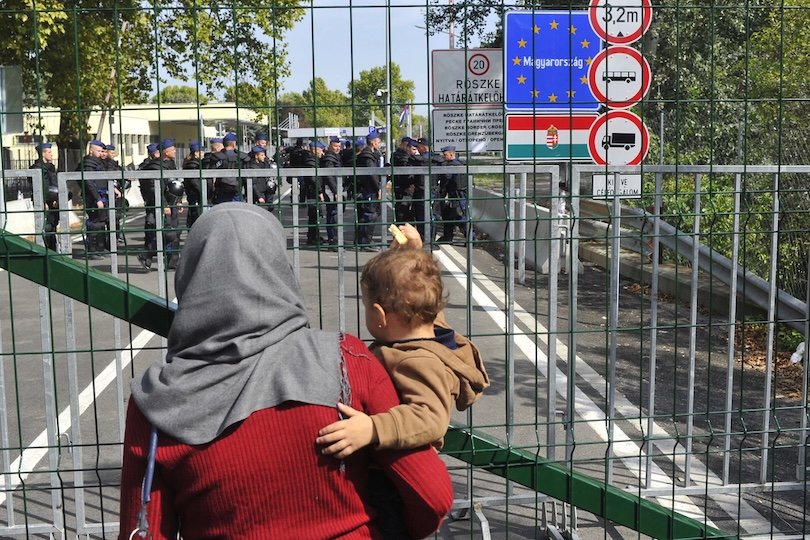
In recent years, several states have incorporated human mobility into their foreign policy strategies as a tool of pressure against the European Union. The strategy consists in deliberately manipulating flows of people — facilitating, organising, or suspending their containment — in order to extract concessions, retaliate against sanctions, or raise the bloc’s internal political costs. Europe therefore faces not only a humanitarian and administrative problem, but a problem of inability to deter and coerce in its immediate neighbourhood. This emerges at a moment when the EU is undergoing a reconfiguration of its strategic environment. The trade tensions reopened by the Trump administration, the pressure on Greenland, and Ursula von der Leyen’s own acknowledgement that Europe can no longer rely exclusively on the “rules-based” order form the framework within which the bloc appears increasingly unable to structure its neighbourhood and increasingly exposed to the decisions of external actors. In that context, the instrumentalisation of migration constitutes a direct expression of the asymmetry of power.
The specialised literature offers precise analytical categories for this phenomenon. Kelly Greenhill described coercive engineered migration as the deliberate use of migrant populations to generate political pressure on destination states. Fiona Adamson and Gerasimos Tsourapas developed the concept of migration diplomacy to show that cross-border mobility can be integrated into strategies of negotiation, retaliation, or extortion. The value of these frameworks does not lie in cataloguing migrants as a threat — the threat lies in the states that use them instrumentally — but in identifying that, where there is a deliberate will to manipulate flows, the phenomenon acquires a strategic dimension that purely humanitarian or policing responses cannot resolve on their own.
The precedents of this pattern are not recent. Libya had already turned migration cooperation into a bargaining chip before the collapse of the Gaddafi regime, threatening to open the central Mediterranean routes if European pressure increased. In May 2021, Morocco offered a briefer but equally illustrative version of the same mechanism: after the hospitalisation in Spain of the leader of the Polisario Front, Rabat relaxed its controls around Ceuta, allowing nearly 8,000 people to cross in just two days. The message was transparent and low-cost for the sender: Europe’s southern borders can be turned into diplomatic leverage with considerable speed.
The Turkish case raised this logic to another scale. The EU-Turkey statement of March 2016 formalised a negotiation in which Ankara offered to cooperate in reducing flows along the Aegean route and to accept returns from Greece in exchange for funding, visa liberalisation, and the relaunch of pending bilateral agendas. The scheme produced quantifiable results — more than 43,000 Syrian refugees resettled from Turkey to the EU between 2016 and 2025 — but its relevance lies not in the metrics but in the structure of power it laid bare. Turkey demonstrated that a transit state with a strategically positioned geography can turn refugee management into a first-rank diplomatic asset. Since then, every political tension between Brussels and Ankara carries the presumption that the migration question may once again be activated as leverage. We see here how, when a state exercises coercion effectively, it does not need to resort to constant threats. It is enough to sustain a certain level of credibility that the tool remains available in its instrumental stock.
The most explicit example came from Belarus in 2021. According to the European Parliament, Aleksandr Lukashenko’s regime organised the transfer of migrants from Iraq, Afghanistan, and Syria to the borders of Poland, Lithuania, and Latvia as a direct response to the sanctions imposed by the EU after the repression of the post-electoral protests of 2020. Unlike the previous cases, this was not a matter of exploiting a pre-existing flow or relaxing established controls: it was a matter of constructing a route for the express purpose of applying pressure. The episode had two weighty consequences. The first was that Brussels formally incorporated the category of “instrumentalisation of migration” into its regulatory framework, as reflected in the 2024 Pact on Migration and Asylum. The second was that several member states responded with border closures and derogations that reopened difficult debates on proportionality and fundamental rights. Lukashenko’s manoeuvre achieved exactly what he sought: distributing political costs inside the bloc.
The northern front added a further layer. From late 2023, Finland denounced Russia for facilitating the movement of people towards its eastern border as a form of pressure articulated with Finland’s accession to NATO. The response was the closure of all land crossings in December 2023 and the adoption, in July 2024, of specific legislation against the instrumentalisation of migration, later extended until December 2026. The case confirms that this phenomenon is not confined to the Mediterranean and does not require actors with large reserves of available migrants. It is a tool that any state with the capacity to operate along border corridors can activate. What matters is not volume: it is the type of vulnerability that is being exploited.
The pattern that emerges is consistent. European vulnerability is not explained solely by geography or by the magnitude of the flows — which in 2024 included more than 239,000 irregular crossings detected by Frontex and more than one million asylum applications in the EU+ area. It is explained, above all, by the political architecture of the bloc: a union of states with divergent interests, slow procedures, demanding legal standards, and electorates increasingly sensitive to an issue that has consolidated itself as one of the main electoral determinants on the continent. That combination produces an asymmetry of costs: those who instrumentalise the flows bear few immediate costs, while those who must receive, process, and integrate them absorb the costs almost in full.
The appropriate response to this challenge is neither to hollow out the right of asylum nor to treat migrants as a threat. The threat is not the people who migrate but the states that use them as an instrument of pressure. Recognising that distinction is the starting point of any serious policy. Europe needs, simultaneously, genuine asylum with effective procedures that do not collapse under pressure; integration with verifiable standards and concrete monitoring mechanisms; border control that does not depend on the goodwill of actors with their own — and at times opposing — interests; and, above all, a credible capacity for coercion towards those who instrumentalise human mobility for political ends. This last dimension does not entail militarising the border or suspending legal guarantees, but rather Europe recovering strategic initiative in its neighbourhood and rebuilding the respect, grounded in the ability to project power, that deterrence requires. An actor that can be systematically pressured through its own rules, without significant consequences for whoever applies the pressure, is not protected by those rules but exposed by them. That is the paradox Europe can no longer avoid.
Further Reading on E-International Relations
