
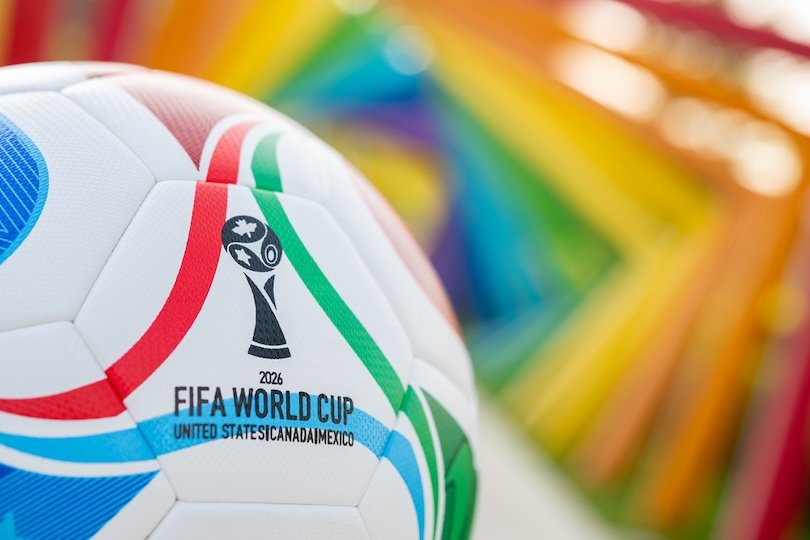
Who had it right? Was it George Orwell who called sports “war minus the shooting”, or Nelson Mandela who said that sports can “create hope where once there was only despair.” The answer turns on the empirical record and a deeper truth: sports and politics brings together two of the great undertakings of human society. Accordingly, sports on the international stage deserves serious scholarly consideration. 2026 is a banner year for international sports mega events. February’s Winter Olympics, held in Italy, and the FIFA World Cup, held across North America in June and July, anchor the international sporting calendar. At the same time, world politics is on a knife’s edge. Simply put, sports is a lens through which classic concerns of International Relations and political science are refracted.
Let’s start with the grandest concern of them all: world peace. Any speech from a FIFA or IOC president would be incomplete without pieties about the unifying power of sport. These claims draw upon the ancient Greek idea of ekecheiria – an Olympic truce – the idea that warring factions would lay down their arms during the games. In actuality, the Olympic truce only meant safe passage for travellers, not a ceasefire. At best, the spirit of a sporting truce has a mixed record. Yes, ping pong diplomacy facilitated US-China rapprochement in the early 1970s, and yes, North Korea and South Korea marched under a unified flag in the 2018 Pyeongchang Winter Olympics. But any good example is easily parried by a negative one. There is the 1969 Soccer War between El Salvador and Honduras, a simmering conflict that was inflamed by rioting during World Cup qualifying matches. Duelling Olympic boycotts by the US and Soviet Union in 1980 and 1984 were certainly not consistent with the spirit of truce, nor were the “vicious passions” observed by Orwell during the Soviet Dynamo tour of England in 1945. The notion that sports was politics by other means became a widely accepted trope during the Cold War and still is today.
Of course, no sports impresario has ever let history get in the way of a good story. But, like second marriages, the supposed unifying power of sport and the Olympic truce represent the triumph of hope over experience. Realists would certainly eschew any optimistic assumptions about human nature or the structural incentives of anarchy. the world. Liberals may place more faith in the harmony of interests or common international norms and institutions. The debate continues.
If world peace is unlikely to be achieved through sport, plenty of other political objectives are in play. Chief among them is the great standby of political modernity: nationalism. Few things rouse the national sentiment more than having all eyes on you, as a national contingent in the parade of nations, as a host country, or both. Similarly, sports mega events are major vehicles for soft power exertion on the world stage. Host cities in wealthy countries can preen and peacock in a bid for international prestige. Other countries, through hosting or competitive success, can announce their return to respectability, as was the case with Japan’s Olympics in 1964, or matriculation to the ranks of the great powers, as China did in the 2008 Olympics opening ceremony. In the 1880s and 1890s, the US announced its early emergence on the world stage, in part, through sports diplomacy initiatives across Asia and Europe.
Post-colonial countries in the developing world can demonstrate their independence and capabilities independence and capabilities by playing host to mega-events or making a good showing in competition. South Africa’s turn as host of the 2010 FIFA World Cup is the arch example of this narrative, as were Brazil’s Olympics and World Cup duties in 2014 and 2016. Hosting games can help burnish the legitimacy or consolidate the authority of the regime that hosts a mega event, liberal and illiberal alike. The 1936 Berlin Olympics was a massive propaganda win for Hitler’s regime, as were the 2014 Sochi games in Russia, and the 2008 Beijing Olympics.
On the economic side, the most common claim is that hosting sports mega-events will accelerate economic development. For developed and developing countries, this means major infrastructure and public works projects, not to mention uncommon access to public finances. International development scholars have puzzled over this phenomenon for decades. The actual record of public expenditure and its relationship to economic development is decidedly mixed. In some cases, cities are left with expensive sports infrastructure that sit unused or unloved long after the tourists have gone. Perhaps the most absurd example is Montreal’s Olympic Stadium built for the 1976 Summer games, which remains a bottomless money pit fifty years later. Saudi Arabia has taken a different approach to economic development through sports. Its sports investments are part of a wide program to diversify the Saudi economy away from oil and attract international investment. This approach might be more sustainable than the quadrennial, one-and-done big mega event.
Sports mega events test the arch liberal claim that good things go together: principles of liberalism, democracy, human rights, as well as public policy goals like economic development, healthy lifestyles, and national unity. But of course, the ideal forms have their deviant counterparts: jingoism, corruption, graft, sportswashing, public debt, and the oppression and abuse of vulnerable populations.
Accordingly, global sports competitions are sites of protest and social contestation, which should be of interest to scholars of global social movements. Think about John Carlos and Tommie Smith raising a black gloved fist on the podium in Mexico City in 1968, protesting racism in America. In 1956, two separate boycotts marked Melbourne Olympics in response to Israel’s occupation of the Sinai Peninsula and the Soviet invasion of Hungary. In 1976, twenty-two African countries boycotted the Olympics after the IOC refused to ban the New Zealand team. New Zealand’s rugby team had played in Apartheid South Africa that same year. The most dramatic example took place in Munich in 1972 when the Palestinian terrorists kidnapped and murdered members of the Israeli national team. More recently, the 2008 Beijing Olympics became a magnet for global protests, as were the 2014 Sochi Olympics. Russian laws prohibiting “gay propaganda” earned harsh reproaches from human rights groups. And, of course, Russia’s Olympic team has been banned from Olympic competition since 2017 over its war in Ukraine, though its athletes have sometimes been permitted to compete under a neutral banner. Activists have called for a similar Olympic ban on Israel over its war in Gaza and have decried the IOC’s “double standard.”
If we set aside a state-centric view, we can observe themes at the core of intersectional IR feminist scholarship: sex, race, and postcolonial power relations. Take, for example, the practice of sex segregation that is foundational to the administration of nearly all competitive sports. It is a powerful institutionalized norm but one that runs up against circumstances that defy sex binaries. The case of Caster Semenya is, perhaps, the highest profile case. In 2019, the Olympic gold medalist from South Africa was banned from international competition for refusing to take medications that would reduce her naturally high testosterone levels. Semenya fought her case in Swiss Federal Tribunal’s Court of Arbitration for Sport and the European Court of Human Rights. She had also been subject to sex verification tests that are still part of eligibility requirements for some international sports federations. Semenya’s case brings together critiques of the racist, sexist and postcolonial assumptions that underpin sports administration. In domestic courts, transgender athletes are challenging the legal and regulatory practices of sex segregation. In the words of veteran sportswriter Sally Jenkins, it is “the single most difficult issue I’ve seen in 40 years of covering sports…[making] gambling, performance-enhancing drugs, and regulation of collegiate athletics look like tidy challenges.” For their efforts, these legal challenges have incurred backlash from anti-gender movements in a culture war over the future of global order.
Just as the United States becomes an agent of global disorder, the international sporting centre of gravity will shift to the US. In 2026 and 2028, in the final two years of Donald Trump’s presidency, the United States will host or co-host the FIFA World Cup and the summer Olympics. The 2026 FIFA World Cup will certainly be a magnet for protesters who will enjoy the protections of free speech and will have plenty to say about Trump’s foreign and domestic policies. How it will play out remains to be seen. But observers can expect every theme noted above to be on garish display.
In fact, it’s already started. The World Cup draw in December 2025 was a glittery affair, hosted by Donald Trump at the Kennedy Center in Washington DC. Trump was presented with the “FIFA Peace Prize.” Famously, Trump has lobbied unsuccessfully for a Nobel Peace Prize, even linking it to the threat to annex Greenland. Look past the theatrics and observe the underlying politics. The 2026 FIFA World Cup will be held across the US, Mexico and Canada at a time of significant tension in North America. Beyond Trump’s threats to annex Canada and to send US soldiers into Mexico to fight drug cartels, the three countries are in the middle of tense negotiations over continental trade. The USMCA trade agreement, negotiated by Trump in his first term, needs to be extended or renegotiated by July 1 – in the middle of the World Cup tournament – otherwise its sunset clause kicks in. For Canada and Mexico, access to the US market is crucial. Their export markets depend on American consumers, and their manufacturing sectors are deeply integrated with American counterparts. Trump aims to reverse all that by way of a punishing tariff regime and dismantling production networks that have developed over generations of trade. Trump calls it “America First”, US Trade Representative Jamieson Greer calls it a “Hamiltonian” economic policy. However you say it, the promise of public bickering in front of dinner guests is very real.
Trump adds an element of instability to the already-fraught interplay of sports and politics. We can expect Trump to follow the same general playbook as many other leaders when hosting international sports contests. There will be shows of nationalism and jingoism, infrastructure spending and corruption, protest and confrontation. We can hope for moments of diplomatic grace but expect moments of cringe.
What makes 2026 so interesting is Trump and the way he has mobilized sports as a vehicle for reactionary politics at home and abroad. This includes differentiating himself from conventional politics, mobilizing his supporters through sports, and instrumentalizing sports in pursuit of wider policy goals. For decades, Trump has been adept at drawing attention to himself through sports. As a presidential candidate, Trump successfully mobilized young male voters partly by meeting them where they are. For example, Trump became a visible fan of the UFC, appearing ringside at events and on related podcasts. Appealing to a politically apathetic audience turned young male fight fans into voters. As a reactionary nationalist with populist stylings, Trump has used sports as a site of grievance and political signalling, most famously raging against Black athletes who refused to stand for the national anthem. On policy, the sports element is the thin edge of the wedge for broader radical policies. Before the current war with Iran, Trump imposed travel restrictions on parts of Iran’s national soccer team, for example. This policy sits alongside his broader anti-immigration program, including ICE raids across the country. Elsewhere, in early 2026, Trump signed the “Keep Men Out of Women’s Sports” executive order, not because he’s concerned about the integrity of women’s sports, but because it aligns with the anti-trans social conservatism that animates much of his base.
History tells us that Trump will use sports as tool for promoting his own movement and his own interests. But divisive and distasteful actions may come at a cost. Politicizing sports may prove electorally costly with voters in a midterm year where Republicans risk losing control of Congress. More widely, politicizing sports may undermine the fortunes of political actors around the world that are aligned with Trump. Viktor Orban’s election loss in Hungary is a blow to the global MAGA movement and a potential sign that Trump is more of a liability to populist-nationalists. As for the United States, once the centrepiece of the liberal international order, it may suffer soft disempowerment – the diminishing of soft power capabilities when bad behaviour attracts critical attention. This happened to Qatar when its World Cup hosting duties drew attention to its exploitative treatment of migrant labour. The same may occur when a global audience, that just wants to watch soccer, is treated to the spectacle of the ugly American. Billions of people will watch the World Cup and the Olympics – academics should tune in too.
Further Reading on E-International Relations
