
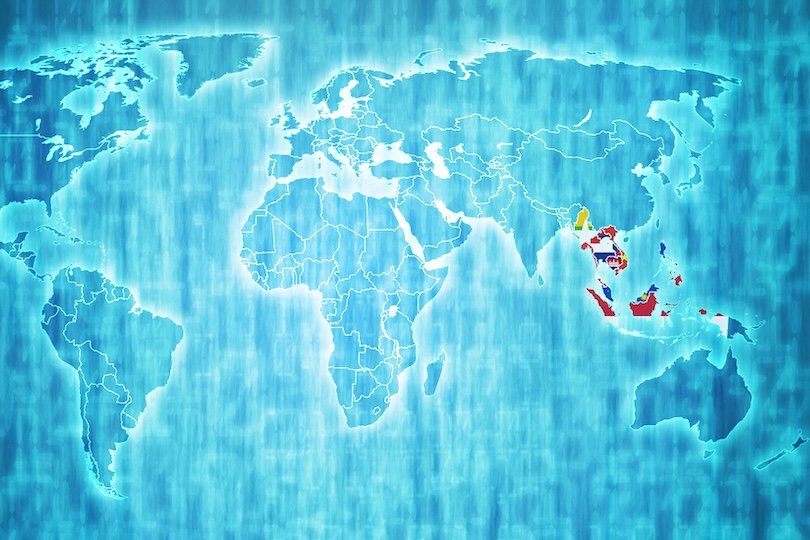
The Philippines plays host to two Association of Southeast Asian Nations (ASEAN) 48th and 49th summits in May and November 2026 respectively. Under the theme “Navigating our future, Together,” the fora focus on three strategic priorities, namely: strengthening peace and security by ensuring regional stability in a challenging geopolitical environment; enhancing economic connectivity by building “prosperity corridors” to promote shared growth across the region; and empowering people by supporting communities through inclusive and sustainable development. Planned as a “very barebones” meeting, the 48th Summit on May 8-9 in Cebu City, participated by leaders of the 11-member states is trained on urgent issues on oil supply, food security, and migrant workers. These are outcomes of global geopolitical tensions resulting from the US-Israel-Iran war.
ASEAN’s response is “serious concern” as expressed by the ASEAN’s first foreign ministers conference held on 4 March 2026. The bloc warned that the widening conflict threatened civilian lives, regional stability, and global peace, and called for an immediate ceasefire grounded in international law and the UN Charter. ASEAN called for peace without taking a definitive side in the conflict. The statement issued by the foreign ministers remains largely diplomatic boilerplate – calling for restraint and dialogue rather than taking any substantive position. Such response acknowledges the gravity of the situation on the one hand, and rests on the organization’s foundational principles of neutrality and consensus and encouragement of restraint and dialogue known as the ASEAN Way on the other hand. Itis the binding principle that underpins the concept of inter-state relation and regional cooperation.
The 49th Summit on November 10-12 in Manila is intended to be the full-scale, comprehensive gathering of the year with ASEAN’s heads of government and its 11 dialogue partners. Key topics for discussion are regional and global strategic issues, including maritime security, the situation in the South China Sea, and other geopolitical challenges apart from political, economic, and socio-cultural issues. The Manila summit is deemed essential for discussing long-term strategy and other major geopolitical matters that require the involvement of larger global powers.
Although unanimity, practiced through consensus-based decision-making, is a fundamental, cornerstone principle of ASEAN, unity is largely rhetorical. In reality, member states respond differently based on domestic politics, and foreign policy traditions. The diversity of the region in terms of ethnicity, religion, culture, political system, economic dependencies, territorial stakes, and strategic alignments circumscribe the differences in foreign policy priorities and limits united regional action.
Muslim‑majority states articulate from strong condemnation of US-Israeli actions and Muslim solidarity (Malaysia, Indonesia, and Brunei); US‑aligned states prioritise stability, economic security (Philippines, Singapore, Thailand, and Vietnam); and mainland Southeast Asian governments remain largely disengaged (Cambodia, Laos, and Myanmar). While ASEAN can articulate principles, it cannot compel coherence nor compliance. Member states navigate the global crises through their distinct national lenses, shaped by domestic politics. True to its structure, ASEAN did not act as a unified bloc.
The most consequential dimension of ASEAN’s diversity lies in framing the Code of Conduct in the South China Sea (CoC). What is contentious in the negotiations on the Code is the fundamental split between states that have direct maritime claims in the South China Sea and those that do not. Claimant states – Philippines, Vietnam, Malaysia, and Brunei – have direct sovereign interests at stake and therefore push for a strong, legally binding CoC with clear definitions and enforcement mechanisms. On the other hand,non-claimant states – Cambodia, Laos, Myanmar, Thailand, Singapore, Indonesia (partially), and Timor-Leste – have varying degrees of indifference or active disinclination to antagonise China over disputes that do not directly affect them. These states are less interested in solving or even managing the CoC issue and further not inclined to risk China’s displeasure as it may be contrary to their national interest. This effectively leaves the claimant states –the Philippines and Vietnam, in particular – often standing alone to hold the line in negotiations with China.
As Chair of ASEAN 2026, the Philippines is confronted with unprecedented strain. It is bound to adopt ASEAN’s strategy of neutral balancing and strategic hedging, allowing the region to maintain its stability while avoiding alignment with major power. In the face of varying and competing national interests of the organizations’ member states, ASEAN’s response to the US–Israel–Iran conflict needs to reflect a careful balance between normative commitments and strategic interests. ASEAN emphasis on neutrality, consensus-based decision-making, diplomacy, and international law underscores the Chair’s role as a stabilising actor in global politics.
Given the plurality of ASEAN across cultural, ethnic, linguistic, religious, and political spectrums and the ASEAN Way of arriving at decisions, negotiations between ASEAN and China may be difficult despite the agreement that CoC would be finalized in 2026. Completing the CoC depends not on confrontation, but on disciplined diplomacy that leverages ASEAN institutions to manage – rather than solve – enduring tensions with China.
Since its inception in 1967, ASEAN has been more effective as a diplomatic forum and economic facilitator. It has facilitated impressive economic integration, growing intra-regional trade significantly, and its collective GDP now represents one of the world’s largest economic blocs, with a collective nominal GDP exceeding ($4) trillion. If considered a single entity, ASEAN ranks as the world’s fourth-largest economy, behind only the United States, China, and Japan. The ASEAN Free Trade Area (AFTA) and broader frameworks like the Regional Comprehensive Economic Partnership (RCEP) have significantly deepened economic ties in Asia.
However, the diversity of the region and its ‘ASEAN way’, both a political glue and its greatest weakness, prevented it to make decisive collective action on hard problems like the Myanmar’s coup (2021), South China Sea disputes, and human rights issues particularly the Rohingya crisis among others. The variety of political systems in the region – democracies, authoritarian states, communist governments – and vastly different economic systems make regional unity challenging. In spite of its socio-political-economic- and cultural mix, it is widely considered the world’s second most successful regional organization after the EU, acting as a crucial diplomatic hub and fostering peace in a highly diverse region. Its effectiveness is defined by its ability to bring together competing powers, though it often struggles to enforce binding agreements and address internal crises.
ASEAN’s record shows that its value lies less in resolving sovereignty disputes than in sustaining a diplomatic ecosystem in which all parties are engaged. As to the political commitment of ASEAN and China to finalize the CoC in the 49th ASEAN Summit, it is unlikely that such will be completed due to the contentious issues of legal status, geographic scope, enforcement mechanisms, and outside interference. Evidently, the Philippines’ success in Chairing ASEAN 2026 would not be defined by the resolution of engrained disputes in South China Sea (SCS), but by whether ASEAN emerges from effectively performing its core functions: as the primary forum for regional diplomacy; as a platform that helps lower the risk of miscalculation at sea; and as a mechanism that prevents maritime tensions from overwhelming cooperation in other domains.
ASEAN’s internal diversity does not necessarily jeopardise CoC entirely but does ensure the any eventual agreement will be a political compromise rather than a forceful, and legally binding instrument that claimant states have sought for over two decades. This concession will likely manifest in ambiguous language on geographic scope, soft formulations on the use of force and law enforcement activities, and the absence of robust enforcement or dispute‑settlement provisions. The Philippines’ chairmanship will not transform the strategic landscape, but it can strengthen ASEAN’s role as the region’s primary diplomatic buffer at a moment of heightened Sino‑Philippine tensions.
A political compromise CoC, while falling short of the legally binding instrument long sought by frontline claimants, would nonetheless carry significant implications for member states. For the Philippines, Vietnam, Malaysia, and Brunei, it would underscore both the limits of ASEAN multilateralism as a security provider and the continued need for parallel hedging strategies with external partners. For non‑claimant members, a softer agreement may be preferable if it preserves ASEAN unity and avoids open fractures with China. Institutionally, such a compromise would establish a normative floor – codifying minimal expectations of behaviour at SCS – while leaving space for more ambitious bilateral or minilateral arrangements among willing states. In this sense, 2026 functions less as an endgame than as a test of whether ASEAN can maintain coherence and diplomatic relevance under increasingly adverse conditions.
Further Reading on E-International Relations
