
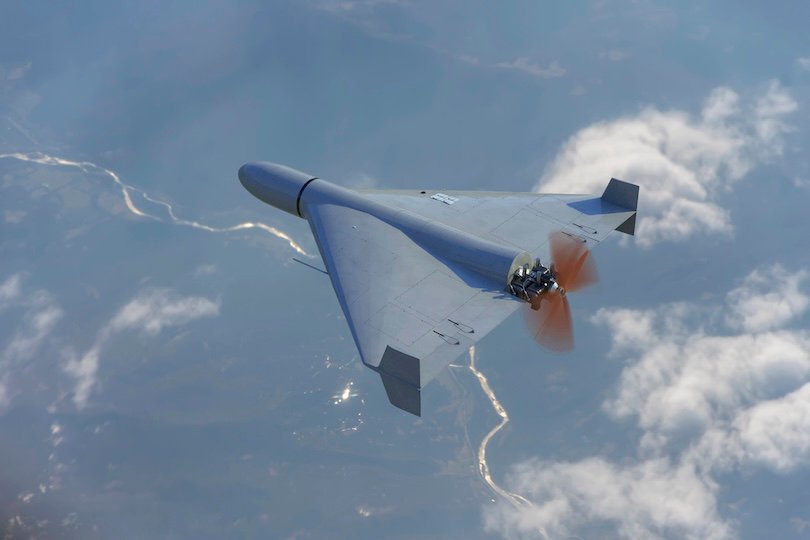
The recent drone strike on RAF Akrotiri has pushed the UK’s Sovereign Base Areas (SBAs) in the Republic of Cyprus to the forefront of the news and raised questions about their continuing status as a British Overseas Territory (BOT). On 1 March, a Shahed‑type drone believed to have been launched by Hezbollah struck the runway at Akrotiri, causing minimal damage. This was followed by the interception of two further drones heading towards the base. In response, the nearby Akrotiri village was evacuated and families living at the base were moved to temporary accommodation in Cyprus. On 3 March, UK Prime Minister Kier Starmer revealed that the UK was deploying two Wildcat helicopters equipped with counter-drone systems and sending the air‑defence destroyer HMS Dragon to the region.
The attacks on the base provoked two-fold criticism of the UK by the Cypriot government. Firstly, the Cypriot High Commissioner to the UK said his government was “disappointed” at the amount of information shared with residents in the SBAs (who are Cypriot) after the drone attack. Secondly, the Cypriots were unhappy that the base was being used for military purposes, arguing that an earlier statement by Starmer on 1 March lacked clear assurance that the SBAs would be used only for humanitarian purposes. According to reports, Cyprus had asked that the UK restrict the use of the bases to humanitarian activities only. In response to a question as to whether Cyprus would seek to renegotiate the status of the bases, the Cypriot spokesperson said, “in this context, we not ruling anything out”. So, the key questions are why does the UK have bases in Cyprus, how do they operate, and is there a risk that Cyprus might request that the land be returned?
When Cyprus became independent in August 1960, the UK retained Akrotiri and Dhekelia under full British sovereignty, together covering just under 100 square miles (approximately 3% of the island). This arrangement was a non‑negotiable British requirement in the independence talks, intended to secure a continuing UK strategic presence in the Eastern Mediterranean. The Treaty of Establishment remains the key document setting out the legal status of the SBAs and how it operates. The UK’s approach to governance set out in ‘Appendix O’ of the Treaty, emphasises three principles: ensuring the effective use of the SBAs for military purposes, cooperating fully with Cyprus, and protecting the interests of those who live or work within the Areas.
Originally, the boundaries of the SBAs were drawn to incorporate the military installations while avoiding towns and villages. However, three Cypriot enclaves are located within the Dhekelia SBA, and approximately 12,000 Cypriots now live inside the Areas. Around 60% of SBA land is privately owned and intensively farmed, while only 20% is owned by the Ministry of Defence and another 20% is SBA Crown land, which includes forests, roads, rivers and the Akrotiri Salt Lake. There are around 6,000 UK service personnel and their families on the military bases, but they are not permanently resident. So, there is the unusual situation that in a British sovereign territory, the only permanent residents are Cypriots.
As a result, there is close cooperation between the two countries in relation to civilian matters. Cypriots have unrestricted access to and through the SBAs, and this is reflected in ‘Appendix O’, which bars customs posts or frontier barriers and allows free movement between the Republic and the Bases. The UK also commits that, as far as possible, Cypriots in the SBAs live under laws equivalent to those of the Republic—an obligation that guides SBA Ordinances and keeps them closely aligned with Cypriot legislation. Alongside assurances on property rights, the UK asks the Republic to deliver a broad range of public services in the SBAs. This is formalised in the 2007 Delegation of Functions Ordinance, enabling Cypriot authorities to handle education, health, welfare, taxation, postal services and other administrative tasks on behalf of the SBA Administration. As a result, daily life for Cypriots living or working in the SBAs mirrors that in the Republic, with Cypriot institutions carrying out most civilian‑facing responsibilities.
This bespoke relationship was supported for two decades by both the UK and Cyprus being EU-member states, but Brexit posed a challenge (as it did for Gibraltar, where finally a draft agreement between the UK, Spain, and Gibraltar has been published). Brexit raised concerns that new customs rules could breach the 1960 treaty not to create frontiers between the SBAs and Cyprus. Thus, the UK–EU Withdrawal Agreement included a dedicated protocol on the SBAs, which preserved the status quo. The protocol allowed the SBAs to remain within the EU customs territory, with Cypriot authorities handling customs and indirect taxation for civilian goods, with oversight from the European Court of Justice. Military goods and personal effects of UK personnel stayed under UK control. So, governance of the SBAs is a patch-work, with arguably most of the day-to-day civilian activities being undertaken by the Cypriots under the framework of EU law.
Relations between the UK and Cyprus over the Sovereign Base Areas (SBAs) have generally been good since 1960, but disputes have periodically flared up—often shaped by a triangular dynamic involving the US. One of the earliest and most significant examples occurred in 1973, when Prime Minister Edward Heath refused a US request to use RAF Akrotiri to supply Israel during the Yom Kippur War. The refusal illustrated the fact that, although the SBAs were a cornerstone of Britain’s strategic presence in the region, London did not always permit US military activities from Cypriot territory, setting an early precedent for fluctuating patterns of coordination between the two allies.
Such tensions re‑emerged in later decades. In 2002, controversy broke out when the Blair government used the SBAs in its so‑called ‘dodgy dossier’, claiming that Saddam Hussein’s missiles could reach Cyprus. These claims, amplified by sensationalist UK tabloid coverage, caused unease on the island. Further, a 2015 article by Richard Clogg discussed events from 2008, when leaked US diplomatic cables revealed that secret American U‑2 reconnaissance flights over Lebanon and Iraq were being operated out of Akrotiri. Although the missions were run by the US, they raised concerns in London about potential complicity in unlawful actions. When the UK sought tighter oversight, Washington objected, calling the proposed restrictions “burdensome” and “unrealistic”. There were also worries about how the Cypriot government might react if they learned about the flights.
Against this backdrop of intermittent collaboration and disagreement, the UK’s political approach to the SBAs has shown a degree of flexibility. Britain’s repeated offers in 2003, 2009, and 2015 to return approximately 45 square miles of SBA land in the event of a settlement to reunify Cyprus suggest that, despite formal claims of perpetual sovereignty, the territory surrounding the bases is not inherently inviolable. Rather, it can be placed on the negotiating table when wider diplomatic considerations are in play.
Another influence is the 2019 International Court of Justice’s ruling on the Chagos Archipelago, which I have discussed previously. Cyprus supported seeking the opinion and later called it a “legal tool” for reassessing the SBAs. Its submission emphasised parallels: UK insistence on retaining sovereign enclaves; limited Cypriot participation in the 1959 Zurich/London negotiations; and independence conditioned on British bases. However, important differences remain—including, Cypriots formally consenting to the SBAs’ creation, no forced displacement of the local population, and the areas operating within strong UK-Cyprus administrative cooperation. Nevertheless, at a time when the Chagos handover is causing much political division, it is important to note Cyprus’ interest in how it will conclude.
The recent drone strike on Akrotiri was momentous, as it was the first time since 1986 that the base had been attacked. In 1986, a Lebanese guerrilla group, the United Nasserite Organization attacked the base with mortars, grenades, and small-arms fire. After the attack, a Beirut‑based newspaper claimed: “[It] is a strong blow to Margaret Thatcher. The attack was never targeted against the Government of Cyprus or the friendly Cypriot people”. It was in response to US aircraft using Akrotiri to bomb Libya as part of Operation El Dorado Canyon. Therefore, it is not surprising local Cypriot reaction to the drone strike has been critical. Local criticism has centred on fears that the island’s future security is being shaped by decisions made in London (and Washington) rather than Nicosia. Protesters argue that the British presence leaves Cyprus exposed to regional conflicts and that the long‑standing arrangements no longer reflect the island’s interests or sovereignty.
While the fallout from the Akrotiri drone strike has sharpened Cypriot criticism of the SBAs, such tensions are not unprecedented. The UK’s continued presence on the island has long been contested at moments of political stress, and history suggests that relations often stabilise once immediate pressures subside. Yet the episode underlines a central truth: for the SBAs to function effectively, they must rest on cooperation, transparency, and the consent of Cyprus. London’s previous willingness to place significant portions of SBA land on the negotiating table shows that compromise is possible, even if—amid the domestic political sensitivities surrounding the Chagos handover—any substantive concession currently appears unlikely. At the same time, recent events, combined with the altered geopolitical environment after Brexit, have exposed the vulnerabilities of these unusual sovereign enclaves.
British sovereignty over the SBAs is not in imminent jeopardy, but the episode serves as a reminder to the UK, Cyprus, the US, and EU that these distinctive remnants of the post‑colonial settlement cannot be taken for granted: they remain strategically important, politically sensitive, and deeply interconnected with the island’s security and governance.
Further Reading on E-International Relations
