
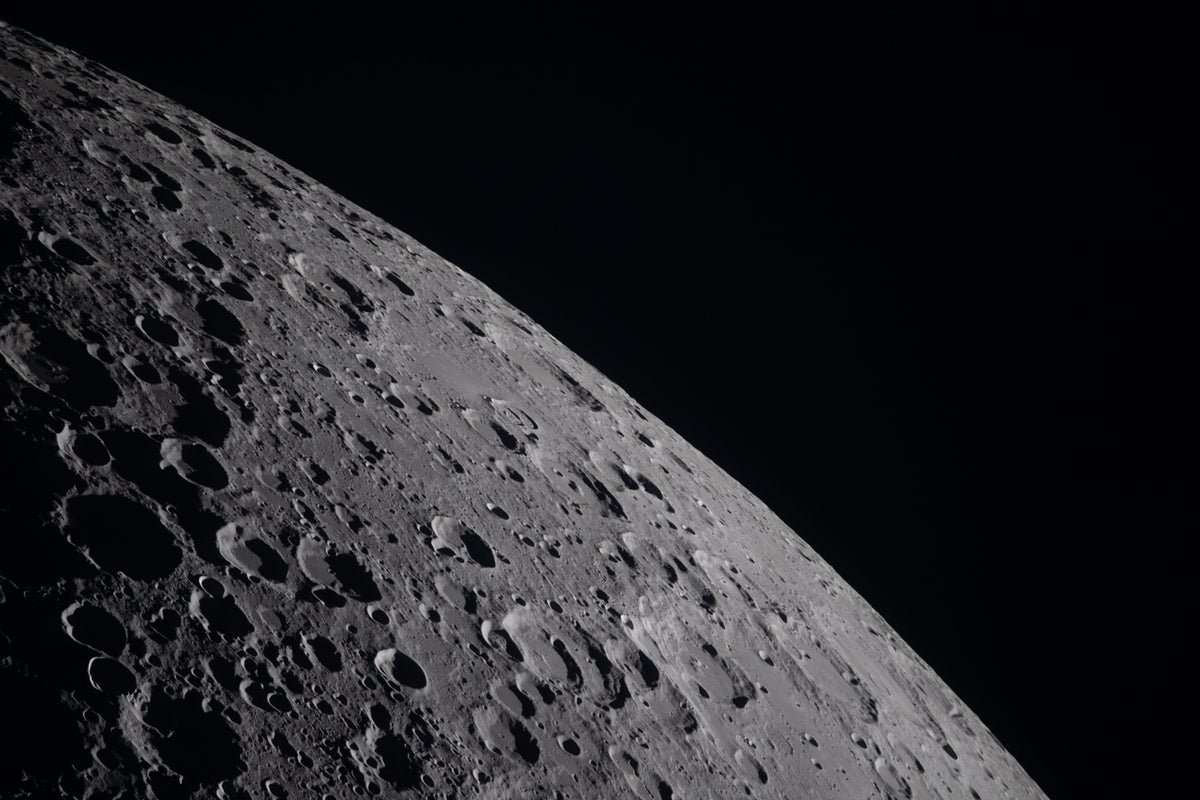

NASA just dropped more than 12,000 Artemis II photos—here’s how to see them
Want to go to the moon? Travel vicariously through the more than 12,000 photos NASA just posted from the Artemis II mission
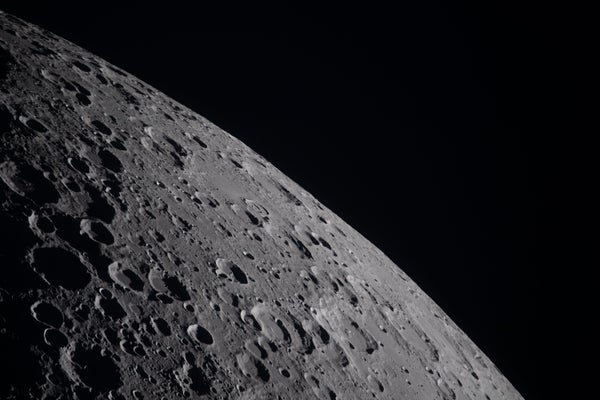
A view of the crater-scarred lunar surface captured by the Artemis II mission.
The Artemis II mission may have been a work trip for the four astronauts onboard, but it was also the journey of a lifetime—and NASA just published the first big batch of photographs the crew took to share their experience with the rest of us.
Artemis II launched on April 1, made its closest approach to the moon on April 6 and returned to Earth on April 10. During the 10-day mission, NASA astronauts Reid Wiseman, Victor Glover, and Christina Koch and Canadian Space Agency astronaut Jeremy Hansen captured thousands of snapshots. But because NASA prioritized mission-essential communications, we Earthlings saw just the occasional photograph during the voyage.

A view of Earth captured by the Artemis II mission.
On supporting science journalism
If you’re enjoying this article, consider supporting our award-winning journalism by subscribing. By purchasing a subscription you are helping to ensure the future of impactful stories about the discoveries and ideas shaping our world today.
Since the crew—and their full memory cards—have landed, NASA staff have been busy. “There’s a Herculean effort that goes on at the Johnson Space Center with the teams that actually have to take all these data and get them into the mission data infrastructure that allows us to process them and get them out,” said Kelsey Young, a planetary scientist at NASA’s Goddard Space Flight Center and lunar science lead for the Artemis II mission at the agency’s Science Mission Directorate, to Scientific American last month. “The amount of data that they are now wrangling to try to get into the system is huge.”
The public’s first glimpse at that bounty—and the work it takes to organize it—comes via NASA’s Gateway to Astronaut Photography of Earth website, which now hosts 12,217 photographs from the mission. The site’s primary search mechanisms have not been updated to include the Artemis II mission yet, but you can access the complete collection at this link. Note that it will take a while to load.

A view of the moon showing Orientale Basin, a key feature of interest to the Artemis II science team.
You can pull up an image at random by clicking Search Photos, scrolling down to Search Using Other Methods and entering a code, although there won’t always be a result to display. The photographs currently available may not represent the full Artemis II collection, given that the image codes run from ART002-E-168 to ART002-E-30001, suggesting there may be some 18,000 more to come.
The Artemis II lunar science team has until October, six months from the mission, to publish its preliminary reports on science and operations, plus the full Artemis II dataset, including all mission’s moon images.

An image of half of the moon, with image artifacts caused by the window of the Artemis II Orion capsule.
Those images’ final destination will be NASA’s Planetary Data System, which houses data from every NASA mission that has been relevant to planetary science. Voice recordings that the Artemis II astronauts made during their flyby of the moon will also eventually be available there, along with a user’s guide compiled by the mission’s science team to help researchers make the most of the information.
The science team, which includes about 60 people, was eagerly poring through mission images when Young talked to Scientific American. The team members’ first step was understanding what they had—just like any other photographers, the Artemis II crew snapped their share of blurry shots and misfires.

An Artemis II photograph shows the glow of a tiny bit of sunlight peeking out from behind the moon during the total solar eclipse the crew experienced on April 7, 2026.
Next, the science team members have to orient themselves in each image’s view of the moon and the lunar features on display. But for researchers, Young said, the most important moment will be pivoting from looking at individual features to filtering those views through the top 10 science priorities for the mission.
Those science objectives include studying color and brightness, which can be clues to geological history; observing the flashes that mark a meteoroid striking the lunar surface; better understanding locations considered potential landing sites for future missions; and analyzing the wispy atmosphere and any lunar dust it contains.

Darker patches of the lunar surface represent lava flows, while lighter areas represent less dense crust.
But while we wait for their initial findings, there are plenty of gorgeous images to gaze upon. “It’s hard not to just absolutely melt into a puddle of awe and amazement at some of the really spectacular ones,” Young said of going through the mission images. Enjoy finding your own favorites!
It’s Time to Stand Up for Science
If you enjoyed this article, I’d like to ask for your support. Scientific American has served as an advocate for science and industry for 180 years, and right now may be the most critical moment in that two-century history.
I’ve been a Scientific American subscriber since I was 12 years old, and it helped shape the way I look at the world. SciAm always educates and delights me, and inspires a sense of awe for our vast, beautiful universe. I hope it does that for you, too.
If you subscribe to Scientific American, you help ensure that our coverage is centered on meaningful research and discovery; that we have the resources to report on the decisions that threaten labs across the U.S.; and that we support both budding and working scientists at a time when the value of science itself too often goes unrecognized.
In return, you get essential news, captivating podcasts, brilliant infographics, can’t-miss newsletters, must-watch videos, challenging games, and the science world’s best writing and reporting. You can even gift someone a subscription.
There has never been a more important time for us to stand up and show why science matters. I hope you’ll support us in that mission.
