
India’s water politics has once again come under scrutiny following the remarks of Nishikant Dubey, a Bharatiya Janata Party Member of Parliament, who on May 30 publicly criticized the India–Bangladesh memorandum of understanding on water sharing. Speaking in Parliament, Dubey alleged that “Farmers in Bihar, Jharkhand, and Uttar Pradesh are committing suicide without water; silt has accumulated in the Ganga, but the water goes to Bangladesh? The Teesta River is the lifeline of Sikkim–we could generate electricity and irrigation, but the water goes to Bangladesh? The Brahmaputra is the lifeline of Assam and Bengal, but the water goes to Bangladesh?”. His statement reflects a growing nationalist discourse in India, where transboundary agreements are increasingly framed as concessions that weaken domestic priorities. While such rhetoric may resonate with constituencies in Bihar, Jharkhand, and West Bengal, it obscures the realities faced by downstream countries like Bangladesh, which already receives a minimal share of water due to its geographical position.
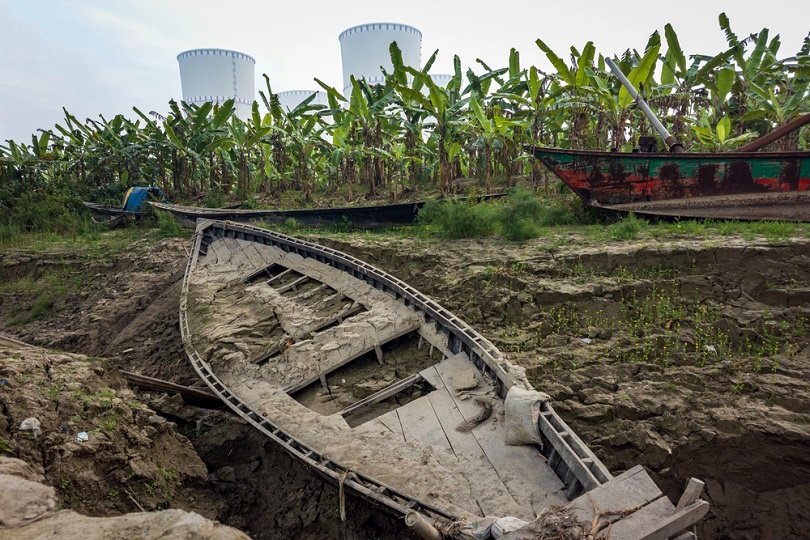
The controversy comes at a critical juncture. The Ganges Treaty, signed in 1996 for thirty years, is set to expire in December 2026. That the agreement was hailed as a landmark in South Asian hydrodiplomacy provided Bangladesh with guaranteed dry-season flows at the Farakka Barrage. Yet even under the treaty, Bangladesh has struggled with ecological degradation and economic hardship. It is evident that reduced flows have contributed to riverbank erosion, salinity intrusion in coastal areas, and declining agricultural productivity. Farmers in northern Bangladesh complain of shrinking irrigation supplies, while the Sundarbans mangrove ecosystem has suffered biodiversity loss due to rising salinity levels. These impacts translate into displacement, rural poverty, and mounting pressure on urban centers as communities migrate in search of livelihoods.
India’s increasingly assertive stance on water sharing reflects a hegemonic approach to regional resources, which is completely against India’s own foreign policy, that is, the neighbourhood first policy. By consolidating control over shared rivers, New Delhi signals that domestic political imperatives outweigh cooperative arrangements. Dubey’s remarks, echoed by other nationalist voices, frame water as a realist zero-sum resource where any allocation to Bangladesh is portrayed as a loss to India. This narrative disregards the principles of equitable and reasonable utilization enshrined in international water law, including the Helsinki Rules and the UN Watercourses Convention. It also ignores the fact that Bangladesh, as a downstream nation, is structurally dependent on flows originating outside its borders—over ninety percent of its freshwater comes from rivers that rise in India, China, Bhutan and Nepal.
Bangladesh has attempted to respond with a more assertive diplomatic posture. In 2025, Dhaka acceded to the UNECE Water Convention, becoming the first South Asian country to join the framework. This move was widely interpreted as an effort to internationalize its water concerns and strengthen legal leverage in negotiations. More recently, in May 2026, the Bangladeshi government approved the construction of the Padma Barrage, a project intended to enhance water storage and irrigation capacity. While the barrage reflects a desire for self-reliance, critics warn that it risks replicating the ecological damage associated with Farakka if not carefully managed.
The expiration of the Ganges Treaty presents both risks and opportunities. India has signaled that climate change and rising domestic demand necessitate a renegotiation of terms, potentially reducing Bangladesh’s share. For Dhaka, this is a moment to insist on transparency and accountability. Joint monitoring of flows at Farakka has long been a demand from Bangladeshi negotiators, who suspect that diversions exceed agreed allocations. Establishing robust mechanisms for data sharing and verification would help rebuild trust and ensure compliance. At the same time, Bangladesh must push for basin-wide agreements that cover all fifty-four shared rivers, not just the Ganges and Teesta. Fragmented treaties leave smaller rivers vulnerable to unilateral diversion, compounding ecological stress.
The stakes are high. Water scarcity in Bangladesh is not merely an environmental issue but a matter of national security. Declining flows exacerbate food insecurity, undermine rural economies, and fuel social unrest. They also intersect with broader geopolitical dynamics. China’s dam-building on the Brahmaputra and Nepal’s hydropower projects add layers of complexity to South Asia’s river politics. In this context, India’s unilateralism risks destabilizing regional cooperation and eroding its credibility as a responsible power. For Bangladesh, aligning with international frameworks and mobilizing global support is essential. By highlighting India’s behavior in forums such as the UNECE Water Convention, Dhaka can draw attention to the asymmetries of power that characterize South Asian hydropolitics.
Bangladesh’s negotiating position must be firm and principled. It should emphasize that equitable sharing is not a concession but a legal and moral obligation. Invoking international law, Dhaka can argue that upstream diversions which cause significant harm to downstream states violate established norms. It should also underscore the ecological consequences of reduced flows, from salinity intrusion in the Sundarbans to declining agricultural yields in Rajshahi and Khulna. These impacts are not confined to Bangladesh; they reverberate across the region, undermining food security and biodiversity. By framing water sharing as a collective challenge rather than a bilateral dispute, Bangladesh can appeal to broader regional and global audiences.
At the same time, Dhaka must prepare domestically. Projects like the Padma Barrage should be pursued with rigorous environmental safeguards to avoid repeating the mistakes of upstream interventions. Investments in water-efficient agriculture, groundwater management, and climate-resilient infrastructure are critical. Strengthening research and data collection will also enhance Bangladesh’s bargaining power, allowing it to present evidence-based claims in negotiations. Civil society and academic institutions can play a role in amplifying these concerns, ensuring that water politics remains a matter of public debate rather than elite diplomacy.
The nationalist rhetoric emerging from India, exemplified by Dubey’s remarks, is a warning sign. It suggests that future negotiations may be shaped less by cooperative principles and more by domestic political calculations. For Bangladesh, the challenge is to resist being cornered into accepting diminished flows. This requires a combination of principled diplomacy, international advocacy, and domestic preparedness. The expiration of the Ganges Treaty is not merely a technical deadline; it is a watershed moment that will determine the trajectory of South Asian water politics for decades to come.
As the clock ticks toward December 2026, the choices made by both India and Bangladesh will shape the destiny of millions. If rivers become instruments of cooperation, they can sustain livelihoods, ecosystems, and regional stability. If they become flashpoints of conflict, the consequences will be dire. The responsibility lies with both governments, but for Bangladesh, the path forward is clear: resist unilateralism, uphold principles, and fight for a future where water flows not as a weapon of power but as a source of shared prosperity.
Further Reading on E-International Relations
