
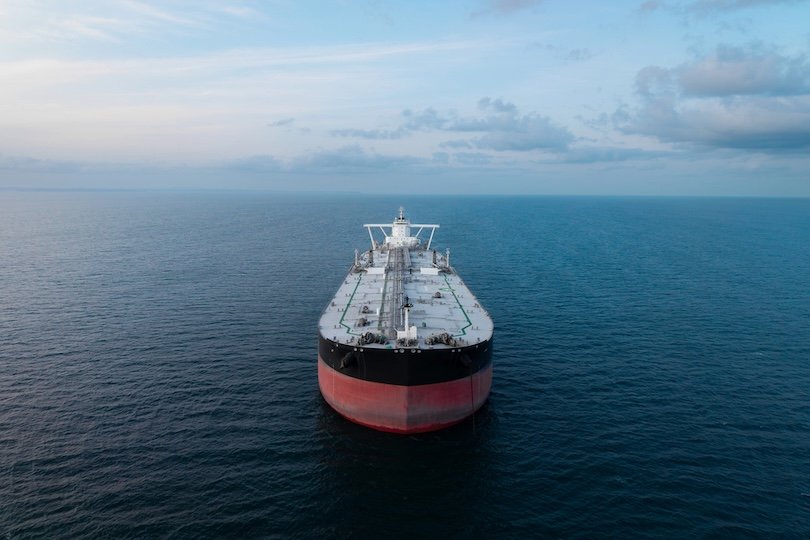
The world’s most consequential stretch of water is 21 nautical miles wide at its narrowest point. Through the Strait of Hormuz approximately 20 million barrels of oil and petroleum products per day flowed in 2025, equivalent to roughly one-fifth of global petroleum liquids consumption and one-quarter of all seaborne oil trade. Qatar alone dispatched over 112 billion cubic meters of liquefied natural gas (LNG) annually through the same passage, representing nearly a fifth of global LNG trade. When the United States and Israel launched coordinated airstrikes on Iran on February 28, 2026, and Iran responded by closing the Strait to non-aligned shipping, a theoretical risk that the military and Intelligence Community had modeled for decades has become reality. The consequences have fallen most heavily on Asia. An estimated 84 percent of the crude oil and condensate transiting the Strait in 2024 was bound for Asian markets, with China, India, Japan, and South Korea together accounting for nearly 70 percent of those flows. While the United States, the largest producer of both oil and gas, and the largest exporter of LNG and oil, has meaningful insulation. Asia, by contrast, has neither the geographic alternatives nor, in many cases, the fiscal resources to absorb a disruption of this scale without structural economic damage.
This article examines how the Hormuz closure is propagating through Asian economies via four channels: petroleum products (crude, gasoline, diesel, jet fuel), liquefied natural gas, industrial chemicals and gases (helium, sulfur, sulfuric acid), and agricultural inputs (nitrogen and phosphate fertilizers). Finally, it turns to the specific macroeconomic and political conditions of six countries, namely: Thailand, Myanmar, the Philippines, India, Bangladesh, and Indonesia – each of which are not just facing fuel shortages and price rises, but wider macroeconomic issues and even domestic political stability.
The most immediate impact was the severance of crude supply to Asian refiners. Tanker traffic through the Strait fell to less than 10 percent of pre-war levels within weeks of the closure. Brent crude surged from approximately $68 per barrel in mid-February to above $120 per barrel by mid-March and the price that Asian and Middle Eastern importers pay for delivered crude reached $132 per barrel by early April. The scale of the physical shortfall was unprecedented. Gulf oil production collectively dropped by at least 10 million barrels per day by mid-March, as Saudi Arabia’s Ras Tanura refinery was forced offline, Kuwait and Iraq curtailed output, and QatarEnergy declared force majeure. Saudi Arabia and the UAE together possess bypass pipeline capacity of roughly 3.5 to 5.5 million barrels per day, but this represents only a fraction of the corridor’s pre-war throughput. The IEA’s coordinated emergency release of 400 million barrels was the largest in its history, but provided roughly 3.3 million barrels per day at maximum drawdown rates, barely a fifth of the daily deficit. Freight rates for oil tankers rose by more than 90 percent from late February, while war-risk insurance premiums surged to levels that prompted some insurers to withdraw Gulf coverage altogether. Airlines began imposing surcharges and canceling routes due to the dual pressure of reduced fuel supply and collapsed tourism demand. Diesel, the fuel of trucks and freight, was also rationed across multiple governments.
Natural gas disruptions added a second, structurally distinct, shock to the first. Qatar, the world’s second-largest LNG exporter, dispatched some 80 percent of its sales to Asian markets before the war, accounting for roughly 20 percent of global LNG trade. Iran’s missile strikes on the Ras Laffan Industrial City in late February knocked approximately 17 percent of Qatar’s LNG export capacity offline. On March 3, QatarEnergy declared force majeure on its export contracts. Asian LNG prices immediately jumped approximately 39 percent, and subsequently surged 140 percent from pre-war levels. Bangladesh, India, and Pakistan imported almost two-thirds of their total LNG supplies via the Strait of Hormuz in 2025. Qatar and the UAE together account for 99 percent of Pakistan’s LNG imports and 72 percent of Bangladesh’s. Natural gas-fired generation accounts for 50 percent of Bangladesh’s electricity mix and 25 percent of Pakistan’s. When LNG cargoes stopped arriving it caused forced reductions in power generation capacity, load-shedding that cascades through manufacturing, and industrial output cuts in gas-intensive sectors including fertilizers and textiles. Countries competing for alternative LNG cargoes found themselves bidding against European buyers who were simultaneously scrambling to replace Qatari supply. This simultaneous demand spike in both Asian and European spot markets left price-sensitive South Asian buyers effectively priced out of the market.
Beyond oil and gas, the Hormuz closure severed supply chains for industrial commodities whose disruption was initially less visible, but whose downstream consequences proved equally serious. Qatar produces roughly one-third of the world’s helium supply, extracted as a byproduct of natural gas processing at Ras Laffan. Iranian strikes on that facility knocked offline approximately 30 percent of global semiconductor-grade helium supply within days, triggering force majeure declarations from suppliers and a spot price surge of 40-100 percent. Helium has no viable industrial substitute at scale. South Korea alone imports 64.7 percent of its industrial helium from Qatar, making Samsung and SK Hynix, the dominant players in memory chip manufacturing, dependent on an input that can only be maintained in containers for roughly 45 days before degrading. A Moody’s Ratings report warned that even with a ceasefire, Qatari helium production would not immediately resume, creating a vulnerability window of six to nine months for the most affected facilities. The semiconductor supply chain is Asian in its center of gravity. Taiwan, South Korea, and Southeast Asian fabrication hubs are all exposed.
Gulf oil and gas refining produces approximately 44 percent of the world’s traded sulfur. Sulfuric acid is an essential reagent in phosphate fertilizer production, in nickel and cobalt processing for EV batteries, in copper refining, and in the processing of uranium, lithium, and rare earth metals. The World Economic Forum noted that sulfur shortages were forcing industrial slowdowns in Indonesian nickel processing hubs and in copper production across Asia. Approximately one-third of globally traded fertilizer by volume transits the Strait, and around 1.3 million tonnes of fertilizers per month can no longer reach global markets, according to the Food and Agriculture Organization. Gulf countries account for approximately 43 percent of global seaborne urea exports and roughly 44 percent of seaborne sulfur trade. Natural gas is both the feedstock and primary energy source for ammonia production, the building block of all nitrogen fertilizers. Fertilizer firms in India, Bangladesh, and Pakistan have had to curtail or shut down production. Urea prices at major import hubs rose from approximately $516 to over $680 per tonne within days of the closure, with ammonia climbing from around $495 to $600 and phosphate crossing $700. By late March, benchmark urea prices had risen approximately 30 percent from pre-war levels, according to Carnegie.
The UNCTAD fertilizer and food security assessment noted that daily vessel transits through the Strait fell from an average of 103 in the last week of February to single digits within weeks, leaving cargo physically stranded. March is when farmers across the Northern Hemisphere order fertilizer for April and May application. Bangladesh was in the middle of its Boro rice season, requiring consistent irrigation and fertilization, and four of five state-run urea fertilizer factories had to shut down for at least 15 days. Thailand, which sources 67 percent of its nitrogen fertilizer imports from Gulf countries and 74 percent of its urea specifically, faced direct supply disruption. India, which requires approximately 17 million tonnes of urea through August 2026, faced a projected shortfall of close to 2 million tonnes after accounting for existing stocks and domestic production capacity.
Thailand exemplifies a middle-income economy where the energy shock arrived simultaneously with a fragile political moment. Prime Minister Anutin Charnvirakul had won re-election in March 2026, fresh from forming his second cabinet, with promises to lift a Thai economy that analysts had already labeled the “sick man of Asia”. The supply disruption was exacerbated on March 11, when the Thai carrier Mayuree Naree was struck by Iranian projectiles in the Strait. The incident forced the Prime Minister into a difficult diplomatic situation: Thailand has historically maintained a cordial relationship with Iran, which had helped mediate the release of Thai hostages taken by Hamas in 2023, while also being a formal US treaty ally now at war with Tehran. The government froze diesel at its pre-war level for the first 15 days of the crisis, but the price cap was costing approximately 1.2 billion baht ($37 million) per day, rapidly depleting the government’s Oil Fuel Fund, which had previously been running a deficit of over 100 billion baht. The Bank of Thailand cut its 2026 growth forecast to 1.3 percent, and the National Economic and Social Development Council warned that prolonged conflict could slash GDP growth to as low as 0.2 percent. The Tourism Authority of Thailand downgraded its 2026 revenue forecast to 1.52 trillion baht as Gulf-region and European visitor markets contracted sharply.
Myanmar has been in civil war since the 2021 military coup, and its institutional capacity to manage an external economic shock is severely constrained. It lacks meaningful domestic refineries. The junta has restricted private vehicle use to alternate days, and long queues at petrol stations have become a daily feature of urban life in Yangon and Mandalay. Myanmar’s junta was already facing shortages of jet fuel for its military aircraft, which have been the decisive instrument in its air campaigns against resistance forces. Iran had previously been a supplier of fuel and weapons components to the regime. The junta’s dependence on China and Russia for political survival means its options in response to the energy crisis are constrained by those patrons’ interests. Myanmar’s population, already impoverished by years of conflict and economic contraction, has minimal savings buffers to absorb commodity shocks. Agricultural production in areas outside military control depends on diesel-powered irrigation, and a sustained fuel shortage during the dry-season rice planting period risks producing localized food insecurity in a country already dependent on humanitarian assistance.
On March 24, President Ferdinand Marcos Jr. signed Executive Order 110, declaring a state of national energy emergency, making the Philippines the first country in the world to take such a formal step. The declaration came on the same day transport workers, commuters, and consumer groups were finalizing plans for a nationwide strike. The pressure on the streets was concrete and immediate. Diesel prices rose from approximately ₱57.60 per litre in January 2026 to ₱126–130 per litre by March 24, a doubling within weeks. Gasoline jumped from ₱54.90 to ₱94–99 per litre. The No to Oil Price Hike Coalition organized strikes involving 70,000 transport workers across 15–20 simultaneous centers in Metro Manila alone, with picket lines from Quezon City to Iloilo and Cebu. A second, three-day strike was staged in mid-April. The Philippines has a single functioning oil refinery capable of meeting only 40 percent of fuel requirements. Its emergency powers authorized suspension of fuel excise taxes, and a ₱20 billion emergency fund was released from the Malampaya gas fund. But transport unions called the declaration a “superficial band-aid,” noting it contained provisions that could restrict strikes deemed to be disrupting economic activity. The Philippine Institute for Development Studies warned that the energy crisis could push 1.3 to 3.1 million Filipinos into poverty.
India’s exposure is both large in absolute terms and partially cushioned by institutional depth that smaller economies lack. India maintains approximately 74 days of oil reserves and holds foreign exchange reserves of approximately $698 billion as of late April 2026, providing meaningful shock-absorption capacity. But the scale of India’s Gulf dependencies is substantial: over half its LNG imports are Gulf-linked, roughly 40 percent of its oil imports transit Hormuz, and 90 percent of its LPG imports pass through the Strait. LPG is the primary cooking fuel for approximately 330 million households and over 3 million businesses. Protests erupted across India over LPG shortages, with road blockades reported in Odisha and queues at fuel stations across major cities. The government directed pollution control boards to allow the use of kerosene, biomass, and coal by the hospitality sector. India’s management of the crisis was complicated by five concurrent state election campaigns, which narrowed the government’s willingness to fully pass through fuel costs to consumers. The sinking of the Iranian naval vessel IRIS Dena by US forces in the Indian Ocean added a further layer, provoking domestic debate about India’s credibility as a “net security provider” in its own maritime sphere. The Reserve Bank of India held its benchmark rate at 5.25 percent in April. Around 38 percent of India’s remittances come from Gulf countries, contributing approximately 1 percent to GDP; disruption to Gulf employment threatens this flow.
In Bangladesh, Prime Minister Tarique Rahman was sworn in on February 17, 2026, just eleven days before the US and Israel launched their strikes on Iran. The country imports around 95 percent of its energy needs and sources approximately 80 percent of its crude and refined oil from the Middle East, according to the International Growth Centre. The ready-made garment sector, which accounts for approximately 84 percent of Bangladesh’s export earnings and was worth over $48 billion in 2025. It was operating at 40 to 50 percent capacity in many factories due to gas shortages and load-shedding. Diesel reserves fell to just nine days of supply as of March 4. Troops were stationed at oil depots to prevent hoarding. Universities were closed in advance for the Eid al-Fitr holiday, ostensibly to conserve electricity and fuel. Shopping centers were ordered to close by 8pm, later revised to 6pm, with restrictions extended to cultural events. As many as 1.2 million Bangladeshis could be pushed into poverty. Beyond direct energy costs, over 7 million Bangladeshi workers in the Gulf generate nearly $30 billion in annual remittances. Disruption to Gulf employment puts this income stream under pressure at precisely the moment when the domestic economy needs it most.
Indonesia’s President Prabowo Subianto was simultaneously dealing with Moody’s and Fitch both cutting Indonesia’s sovereign debt outlook to negative in early 2026, citing governance concerns before the energy shock had even landed. The 1998 revolution that ended Suharto’s three-decade rule was partly triggered by a 71 percent spike in petrol prices. Between 2005 and 2018, Indonesia saw five riots over fuel prices. Protests in August 2025, shortly before the Hormuz crisis, had already turned violent and been suppressed by security forces. Every $1 increase in global oil prices raises Indonesia’s fuel subsidy bill by approximately IDR 7 trillion ($409 million). To finance this, the government committed to seeking up to IDR 100 trillion in savings, including cutting the free school meals program to five days per week from six, and limiting subsidized fuel purchases to 50 liters per vehicle per month. Sulfuric acid shortages from the Gulf disruption are hitting Indonesia’s nickel processing industry, which both the Jokowi and Prabowo administrations had spent years developing as a critical-minerals downstream processing hub. The loss of this upstream chemical input threatens to slow the very industrial diversification strategy that Indonesia had been pursuing as an alternative to commodity export dependency.
For monetary authorities across Asia, rising energy prices are inflationary, arguing for rate increases or at minimum rate maintenance; rising energy costs simultaneously compress growth and household purchasing power, arguing for easing. Central banks in the Philippines, India, Thailand, and Indonesia each face this tension, with their respective responses constrained by currency pressures. The war that created this crisis was launched by the United States, the security patron of the Philippines, Thailand, and, in a different register, India. Each of these governments has been forced to pursue energy diplomacy by negotiating carve-outs with Tehran, seeking sanctions waivers in Washington, and reconsidering defense agreements. The energy crisis has thus created a geopolitical wedge between economic self-interest and security alignment that will not disappear when oil prices fall. China’s massive pre-war stockpiling and its continued access to Russian pipeline gas provided buffers unavailable to South and Southeast Asian importers. The crisis has thereby reinforced China’s relative energy security advantage over its regional neighbors.
In conclusion, Asian economic development over the past four decades has been built on a foundation of cheap, reliable Gulf energy and industrial inputs. Governments across the region have discovered that fuel subsidies, once deployed, create constituencies that demand their continuation. The strategic lesson that Asian governments draw from this crisis will shape energy policy for a generation. The continent’s dependence on the Gulf corridor reflects decades of capital investment, bilateral contracts, refinery configurations, and shipping infrastructure. Unwinding that dependence takes time, courage, and lots of money.
Further Reading on E-International Relations
