
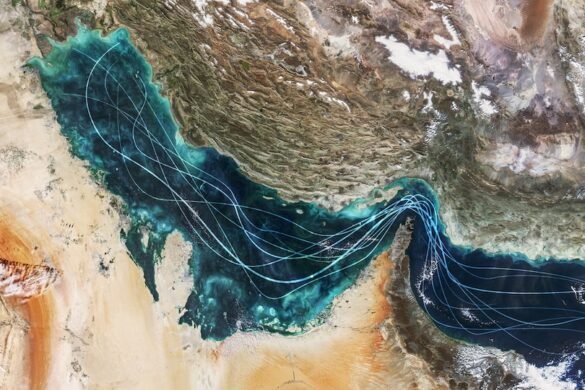
The global economy is currently experiencing a systemic shock of unusual magnitude. The closure of the Strait of Hormuz, through which roughly one-fifth of global oil consumption and about a quarter of seaborne oil trade normally flows, has disrupted a critical artery of the international energy system. Combined with escalating confrontation with Iran, the disruption has driven prices sharply upward and heightened the risk of a prolonged global downturn. However, this is not a “black swan.” It is the materialization of a “grey rhino”: a high-probability, high-impact threat that policymakers repeatedly identified but failed to address. The central question, therefore, is not why the crisis occurred, but why advanced economies remained structurally unprepared despite clear warning signals. The deeper failure was not simply poor contingency planning. It was a political-economic logic that systematically privileged efficiency over resilience.
Western energy systems were designed to minimize costs in normal times, not to absorb shocks in moments of geopolitical rupture. Deterrence reinforced this bias by making disruption appear unlikely; the energy transition accelerated it by weakening legacy redundancy before alternatives were fully mature; and democratic fiscal and electoral constraints locked it in by making costly preparedness politically difficult to sustain. The crisis, therefore, exposes not three separate failures, but a single mechanism: the chronic underproduction of resilience in systems optimized for short-term efficiency. This imbalance is not simply an economic liability; it is becoming a structural feature of geopolitical competition, as states that can sustain resilience gain increasing leverage over those that cannot.
The immediate effects of the crisis extend well beyond oil markets. Price volatility has propagated through supply chains, affecting agriculture, chemicals, and advanced manufacturing. Growth forecasts have been revised downward, with several major economies now hovering near recessionary thresholds. More importantly, the disruption has triggered a cascading “triple shock”: rising energy prices, food insecurity, and slowing growth. These effects are especially acute in developing economies, where fiscal constraints limit the ability to absorb external shocks. The crisis thus exposes not only the fragility of energy markets but also the tight coupling of global supply chains to a small number of geographic chokepoints. The Strait of Hormuz is not merely a transit route; it is a systemic node linking energy flows to petrochemicals, fertilizer production, shipping insurance, and financial expectations. When such a node fails, the effects ripple across the entire global economy. In such conditions, control over disruption or the capacity to withstand it becomes a source of strategic influence. Energy vulnerability is no longer simply a market risk; it is emerging as a lever of geopolitical power.
Deterrence was the first mechanism through which efficiency displaced resilience. For decades, Western policymakers assumed that military presence and economic coercion would be sufficient to deter major disruptions in the Gulf. This assumption fostered an illusion of stability that proved deeply misleading. Deterrence did not eliminate risk; it obscured it. The result was chronic underinvestment in resilience. Building alternative infrastructure, whether bypass pipelines, expanded storage, or diversified overland routes, required large, long-term capital commitments. In a policy environment dominated by cost efficiency and short-term returns, such investments were repeatedly deferred. Over time, this produced a structural vulnerability: a system optimized for efficiency in normal conditions but brittle under stress. The energy transition accelerated the same underlying bias by reducing investment in legacy buffers before renewable systems could provide equivalent strategic depth. The global push toward decarbonization has unintentionally reinforced this vulnerability.
Over the past decade, governments and firms have reduced investment in fossil-fuel infrastructure in anticipation of a transition to renewables. Nevertheless, the transition remains incomplete. Renewable energy still accounts for only a minority share of total energy consumption when transportation, heavy industry, and heating are included. The problem, therefore, is not the transition itself but its sequencing. The dismantling of legacy energy systems has outpaced the construction of resilient alternatives. Instead of reducing dependence on Middle Eastern hydrocarbons, the transition has, at least in the short-term, narrowed the system’s margin for error. At the same time, the shift to clean energy has introduced new dependencies. Supply chains for critical minerals and advanced energy technologies are highly concentrated, creating fresh vulnerabilities even as older ones persist. The result is not a reduction in geopolitical risk but its transformation.
Institutional constraints locked this vulnerability into place. Even when risks were visible, liberal democracies struggled to finance redundancy because their political and fiscal systems rewarded immediate affordability over long-term preparedness. Global infrastructure needs are projected at roughly $97-106 trillion by 2040, with a persistent investment gap of $15-18 trillion. At the same time, many advanced democracies face debt burdens above 100 percent of GDP, limiting fiscal space for long-term capital spending.
Liberal democracies face structural barriers to long-term investment in resilience. Electoral cycles reward short-term gains, while large-scale infrastructure projects require sustained commitment and impose visible costs long before they deliver benefits. Fiscal constraints further complicate the picture. High debt levels and competing domestic priorities limit the political appetite for costly redundancy. As a result, investments in storage capacity, supply diversification, and infrastructure resilience are often postponed or scaled back.
This dynamic contrasts sharply with the behavior of more centralized systems, which face fewer domestic constraints on long-term planning. The divergence has produced asymmetries in preparedness that are now becoming visible under crisis conditions. This asymmetry is likely to shape geopolitical competition in the coming decade, as states with greater buffering capacity can absorb shocks, stabilize domestic markets, and exert influence over more exposed economies. China matters in this argument not because it escaped vulnerability, but because it illustrates an alternative strategic logic: accepting short-term inefficiency to build long-term buffering capacity.
China offers a revealing counterpoint. As the world’s largest energy importer, Beijing has long recognized the vulnerabilities inherent in maritime dependence, often framed as the “Malacca dilemma.” China has responded by diversifying supply sources, building overland pipeline routes, expanding strategic stockpiles, and investing heavily in grid integration and domestic clean-energy capacity. Rather than relying on deterrence or market stability, China has pursued a comprehensive hedging strategy.
This approach combines several elements: diversification of supply sources, expansion of overland pipelines, accumulation of large-scale strategic reserves, and sustained investment in both fossil and renewable energy systems. By the end of 2025, China’s combined strategic and commercial crude oil inventories were estimated at roughly 1.4 billion barrels (the largest strategic oil reserves in the world), exceeding the aggregate strategic reserves of many advanced economies.
At the same time, China had established a dominant position in key segments of the clean energy supply chain, including solar panels and lithium-ion batteries, with recent assessments putting its share near 85 percent of solar manufacturing capacity and about 80 percent of battery supply-chain capacity. This dual-track strategy, reinforcing legacy energy security while investing in future systems, has enhanced China’s ability to absorb shocks and maintain flexibility under stress. This approach carries costs, including inefficiencies, overcapacity, and potential misallocation of resources, but it nonetheless strengthens China’s capacity to absorb shocks. In a more competitive international environment, such capabilities do not simply mitigate risk; they create the conditions for managing, leveraging, or even strategically exploiting disruption. China remains exposed to global disruption, but its approach reflects a fundamentally different strategic logic: one that prioritizes resilience alongside efficiency, rather than treating the two as mutually exclusive.
The crisis reveals more than uneven preparedness, it exposes a structural asymmetry between systems optimized for efficiency and systems organized around resilience. Liberal market economies tend to reduce spare capacity, rely on price signals, and defer investments that appear unnecessary in normal times. More centralized systems, by contrast, are better positioned to sustain long-term investments in resilience. They can absorb inefficiencies in the short-term in order to mitigate risks over longer horizons. This is not simply a policy difference but a structural asymmetry: the strengths of one model in normal times become liabilities under conditions of disruption. The implications are clear. Energy security can no longer be treated as a byproduct of market efficiency or deterrence. It must be understood as a core component of national and economic security.
Four priorities stand out. First, diversification of supply routes is essential. Expanding alternative transport corridors, increasing storage capacity, and reducing reliance on single chokepoints can enhance system resilience. Second, governments must adopt longer time horizons in energy planning, insulating strategic investments from short-term political pressures. Third, technological innovation, particularly in energy storage and grid management, will be critical to improving flexibility. Finally, energy policy must be integrated with broader economic security strategies, including food systems and industrial supply chains. Energy security is thus no longer a technical policy domain but a central component of grand strategy, shaping states’ capacity to compete, project stability, and absorb systemic shocks.
Without a structural shift from efficiency-first energy policy to a resilience-centered strategy, advanced economies will remain exposed to foreseeable, preventable shocks. In an era of geopolitical fragmentation, energy shocks will increasingly be instruments of strategy rather than exogenous disruptions. States will not only seek to withstand such shocks but to anticipate, shape, and exploit them. The central question is no longer resilience alone, but control. In other words, who can manage disruption, and who will be forced to absorb it?
Further Reading on E-International Relations
