
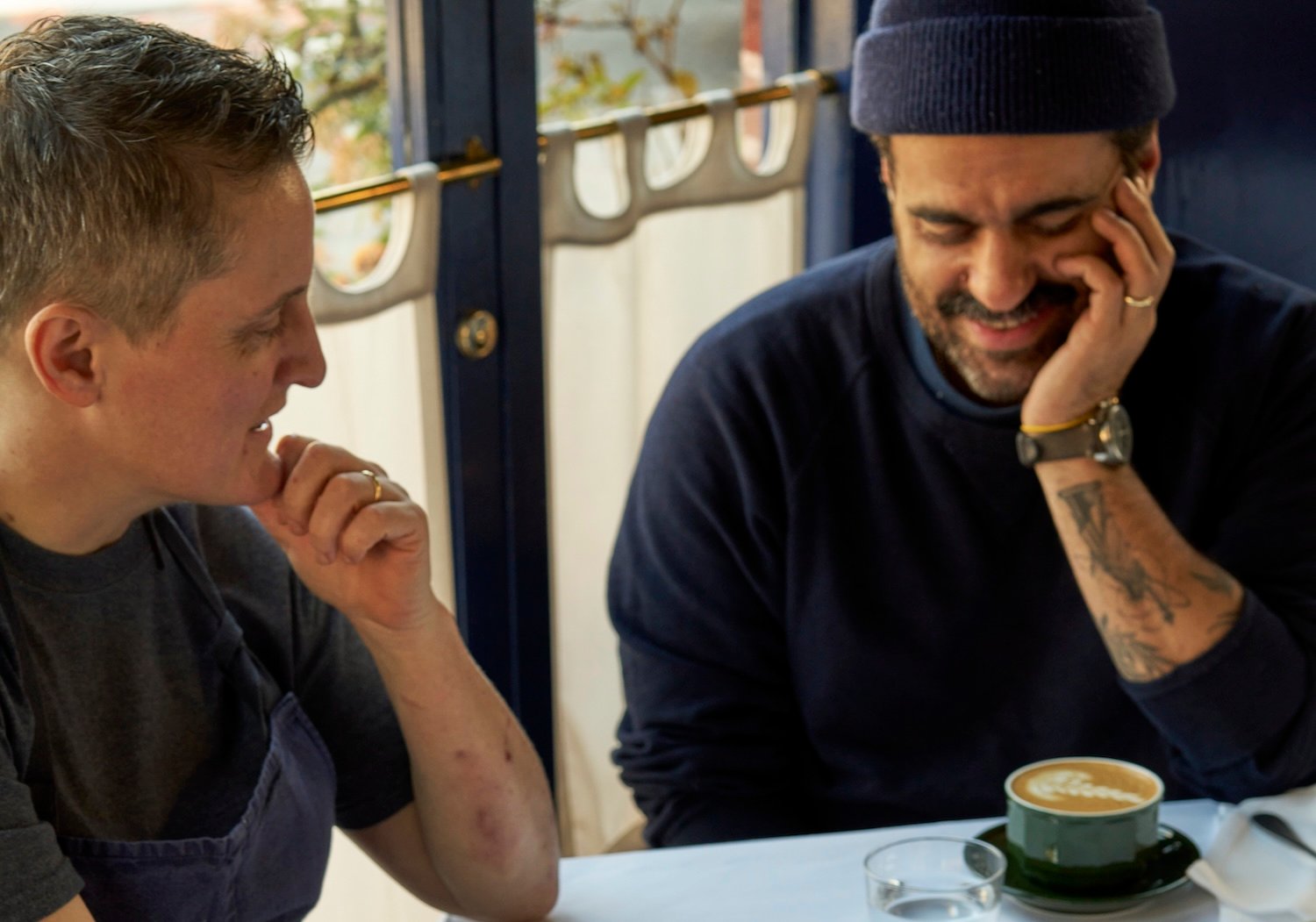
Open Kitchen is a monthly interview column covering the joys and frustrations of Brooklyn restaurant operation in all its many forms. For April, we spoke to chef April Bloomfield and Gabriel Stulman, partners at Sailor in Fort Greene.
An unusual event occurred a few weeks ago when Sailor—the platonic ideal of a neighborhood restaurant, added in 2023 to what was DeKalb’s already formidable row—announced it was reviving one of the great burgers in New York City’s storied burger history.
In Brooklyn’s niche, hyper-passionate pocket universe of online food nerds, it was met with a much smaller but no less rabid fanfare, comparable to the national panic Jay-Z inspired when he scheduled dates at Yankee Stadium later this summer to perform his masterpieces, Reasonable Doubt and The Blueprint, on their 30th and 25th anniversaries.
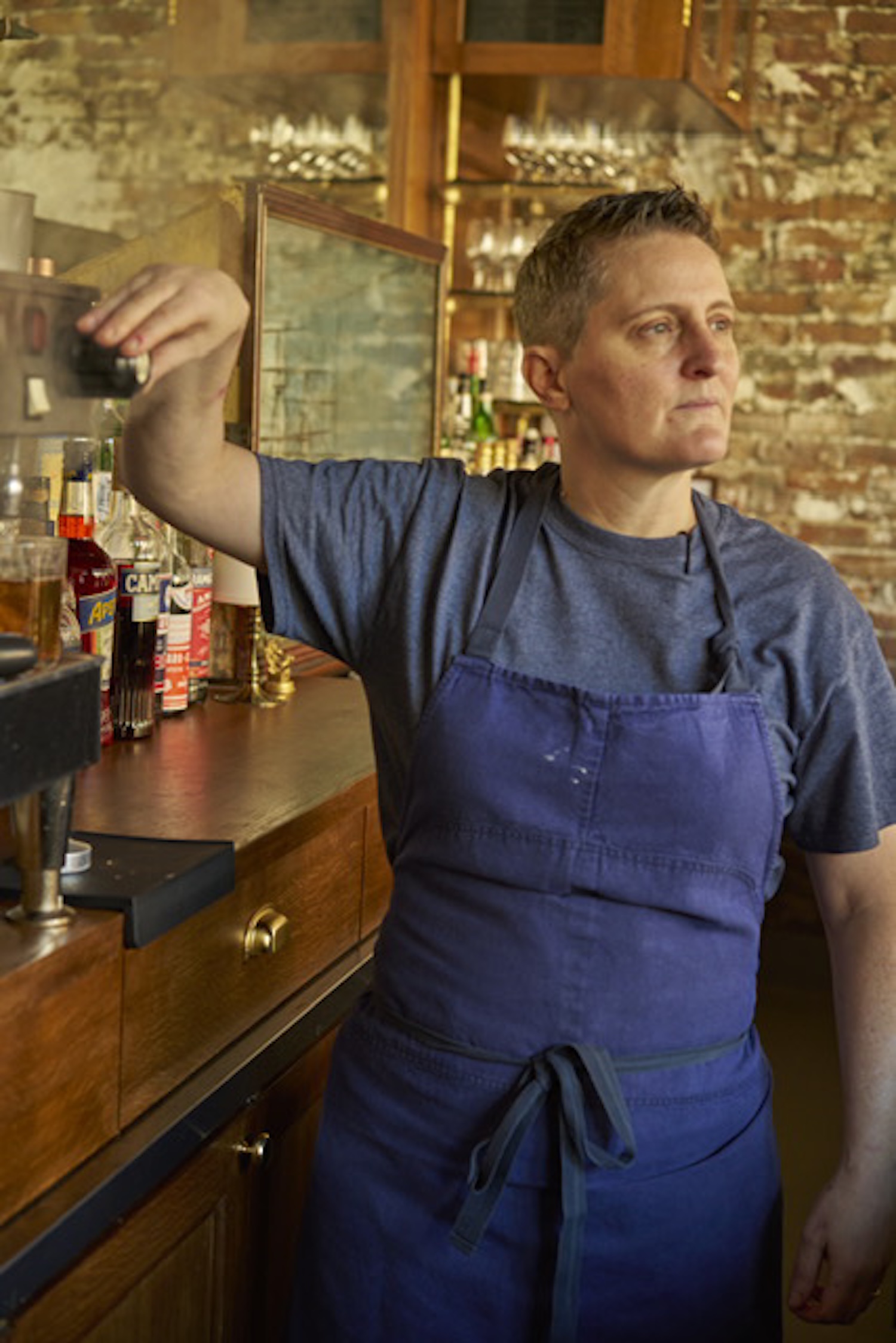
The revival of the classic burger and the classic albums have more in common than they may appear at a glance, mostly because the burger in question is the lamb burger made famous in the late-aughts at the dearly departed meat temple, The Breslin, once housed on the ground floor of the Ace Hotel in NoMad. It is the brainchild of Chef April Bloomfield, another great artist whose work dominated and defined culture in their era.
Courtesy of Sailor
Her miraculous origin story has been often retold, from an industrial city in the UK to America’s first gastropub in a building that Jay-Z owned on West 11th, two blocks from the Hudson River. The rapper ended up investing in that pub, the unfortunately, fittingly titled (in hindsight) Spotted Pig, a revelatory and paradigm-shifting establishment that made a permanent dent in American cuisine and American restaurants, and made Bloomfield one of a handful of the most influential chefs of her generation.
From a culinary perspective, Bloomfield was the perfect ambassador to bring London’s neo-barfood movement to our shores because her cooking, like that cuisine, is rooted in simplicity and execution. She is an essentialist. The perfect descriptor of nearly any April Bloomfield dish is likely tautological. I am often at a loss when attempting to describe why her Caesar salad, not a raft of romaine or crouton out of place, is so fucking Caesary, why her roast chicken is so fucking chickeny, or why her burger is so fucking burgery. It is because her cooking is rooted in extreme intentionality, isolating and concentrating intense fatted flavors specific to and indicative of the subject she’s laser-focused on.
Because her food is so intimate, because by all accounts she exists as a kind of culinary monk with few interests or hobbies—who hates leaving the kitchen and lives for 12-hour shifts– it was surprising to me, at least, that Bloomfield eventually became a national brand. She first took over the city with Spotted Pig in addition to two restaurants in the Ace, a dedicated burger concept, and a dedicated taco concept in another hotel across town, plus a high-end butcher shop. She then expanded to the West Coast with critically adored hit restaurants in Los Angeles and San Francisco. Then it all fell apart—the Front of House piece of her management equation was exposed for his many indiscretions with his staff over the decades, which led to Bloomfield divesting entirely from their empire.
Courtesy of Sailor
Sailor, her venture with Happy Cooking Hospitality magnate Gabriel Stulman, another Manhattan-first wunderkind, has been hailed as a return-to-form triumph since it opened in the fall of 2023. It was Bloomfield’s first trip across the bridge, and one so successful that it demanded an extension into a second space next door in 2025, because it was an impossible table for several years. I’d managed to slip in a few times, particularly after they extended to lunch service in 2024. The dining room would often be full, with young mothers nursing a laptop in one arm and an infant in the other, while the rest were definitively adults on lunchbreak, similarly swaddled in quiet luxury, chasing their comte omelettes with french fries and dirty martinis, or wine chosen from a bottle list with a coherent low end that practically has to offer splurges for those who may own multi-million dollar brownstones in the vicinity.
It’s a Stulman dining room, so if anyone here is working their first or second hospitality job, you’ll never be able to tell. Every server, bartender, and busser presents as a grownup, with their food and literature-related upper arm tattoos almost fully obscured by uniform white shirts under crisply laundered navy blue aprons. They approach each table as its own unique assignment, with a thoughtfulness that in no way lets on that they have a screenplay to tackle or happy hour plans down the street at Alibi (a great, long-standing dive bar refuge for the area’s hospitality industry), on the other side of service.
Perhaps influenced by the nautical decor—the rich blue painted walls and distressed porthole mirrors and pipes wrapped in dock rope and giant ceramic lobster—I always seem to associate the place, and treat it like an extension of a restaurant forged in San Francisco’s North Beach, an area defined by Italian seafood, where Bloomfield’s revival of Tosca Cafe was once located. On my last visit, there was a smoked potato and cream-mounted haddock chowder, and tempura-fried anchovy filets, each featuring one perfect sage leaf placed with Bloomfieldian precision, further supporting the idea that brine serves as less of a flavor than the pulsing bassline of the menu. The one-day salted and fridge-dried chicken further plays up the SF connection, evoking Zuni Cafe’s classic, sans panzanella stuffing, still as good as everyone said it was when the restaurant opened.
But one night a few weeks ago, I returned to Fort Greene (which I solemnly swear this column, dedicated to the entirety of our borough, will be abandoning for at least the rest of the year beginning next month), ditched my standard order and requested a stool at the bar Stulman built out with that extension, because I had to revisit that burger, as I was mustering up the courage to reach out to see if Bloomfield would want to be featured as this month’s subject.
Courtesy of Sailor
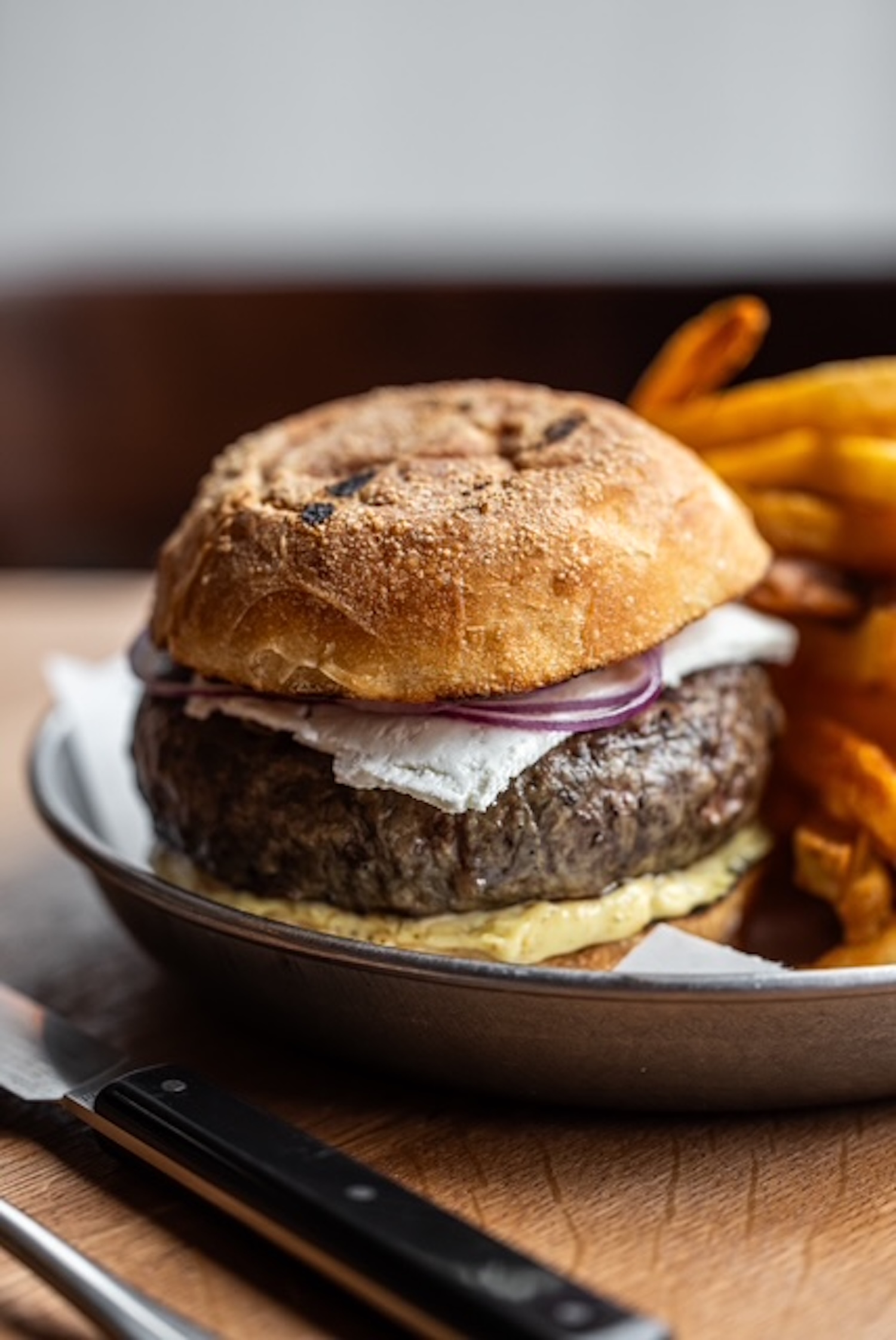
It sits tall on the plate, on a Bianca bun from Sullivan Street, with a square sheath of feta, hand-selected and separated inner rings of red onion, and a slathering of cumin mayo, with a hefty side of house-punched fries. It transported me to good times, when on a day off, or after a brunch service, I’d mill around the bar at Breslin with a pint, waiting for a lone stool at another packed bar so I could squeeze in with a book. Then I would try, but fail, to make what I considered the best burger in the city last for at least a chapter, before losing myself and devouring it in a few bites as grease rained on my dog-eared and annotated pages. Like its new iteration in its new home, it is difficult to describe it as anything but so fucking lamby.
Those were chaotic, halcyon days for both me and Chef Bloomfield. She is older now, as am I, as are you. Gone is her once trademark pulled-tight bun. Her hair has been shorn and cropped, with maybe a touch of salt mixed into the ginger since the announcement of this project. I spoke to Chef and Gabriel Stulman over Zoom a few weeks ago. She now splits her time between Sailor and a gig in Texas with a respected national hospitality group she oversees. But this afternoon, she sat on the same side of a booth as her partner, deferring, as he did much of the talking for her. It reminded me of the dynamic Bloomfield once had, and perhaps needs, in a business partner to allow for her singular focus on the pan, the flame, and the plate.
In the conversation below, I had the honor of discussing history with a legend, how she continues to pursue her passion and stay motivated decades into her career, as well as how things have changed in restaurant kitchens and on restaurant floors since the reckoning that nearly derailed Chef Bloomfield in the late 2010s, along with COVID shortly thereafter.
My impression is that perhaps at last, in a perfect, humble, contained space like Sailor, with a good faith partner who has always kept his focus on the work of caring for his staff and guests and blocking out the bullshit, she has finally found the sanctuary she was looking for.
(This interview has been edited and condensed to make me sound like less of an asshole.)
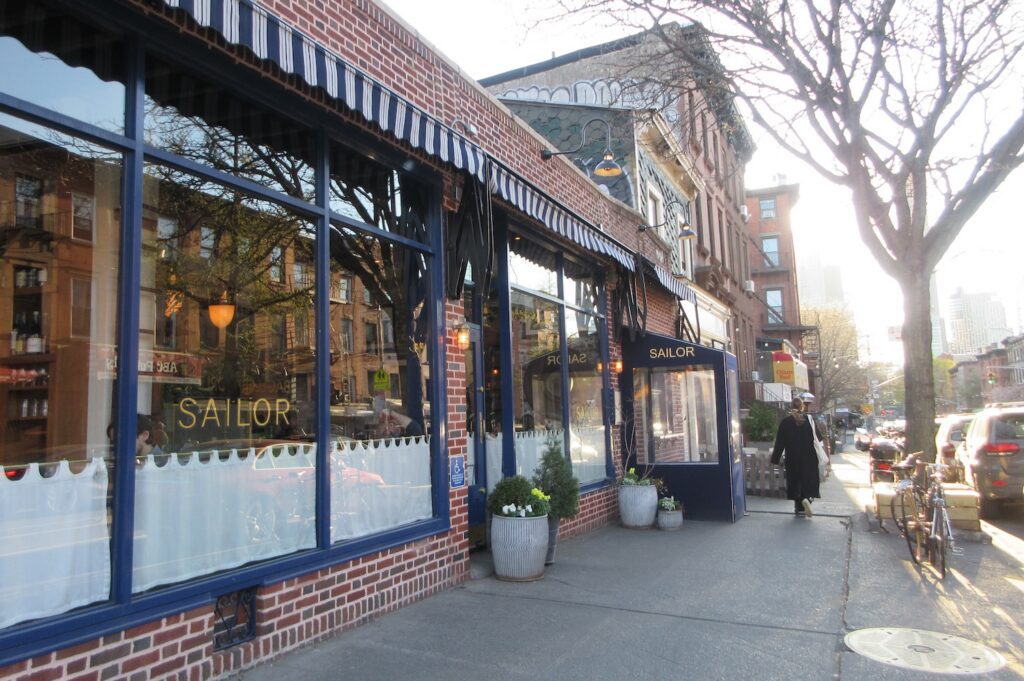
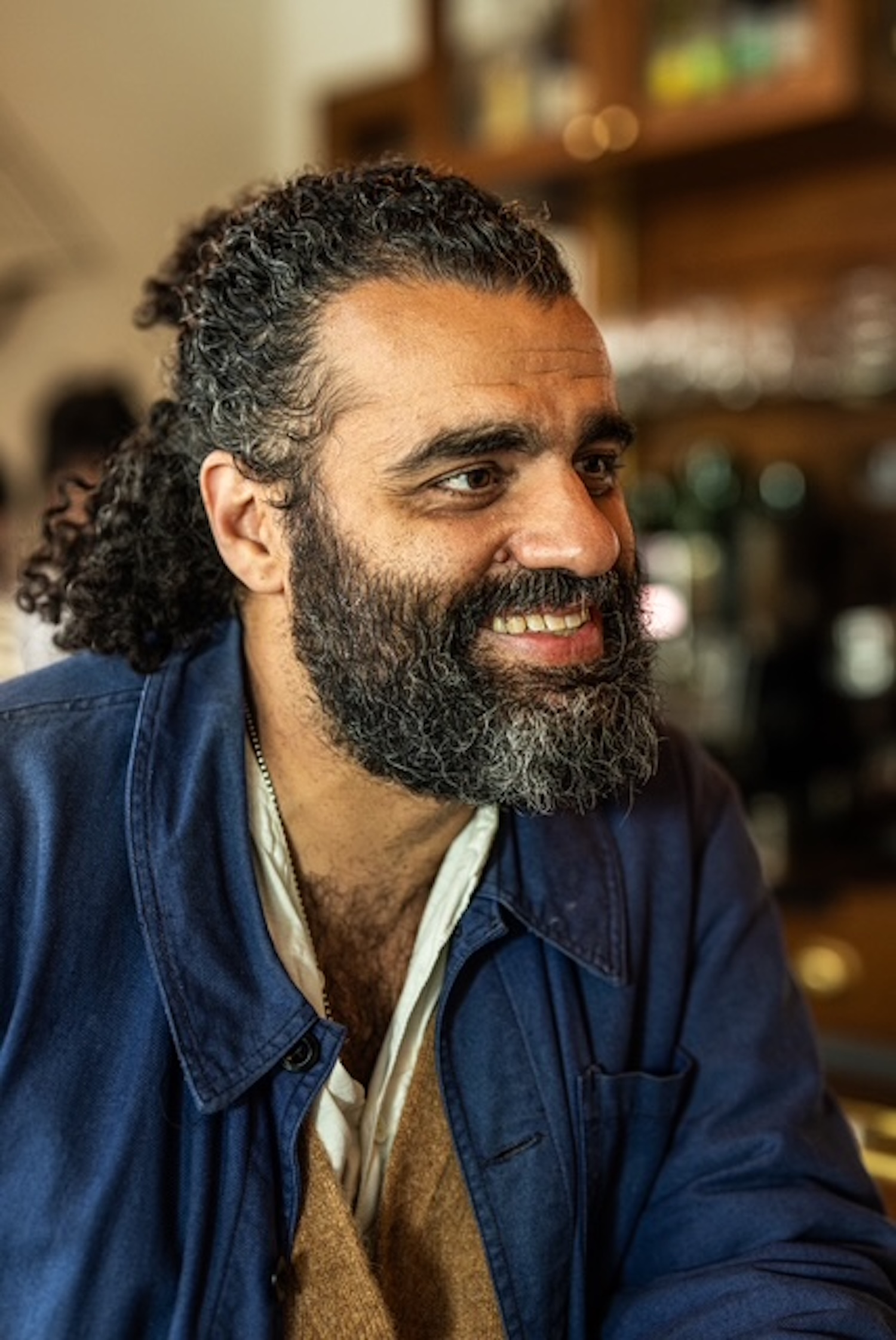
Photo by Michael Gonik
What was the thesis behind the menu and design of Sailor?
April Bloomfield: When you’ve been cooking for as long as I have, you get a repertoire. It’s a bit like having an almanac—you kind of figure out what works and what doesn’t, and what you love eating. So if maybe Sailor has a little bit of Pig, or John Dory, that makes sense because it’s all stemming from me and the food I like to eat.
For instance, I spent a lot of my career making roast chicken, most popularly at Tosca and then the Hearth and Hound. There’s nothing that screams local and neighborhood more than roast chicken. So it seemed just quite fitting to have that on. It’s a combination of the circumstances and things I’ve learned that works best in those circumstances.
I like to eat something and make it better, but not mind-bendingly. Hopefully, just make it more soulful, more layered. Maybe I take the time to caramelize an onion longer, and with more butter or more acid. So the goal with Sailor was that we wanted to create a local neighborhood restaurant that was not elevated to a 3-star—just elevated in terms of flavor profile with an elevated dining room, but still accessible.
Gabriel Stulman: Look, the reason we are working together is, first off, because we really enjoy each other’s company and have a lot of respect for each other. Secondly, I love and crave her cooking. All of my touchpoints prior to working together were the touchpoints that everyone else in New York had. So the conversation really began with, “I miss your food, April. And I think a lot of people miss your food. What if we showcase it in a new way with a new room that’s a little bit more elevated than anything that I’ve ever built or that your food has been in?”
I think there’s an elegance to the dining room of Sailor. I’m subjective and biased, but I think it’s a very elegant room. I think there’s this natural progression, like a musician or a painter. Your styles change as you grow. Your styles evolve as you grow. Your styles evolve as you travel the world. And so it was just like, April is still cooking, and I’m still building dining rooms. Maybe I’m getting better at it. I’m still serving people. Maybe I’m getting better at it.
AB: It’s the refining, it’s the perfecting every time you open. Or maybe you open a restaurant of your dreams, but then you realize it has limitations. Then you can open another restaurant that you can tweak a little bit and do something there which you couldn’t do at a previous restaurant. It’s bringing all the years of experience into one spot, which is Gabe’s experience and my experience, and the things that we love all gelling in Sailor.
There are rules around the lamb burger, from its scarcity to precisely where in the restaurant you can actually order it. Every restaurant has different reasons for why they keep hard counts on their burgers. What’s yours?
GS: When we first built Sailor, it was a smaller restaurant. Where we’re sitting right now used to be the bar. Sailor is about maybe 50% bigger now. When we first conceived of the restaurant, April and I were so crystal clear we didn’t want to have a burger at dinner in that first dining room. The thought process behind it worked on a few levels. One was we didn’t want a dining room when you walked around to see every other table leaning over a white tablecloth, eating with their hands. And with April’s incredible success with burgers, we knew if we put one on the menu, there’s a risk that that’s all people will order.
She has that context from Spotted Pig and Breslin, and obviously Salvation Burger. I have that experience at Fairfax. I think 90% of the entrees we sell at Fairfax is the burger. And so we both know what it’s like to walk into a dining room and literally every table has one or more burgers on it. It’s cool. It’s awesome. I love that you love our burger. There’s other food on the menu. So we didn’t want to start this new thing together and have it be a burger place.
Another issue was the physical layout of the space. The way the bar was before, it was very much part of the dining room. We thought it was not okay for us to walk through the dining room to a bar in the dining room and say, ‘Oh, the burger’s only available at the bar,’ but there’s a table right there. The expansion is the only reason we consider doing a burger at dinner. We also served a burger, just not at dinner. We have a lunch or brunch burger.
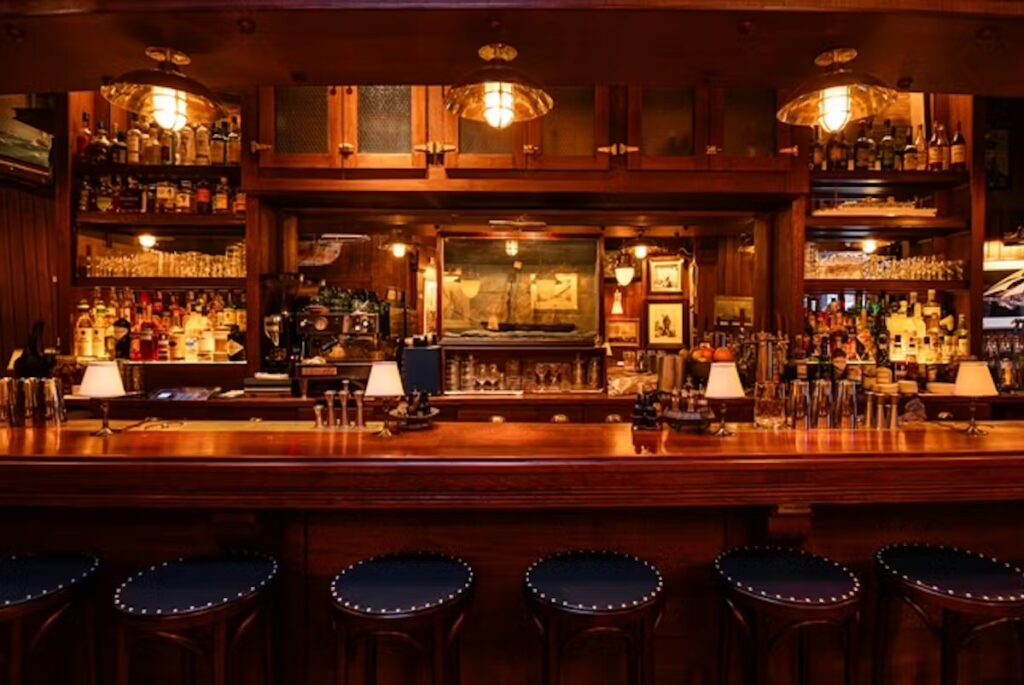
The bar room has a very different aesthetic. There’s just one small window. It’s much darker. I pitched the inspiration as Keens. I love the bar room at Keens. And what I love about the bar room at Keens is it is simultaneously a part of Keens and its own place. And at Keens, if you’re in the bar room, there’s a burger on the menu. If you’re in the dining room, there is not a burger on the menu. If you’re in the bar room, you can order the entire menu from the dining room. But if you’re in the dining room, they’ve got like 3 things that are only available in the bar room.
When we started talking about it, I was like, “You know what, if we’re gonna do a bar burger, it should be something that’s a little bit more luxurious.” Like, let’s not just serve the lunch burger at night. Let’s do something that you can only get at dinner. And I was like, look, April, I know everybody loves the Spotted Pig Burger, but personally, I miss the Breslin Burger.
AB: I’m a huge fan of Keens too, and I eat there quite a lot. My favorite area is just going to the bar, and they got that little table to the right-hand side. I don’t think everybody knows that it’s there. And it is really special to sit there at the bar and just eat in a very casual way without all the fanfare. And it’s really fun to be able to come to Sailor and have the burger and sit in the dark, moody, very sensual bar area, which is beautiful.
Courtesy of Sailor
For many years, I’ve actually been trying to get an editor to let me write a piece about why that barroom is the best sports bar in America.
GS: No takers?
I know, I know. But it’s just so niche and specific. The three of us know what a miracle that room is, but outside of food nerds, I don’t know how many people care.
GS: It shocks me that no editor wants to take you up on that, especially with its proximity to the Garden.
From your lips to God’s ears. April, what do you see as the ultimate legacy of the gastropub movement?
AB: I don’t know if I can answer that question. I wasn’t overly privy to going to those types of restaurants, and I’m not even sure I can name any of them, really. My goal when I opened The Pig—I didn’t want to cook gastropub food, you know? And so I didn’t. I just cooked the food that I knew how to cook. I could tell you what gastropub food was like coming from England, which were things like a burger or pasta that was just kind of semi-mediocre. Some were really great, like The Eagle, they were like the founders of gastropub. But yeah, I don’t know. I guess I was too busy working. I don’t really go to too many bars.
I guess it probably turned out to be like a different category, right? Like, there was really cheap, and then high-end. And I think maybe then more refined, casual dining came in. And that was Dave Chang, myself, other people that did similar things.
In your book, J.J. Goode says that you’re in your happy place when you’re cooking. Is that still true?
AB: Yeah.
You’ve been doing it for decades now. Do you–
GS: Take it easy. (laughs)
I mean, let’s say, in terms of dish creation, in terms of execution and service, is it hard to stay inspired? Are the things that inspire you now the things that inspired you when you were younger?
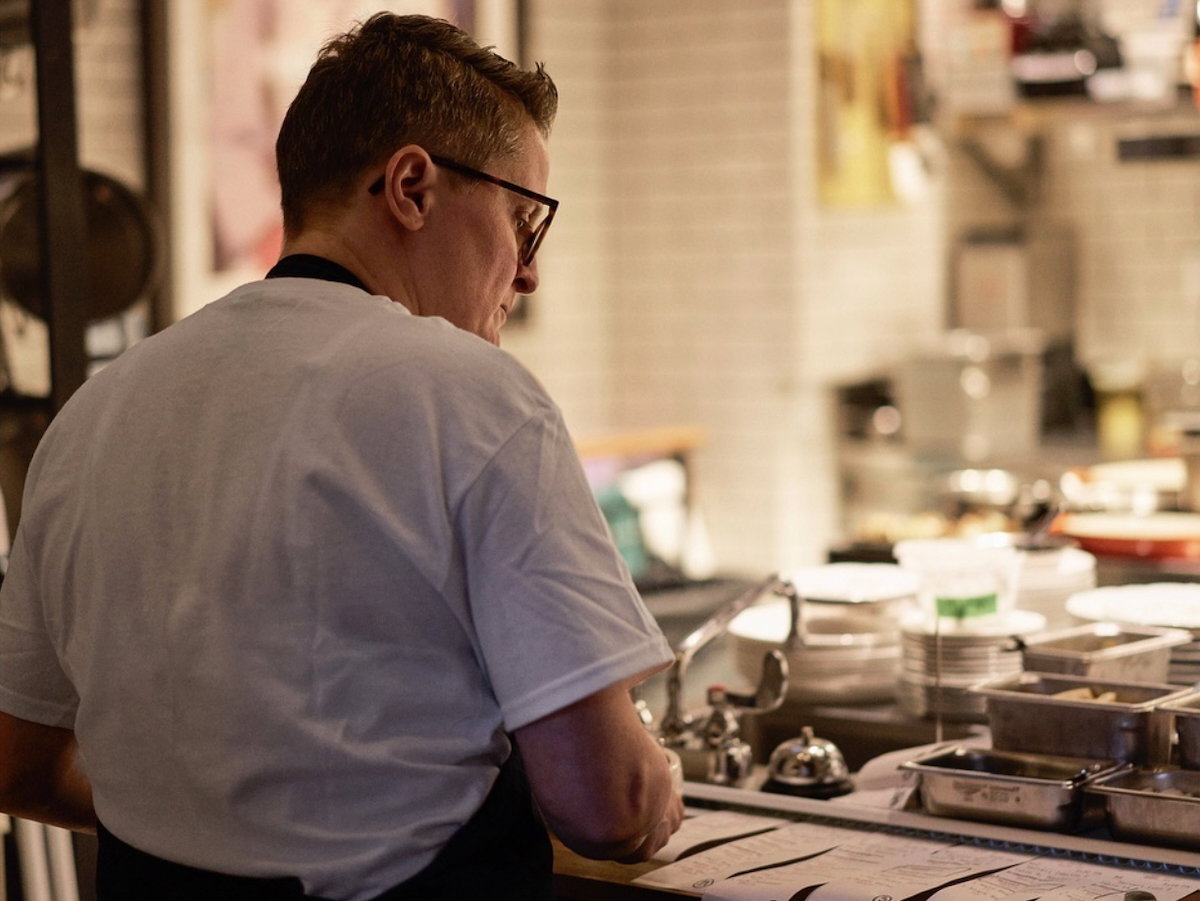
AB: I still have the same motivation that I had when I first started cooking. I love what I do. I have an extreme passion for it. I push every day. I just try and perfect every day. It’s the way you get from A to B on the plate, all the in-between, I get a lot of joy from that. When I cook, I feel a lot. It’s not very cerebral. It’s all connection from here (*points to chest*), which you could call my soul. I think that’s why my food is very layered. I get a lot of the connection through teaching and explaining why. And when you teach, and it clicks, that’s amazing. That’s a really good feeling. And then you’re having fun doing it, and the other people are having fun. That’s the best thing in the world.
Courtesy of Sailor
How has the work of running and operating a kitchen changed in the last 10 years?
GS: That’s a good question. The first thing that comes to my mind, specifically with regards to cooks—I’ve been hiring cooks for Joseph Leonard for 17 years—is, I think 10 years ago it was much more common that a cook would join a team wanting to be there for years and grow up in that restaurant. And that was the aspiration, to join as a line cook with the goal to grow to become a sous chef or higher. And now, I think that what is a lot more commonplace, and you see it on resumes that come in, is people like to collect restaurants, almost like feathers in their cap. I worked here for 3 months, I worked there for 6 months, I worked there for 6 months. And I think that that’s a challenge, when people might sit there and be like, “I want to put on my resume that I worked for the great April Bloomfield, and I want to put on my resume that I worked at 3-star Sailor.”
We’ve experienced both sides, where we’ve got some really amazing people who have been with us for a couple of years, and then we’ve also had some people that worked here just long enough to put this on their resume.
AB: I think it’s been like that for a very long time. It’s a very New York thing, or a very “big city” thing, to have that experience. It’s definitely not like that in Austin. People stay longer, they’re more committed, which is quite refreshing in a way. But I guess, from my experience, I’ve been in New York over 22 years, and it’s always been like that. So I can’t say, for the last 10 years, that that’s changed. That’s always been a challenge in New York—the hiring and having people commit, and understanding that commitment is growth. That’s how you get to learn all aspects of the kitchen. And you get to see the different seasons, and you get to be in the moment and absorb that. When you don’t stay in a place very long, you’re denying yourself the experiences of building that foundation because you’re never really settled.
How about in the ways that people communicate in kitchens, in the expectations that we have from cooks in kitchens, in the teaching process? Have you seen any changes in that respect?
AB: Yeah, attitudes have changed, I think, for the best. I’m the first one to admit that I’ve done and made many mistakes. And you have to learn, and you have to grow, and you have to allow yourself to have failures and make mistakes. We’re all human, we’re imperfect. And it’s just about how can we do better the next day and how can we do better the day after. So it’s just perseverance and trying to have all those experiences be positive.
Do you think anything has been lost in the exchange?
AB: Yeah, I do. I think it goes back to what I was saying before. I think if you don’t do a year or two in a restaurant, you don’t get to see the progression of your hard work, because you give up, or you move on because you’ve had a better opportunity. You don’t get to build the foundations, so you’re never present; you’re always looking for the next thing. And I think sometimes, we have to just be in the moment and just dedicate ourselves, whether it’s a little uncomfortable or not. I think if we’re not uncomfortable, then we’re not learning. You have to get out of that mold a little bit. Even me, going to Austin, having to learn a different way in a different company and different people to work with—it’s gonna be uncomfortable. I’m not gonna give up straight away. I might be embarrassed, or I might be shy, or maybe I messed up this thing, but I’m gonna persevere, and I’m gonna keep going. And I do it because the rewards are so much greater for me, understanding myself more. It’s not just about the environment. It’s like, what do I learn about myself by staying, instead of giving up and moving on? That could be a line cook perspective. It could be a “Me” perspective. It could be a manager perspective. It’s all relevant, isn’t it? We all have the same feelings and the same thoughts. It’s just how do we deal with it?
Do you think it has become harder to train cooks to have a sense of resilience and urgency when dealing with adversity?
AB: I think it’s few and far between with people that have the natural grit, or learning grit. It takes effort to learn grit, and it takes pain, and it takes being uncomfortable to get there. And I think many, many young people just give up. And I think a lot of younger people don’t communicate their feelings and how, if they’re uncomfortable, they would just rather move on and not express that. But that doesn’t really help them, and it doesn’t really help the person that you’re employed by. So nobody’s growing, you know? If no one in the dining room communicates their feelings, it’s just a loss for everybody. When I was growing up, I would sit down with my chef, and I’d ask, “What do I need to do? How do you feel like I’m doing?” How about checking in with your manager and asking, “Do I need to be faster? Am I clean enough? What do I need to do to better myself?” You know, I think asking those questions are really important. It shouldn’t be just one-sided.
Is this a common refrain that you find amongst other chefs that you’re friends with, who have been doing this for a long time? And how do you think that this has affected the dining experience in New York, and even across the country?
GS: You know, Abe, I’m 45, and I started working in restaurants when I was 17, and April’s a few years older than me, not many (laughs). But I don’t think it’s ever been easier to work in this industry, in this city. I remember in ’06 when I opened my first restaurant, The Little Owl. It was grueling hours. It was hard. In ’09, when I opened Joseph Leonard, it was grueling hours. It was hard. In 2018, when I opened Simon and the Whale, it was grueling hours. It was hard. And in 2023, when we opened Sailor, it was grueling hours, and it was hard. Does the hard shift? Yes and no. The zoomed-out perspective is you’re always trying to focus on the same kind of challenge, convincing people that they should walk through the door, right? That’s not a guarantee. I’ve had some restaurants where that was harder to do than providing service and giving people something that they leave happy with.
And then, while you’re doing that, trying to build camaraderie, unity, and ambition within your team is a challenge. And trying to keep it joyful while working exhausting hours is a challenge. I think it’s been that way in ’06, ’09, ’18, and ’23, you know? Nobody’s ever been like, “Oh, restaurants. That’s an easy job.” Nobody’s ever said that before, and nobody’s saying that now. It is hard. And that’s also really rewarding too, because I think if it was easy, I don’t think finding success would be as fulfilling. The challenge, and then succeeding, makes it so much richer. It’s like dealing with loss makes you love more, maybe.
AB: Yeah. You’ve got to strive a little bit. You’ve got to push to get somewhere, anywhere, whatever, or wherever you want to be.
GS: I really like what you said about…I think your words were “some people just naturally have the grit and some people need to be coached to get the grit.”
AB: And that can be painful sometimes– getting them to realize that it’s there, it’s accessible, everybody can do it. You just need to push yourself into it. You need to feel uncomfortable.
GS: But whether you have that grit naturally or whether you need to be coached to access it, you need the grit to do this work.
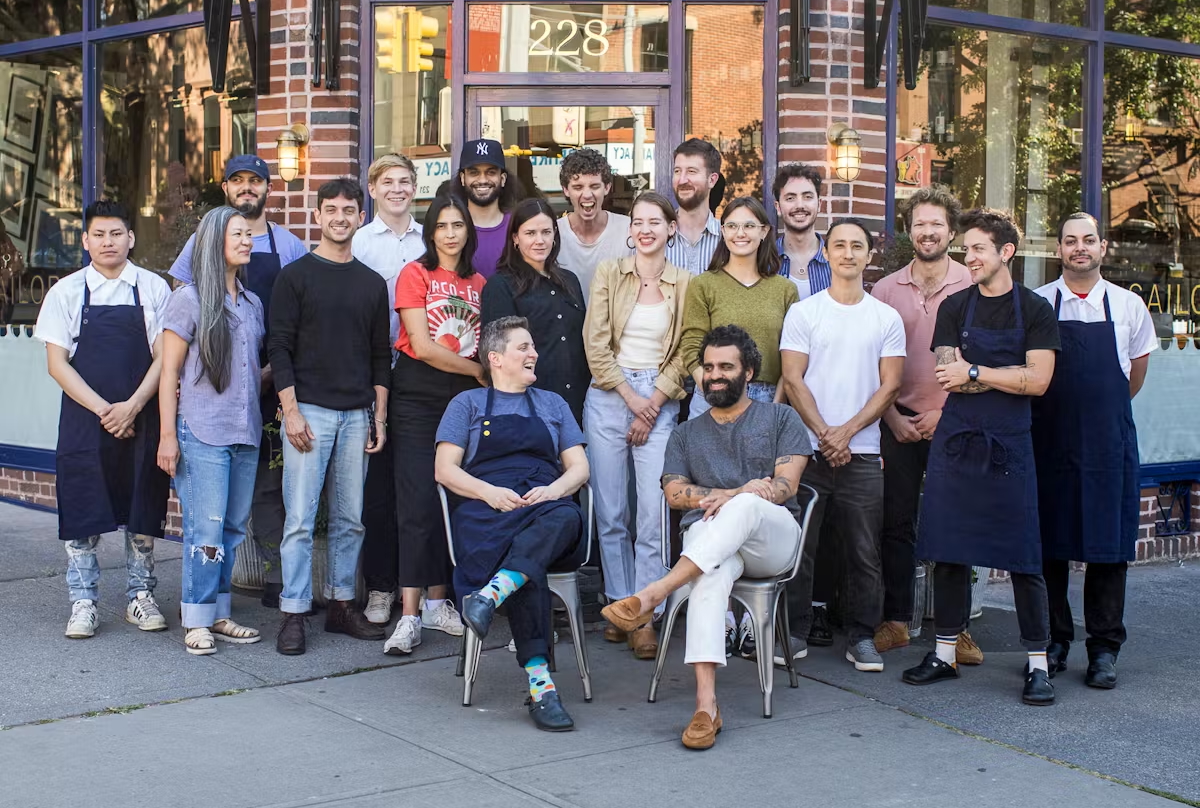
Courtesy of Sailor
Gabriel, you started by saying the work has never been easier. What did you mean by that?
GS: Well, restaurants and bars used to be open later. I totally remember that. When I opened Joseph Leonard, we served food till 2 [in the morning]. When I first came up in this industry, and I moved to New York in ’03, I used to be excited to go to Blue Ribbon at 3 in the morning, and have it be full of industry people, and [feel] like I was a part of something.
AB: (scoffs) I did not want to do that.
GS: Or go to The Spotted Pig at 2 AM, and be able to get something to eat. I have no interest in that anymore. I’m clearly not alone, though. I think there’s been a major shift in the New York dining demographic, which is it just shifted to the opposite shoulder. I remember it was difficult, near impossible, to fill seats at 5:00 AM or 5:00 PM when you opened the door. That’s when every restaurant was like, how can I get the first turn? And the late turn was a lot easier. New Yorkers have started craving 5:00 dining, 5:30, and 6:00 reservations in a way that I never saw 10 years ago.
AB: I think that has a lot to do with COVID, though. I think people were stuck at home and just, you know, they were eating earlier, and maybe it just kind of translated when the world opened back up, that, “Hey, you know, we can eat early and have the whole evening, and I can still get a full night’s sleep.”
GS: I look at our restaurants, and not just here: Fairfax, Joseph Leonard, Jeffrey’s, and not just demographics of people that are older, right? I see our seats filling up with people in their late 20s, and I’m like, wow, something shifted in New York. I’m still busy for the same number of hours, it just shifted earlier.
Look, I think that’s true. I also think if you opened Wo Hop 24 hours again, it would be filled with 23-year-olds every night at 4:00 in the morning.
GS: Maybe not a business I want to run. I think that’s what I think has shifted. I think everyone kind of made the decision that if you can have paternity leave and paid sick leave and work more sustainable hours and all these sorts of things in other industries, why wouldn’t you want those things?
AB: I think it’s important, you know, trying to just have balance is one of the hardest things to do in this industry, but there’s definitely more opportunity for that now. And I embrace that. I fully embrace people having balance. But when you’re at work, let’s work, you know?
We end every interview by asking the chef to recommend a favorite sit-down or takeout experience you’ve had recently in Brooklyn.
GS: In Fort Greene, my favorite restaurant other than Sailor is Roman’s. Andrew Tarlow is a friend, the food is rustic and delicious, and I routinely crave the Fava Bean Puree. Good people working in the dining room, and always a delicious meal. Oh, if they have the Olive Oil Cake on the dessert menu, that’s a must-order.
In Brooklyn Heights, my wife and I love having a date night at the bar of Ingas. We love how the bar is tucked in the back of the restaurant, with a nice and dark vibe. We always order different dishes, and nothing has ever disappointed. Nearly a dozen visits in over the years, and we always mention it when we’re trying to decide where to go on a date night. It’s a great neighborhood restaurant.
And, haven’t been but need to…. Rolo’s has been on the list for a minute. Everyone I have ever heard talk about Rolo’s says great things. It’s one of those few restaurants that literally has 100% positive reviews from people I talk to. One of the owners was recently at Sailor and invited me to dine with them. I need to make that happen.
The post Open Kitchen: A Conversation with April Bloomfield and Gabriel Stulman of Sailor appeared first on BKMAG.
