
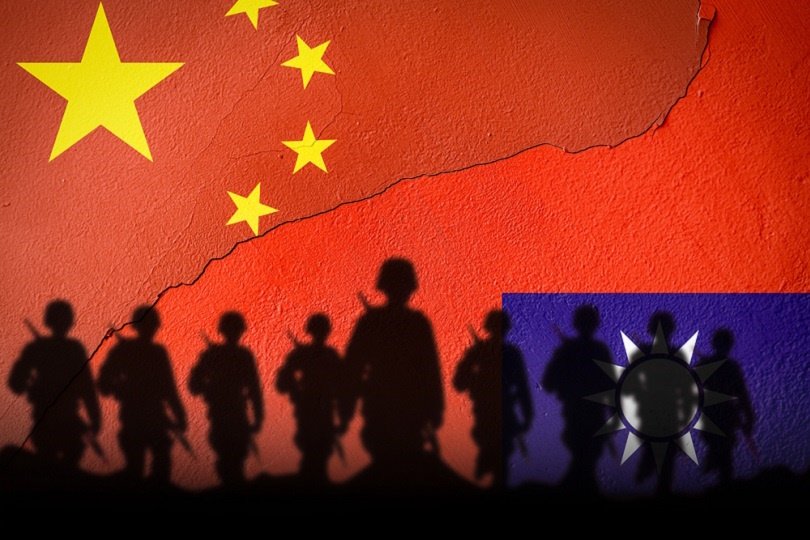
In the 21st century, the international system has returned to a bipolar structure and is heading toward a new “Cold War” (Tunsjø, 2018; Ferguson, 2019; Doshi, 2021; Beckley, 2022; Lind, 2024). Countless news reports and commentaries discuss how policymakers in the White House are obsessed with containing China’s economic and technological power, and how Beijing is attempting to break through this containment or undermine American influence. Undoubtedly, the United States and China are already in a situation of mutual confrontation. Conflicts will only proliferate, and the chain reactions of this great power rivalry will destabilize global markets and significantly heighten unpredictability. We have entered an era defined by pervasive risk and crisis.
For states situated in the Asia-Pacific, the sustained expansion of Mainland China’s economic and military power has triggered a perilous logic of hegemonic transition, compelling a strategic response from the United States (Loke, 2021). To be sure, this pessimistic Thucydidean perspective has faced academic challenges (Hanania, 2021). However, considering that the combined aggregate power of the two contemporary titans—the U.S. and China—already far exceeds that of the U.S. and Soviet Union during the previous century, this article contends that the strategic context of the current Sino-American confrontation is significantly more volatile and complex than that of the Cold War (Krickovic & Jaeyoung, 2025). Consequently, several developments merit close attention: First, in today’s international system, states such as Brazil, India, and South Africa exercise greater autonomy and agency than they did during the Cold War. The alignment of these actors is steering an international system—physically bipolar in structure—toward a hybrid order that is institutionally multipolar; this order is expected to persist for the foreseeable future. Second, in the era of Trump 2.0, the United States has markedly marginalized the strategy of containing the Chinese Communist Party through partner alliances, shifting its focus instead to maximizing the reconstruction of American relative advantage on the global stage (Ryan & Burman, 2025). The instruments for achieving this include extracting tariffs from trading partners and emulating 19th-century Concert Diplomacy to constrain the “Axis of Upheaval.”
The pursuit of a hybrid order by middle powers, coupled with the United States’ dogged insistence on its own primacy, has ignited a new round of cooperation and conflict across various issues and spheres of influence. The volatile and complex nature of this shifting landscape has compressed the diplomatic maneuvering room for all American allies—including Taiwan. Constrained by the imperatives of both military and economic security, these actors find it increasingly untenable to avoid making a definitive choice in their foreign policy. However, a recent argument by Cheng Li-Wun in Foreign Affairs (March 3, 2026) posits that Taiwan doesn’t have to choose (Cheng, 2026), advocating for a policy through a series of ambiguous and self-contradictory claims. Such a proposal is deeply concerning, as it is highly likely to exacerbate Taiwan’s security risks and overgeneralize by treating Taiwan as equivalent to typical small states. Consequently, the article titled “Taiwan Doesn’t Have to Choose: Cross-Strait Peace Requires Working With Both Beijing and Washington”—while elegantly written—suffers from several logical fallacies and a misunderstanding of structural constraints from the perspective of International Relations (IR) theory. Survival is an extremely serious matter for a small state, because the international system is anarchic, meaning there is no higher authority or world government to call when a predator comes knocking at your door. Peace is not a normative end in itself; rather, it is a precarious epiphenomenon of the underlying balance of power. When great powers architect a regional order, they do so as a function of their own strategic interests, not out of altruism for small states. To conflate the tactical guarantees of a regional power with a durable security commitment is a profound strategic error. History remains a sprawling necropolis of small states that mistook the transient convenience of a great power for a permanent stability.
Why is the Proposition that “Taiwan Doesn’t Have to Choose” Flawed?
First, the title of Cheng’s article mentioned above may suffer from a clerical error or a conceptual misunderstanding. The countries capable of eschewing a definitive choice are not those like Taiwan, but rather a select few ones that—owing to their specific geographic advantage or unique economic status—are able to engage with the United States while simultaneously interacting with Beijing (Noakes & Tan, eds., 2023), all without ever being compelled by Taiwan to choose between these relationships. In fact, the analytical crux of ‘not having to choose’ should center on whether the ‘necessity’ of choosing exists at all, rather than focusing on the ‘object’ of that choice or whether one can select both sides (or neither). The prevailing discourse on small-state neutralism, exemplified by Cheng’s analysis, suffers from a fatal logical lacuna: it prescribes a policy of non-alignment without first interrogating the structural necessity of choice. In an anarchic system defined by intense polarization, the ‘necessity to choose’ is an exogenous constraint imposed by great power competition, not a subjective preference of the small state. Therefore, any argument advocating for the avoidance of alignment remains analytically void unless it can demonstrate that the systemic pressures demanding such a choice have been neutralized. If Cheng intends to effectively persuade readers that the necessity of choosing is nonexistent, the thrust of her argument must focus on the specific conditions under which it might become possible for Taiwan to avoid such a strategic alignment.
Second, does Cheng’s definition of the “1992 Consensus” align with the definition held by the authorities in Beijing (We, 2016; Chen 2022)? Can she offer any guarantees to this effect? Should her definition diverge from Beijing’s, her argument that Taiwan does not have to choose would lose all persuasive power. Furthermore, Cheng posits that the function of the “1992 Consensus” is to craft a form of strategic ambiguity, which she views not as a disadvantage but as a strategic asset for Taiwan—one that protects Taiwan’s sovereignty and provides breathing room for the island’s development. Paradoxically, Cheng also asserts in her article that the “1992 Consensus” can resolve cross-strait sovereign disputes. One must ask: if a sovereign dispute between the two sides of the Strait persists, how can the “1992 Consensus” possibly protect Taiwan’s sovereignty? To be precise, Taiwan must already possess state sovereignty in order to necessitate the protection of such sovereignty from infringement or deprivation. Since Taiwan already possesses sovereignty, any sovereign disputes with Beijing boils down to whether Beijing can pragmatically accept the fact that Taiwan already exercises 100% autonomy across five key domains—political leadership, national defense, policing, currency, and taxation—and is thus not a part of the CCP’s jurisdiction. If Beijing cannot accept this long-standing and undeniable reality, the “1992 Consensus” is incapable of protecting Taiwan’s sovereignty as Cheng argued. Moreover, since 1996, Taiwan has never committed any act that violates or diminishes the political rights of the CCP; conversely, it is Beijing that has systematically subjected Taiwan to military coercion since 1996. Therefore, compared to Taiwan’s strategic location, its leadership in advanced semiconductor technology, and its robust democratic system—all of which Cheng mentions—an ill-defined and substantively ambiguous “1992 Consensus” possesses zero functional utility in protecting Taiwan’s sovereignty (Huang, 2008). On the contrary, this hollow and hypocritical consensus has brought nothing but unnecessary sovereign disputes and complications to Taiwan in the years since 1992.
Third, Cheng’s article posits that many countries maintain substantive engagement with Taiwan and support its autonomy. However, what precisely does this “autonomy” entail? Can an entity possess autonomy if it is not a sovereign state? Cheng explicitly points out that many countries support Taiwan’s de facto sovereignty, which inherently implies support for Taiwan’s de facto independence. Consequently, according to Cheng’s own logic, maintaining the cross-strait status quo is equivalent to maintaining Taiwan’s substantive independence. Can the authorities in Beijing truly accept or even tolerate such a perspective? A critical examination of Cheng’s thesis reveals a profound conceptual ambiguity regarding the nature of Taiwan’s autonomy. Cheng argues that the international society supports Taiwan’s autonomy and its de facto sovereignty—a condition she equates with the preservation of the cross-strait status quo. However, this positioning leads to a logical impasse. As Cheng posits, “Maintaining the 1992 consensus and opposing Taiwan’s independence preserves the delicate balance in the Taiwan Strait and promotes peace.” In the logic of this argument, she implicitly defines the status quo as a form of substantive independence; however, the true essence of the “1992 Consensus” lies in a tacit understanding between Taipei and Beijing that there is, in fact, no consensus at all—only an agreement to allow each side to articulate its own interpretation of ‘one China.’ In her article, Cheng acknowledges that the “1992 Consensus” constitutes a form of strategic ambiguity, yet simultaneously advocates for maintaining the status quo, encouraging other countries to support Taiwan’s de facto sovereignty, while, in a logically inconsistent turn, opposing Taiwan’s independence. From a theoretical, practical, and logical standpoint alike, Cheng’s perspective is deeply flawed and strategically untenable. It assumes that Beijing can tolerate a status quo that is functionally indistinguishable from de facto independence—a premise that ignores the core security interests of a regional great power. By failing to provide a rigorous definition of ‘autonomy’ versus ‘sovereignty,’ Cheng’s argument suffers from a terminological looseness that obscures the primary strategic reality: the systemic pressure for Taiwan to choose a side cannot be wished away through calculated linguistic ambiguity. When the author fails to define the very core of her thesis, her conclusions lose all credibility. One is forced to wonder: is this obfuscation accidental, or is a calculated lack of clarity the only way to sustain the illusion that Taiwan can avoid the structural necessity of choosing a side?
Fourth, Cheng asserts that should the Kuomintang (KMT) emerge victorious in Taiwan’s 2028 presidential election, the strategic focus will shift toward the establishment of “institutional peace.” In other words, Cheng posits that a framework capable of reducing miscalculations and enhancing predictive precision would foster greater stability across the Taiwan Strait. Paradoxically, Cheng fails to elucidate the mechanisms for mitigating such risks of misjudgment or for refining the accuracy of strategic forecasting. Instead, she deflects from the core tenets of “institutional peace”—namely, the reduction of miscalculation and the achievement of precise predictability—by advocating for the expansion of cross-strait societal exchanges and functional cooperation in public health and environmental sectors. People must analytically contend that Cheng’s thesis overlooks a foundational reality of international life: increased density in exchange and cooperation between actors inherently escalates the potential for systemic friction and distributive disputes (Waltz, 1979: 104-106). Cheng exhibits an overly optimistic, and arguably misplaced, faith in the pacifying effects of economic interdependence. In point of fact, should Beijing’s leadership determine that Taiwan’s strategic position is indispensable to the United States’ Indo-Pacific containment strategy, or that Taiwan’s continued autonomy constitutes a primary structural obstacle to China’s regional hegemony, the rational calculation of the state will shift toward conflict. As historical record and realist theory suggest, the will to secure vital national interests invariably trumps the desire for economic profit; Beijing will possess a formidable resolve to absorb the significant economic costs associated with military escalation (Mearsheimer, 2001; Copeland, 2024). Under such intense structural pressures, interdependence—rather than acting as a deterrent—may even heighten the sense of vulnerability, prompting a move toward military resolution. At that critical juncture, neither cross-strait trade volumes nor societal ties will possess the requisite power to extinguish the flames of a war dictated by the inexorable logic of the balance of power.
Fifth, Cheng’s assertion that “predictability” inherently constitutes a form of deterrence reveals a fundamental misunderstanding of the strategic logic governing coercive diplomacy. While Cheng views behavioral consistency as a stabilizing force, classical deterrence scholarship suggests that absolute predictability can, paradoxically, invite aggression. Thomas Schelling, in his seminal work The Strategy of Conflict, argued that a defender’s utility is often enhanced by “the threat that leaves something to chance.” (Schelling, 1960: 187) In the cross-strait context, if Taiwan’s escalatory thresholds are entirely transparent and predictable, an aggressor can calibrate its salami-slicing tactics with surgical precision, operating just below the trigger point for retaliation without fear of disproportionate response. Furthermore, as Charles Glaser notes in his rational choice analysis of military strategy, predictability only functions as a deterrent when backed by robust structural capabilities and a history of fulfilled threats (Glaser, 2010: 82-84). Without the material capacity to impose unacceptable costs or the credibility to convince the adversary of one’s resolve, high predictability merely serves to signal one’s own vulnerabilities. Consequently, as Schelling famously posited, a defender must occasionally project a degree of “rational irrationality”—appearing sufficiently unpredictable to ensure the adversary remains deterred by the uncertainty of the ultimate bottom line (Schelling 1960, 16-18). In strategic reality, predictability is a tool for communication, not a substitute for the raw power and credible uncertainty required to hold a superior aggressor at bay. In light of this, we contend that the most effective deterrence is characterized byclarity of intent and ambiguity of means. In other words, one must ensure the adversary is certain that a reaction will occur (predictable intent), while leaving them uncertain as to the timing, location, and nature of that reaction (unpredictable means).
Sixth, while liberal institutionalists argue that dialogue and economic interdependence can mitigate conflict, a structural realist analysis suggests that consensus and engagement are insufficient to safeguard the autonomy of a small state situated within a great power’s perceived sphere of influence. Cheng in her article contends that Taiwan should pivot toward economic diversification and reduced defense expenditures to facilitate communication with Beijing. However, this palliative approach rests on the flawed assumption that Beijing seeks a stable, long-term co-existence. As Mearsheimer argues in The Tragedy of Great Power Politics, a rising China, like all great powers, will seek to achieve regional hegemony and make it clear to the United States that its presence in East Asia is unacceptable (Mearsheimer, 2001: 57). From this perspective, Taiwan is not merely a diplomatic friction point but a critical geo-structural ‘thorn’ that impedes Beijing’s naval projection and regime security (Fravel, 2008; Yoshihara & Holmes, 2010). Consequently, tactical engagement is viewed by Beijing only as a precursor to the eventual absorption of Taiwan. As Gilpin elucidates in War and Change in World Politics, rising powers inevitably seek to change the international system and resolve territorial anomalies that challenge their prestige and security (Gilpin, 1981: 94-96). Thus, any Taiwanese overtures of accommodation are unlikely to secure a durable peace; they may, in fact, signal a weakening of resolve, thereby accelerating Beijing’s strategic drive to eliminate the “Taiwan problem” once and for all. Countless historical precedents demonstrate that in the crucible of Great Power competition, small states are afforded no such luxury as a neutral space. Every step Taiwan takes in cooperation with the United States is perceived by Beijing as a hostile act; conversely, every step Taiwan takes toward cooperation with Beijing is viewed by Washington as a widening breach in the First Island Chain.
Conclusion: The Tyranny of Structure – Why Choice is Survival
The fundamental fallacy of the “Taiwan Doesn’t Have to Choose” thesis lies in its radical overreliance on subjective agency at the expense of structural reality. It naively posits that Taiwan can offset objective systemic pressures through micro-level policy recalibrations, supply-chain indispensability, or an adherence to the “1992 Consensus”—a construct whose strategic utility has been rendered obsolete by the current distribution of power. This brand of optimistic liberalism suffers from three fatal blind spots: a disregard for the widening power asymmetry across the Strait, a misplaced faith in the pacifying effects of interdependence, and a set of prescriptions that fundamentally misdiagnose the nature of the current bipolar rivalry.
The geopolitical landscape of 2026 confirms the grim reality of structural compulsion. The recent proceedings of China’s “Two Sessions” and the formal adoption of the 15th Five-Year Plan demonstrate Beijing’s transition toward a war-footing economy statecraft, prioritizing technological autarky and military readiness over regional integration (BBC News, 2026). Furthermore, the enactment of “The Ethnic Unity and Progress Promotion Law”(民族團結進步促進法)signals a hardening of the legal and political architecture intended to forcibly resolve the Taiwan issue within a fixed strategic horizon (Wu, 2026). In this zero-sum environment, any attempt by a small state to maintain “strategic ambiguity” is no longer viewed as a stabilizing hedge, but as a provocative form of opportunism.
For Taiwan, the delusion of pleasing both great powers is the shortest path to abandonment or annihilation. In a polarized system, “not choosing” is perceived by Washington as unreliability and by Beijing as a deceptive delay tactic. The survival of a small state situated on a geo-structural fault line does not depend on elegant or moderate diplomacy; it depends on a cold-blooded recognition that autonomy is a function of alignment. Given the CCP’s relentless military expansion and the legal codification of its revisionist ambitions through the “The Ethnic Unity and Progress Promotion Law”, Taiwan is not being asked to choose; it is being forced to choose. In the tragedy of great power politics, those who mistake transient tactical convenience for permanent peace invariably find themselves in the necropolis of history.
References:
Beckley, Michael. “Accepting a Cold War with China Is the Best Option,” Washington Examiner (December 6, 2022), via at: https://www.aei.org/op-eds/accepting-a-cold-war-with-china-is-the-best-option/
Cheng, Li-wun. “Taiwan Doesn’t Have to Choose: Cross-Strait Peace Requires Working With Both Beijing and Washington,” Foreign Affairs (March 3, 2026), via at: https://www.foreignaffairs.com/taiwan/taiwan-doesnt-have-choose
Chen, Yu-Jie. ““One China” Contention in China–Taiwan Relations: Law, Politics and Identity,” The China Quarterly, Vol. 252 (September 2022): 1025-1044.
Copeland, Dale. A World Safe for Commerce: American Foreign Policy from the Revolution to the Rise of China (Princeton, NJ: Princeton University Press, 2024).
Doshi, Rush. The Long Game: China’s Grand Strategy to Displace American Order (Oxford: Oxford University Press, 2021)
Ferguson, Niall. “The New Cold War? It’s with China, and It Has Already Begun,” The New York Times (December 2, 2019), via at: https://www.nytimes.com/2019/12/02/opinion/china-coldwar.html
“Former MAC Minister Chen Ming-tong’s Comments on the 1992 Hong Kong Talks,” MAC (Taiwan), via at: https://www.mac.gov.tw/en/cp.aspx?n=34591B13E0BCBF3E
Fravel, M. Taylor. Strong Borders, Secure Nation: Cooperation and Conflict in China’s Territorial Disputes (Princeton, NJ: Princeton University Press, 2008)
Gilpin, Robert. War and Change in World Politics (Cambridge: Cambridge University Press, 1981).
Glaser, Charles. Rational Theory of International Politics: The Logic of Competition and Cooperation (Princeton, NJ: Princeton University Press, 2010).
Hanania, Richard. “Graham Allison and the Thucydides Trap Myth,” Strategic Studies Quarterly, Vol. 15, No. 4 (Winter 2021): 13-24.
Huang, Kun-huei. “1992: The Consensus that Never Happened,” Taipei Times (October 28, 2008), via at: https://www.taipeitimes.com/News/editorials/archives/2008/10/28/2003427170
Krickovic, Andrej and Jaeyoung Kim, “Conclusion: Rethinking Great Powers, Regions, and Peaceful Change in the New Cold War Era,” in T. V. Paul and Markus Kornprobst, eds., The New Cold War and the Remaking of Regions (Washington
Lind, Jennifer. “Back to Bipolarity: How China’s Rise Transformed the Balance of Power,” International Security, Vol. 49, No. 2 (Fall 2024): 7-55.
Loke, Beverley. “The United States, China, and the Politics of Hegemonic Ordering in East Asia Get access Arrow,” International Studies Review, Vol. 23, No. 4 (December 2021): 1208-1229.
Mearsheimer, John. The Tragedy of Great Power Politics (New York: W. W. Norton, 2001)
Noakes, Stephen and Alexander C. Tan, eds., Asia-Pacific Small States: Political Economies of Resilience (Boulder, CO: Lynne Rienner, 2023).
Ryan, Maria and Stephen Burman, “Globalization, Primacy, and the US–China Tech War in “Emerging and Foundational Technologies”,” The Chinese Journal of International Politics, Vol. 18, No. 4 (October 2025): 406-429.
Schelling, Thomas. The Strategy of Conflict (Cambridge: Harvard University Press, 1960): 187.
Tunsjø, Øystein. The Return of Bipolarity in World Politics: China, the United States, and Geostructural Realism (New York: Columbia University Press, 2018).
Waltz, Kenneth. Theory of International Politics (New York: Addison-Wesley Company, 1979).
We, Chi-hung. “China–Taiwan Relations and the 1992 Consensus, 2000-2008,” International Relations of the Asia-Pacific, Vol. 16, No. 1 (January 2016): 67-95.
“What Did We Learn from China’s Biggest Political Meeting?” BBC News (March 12, 2026), via at: https://www.bbc.com/news/articles/cvg80pedxeyo
Yoshihara, Toshi and James Holmes Annapolis, Red Star over the Pacific: China’s Rise and the Challenge to U.S. Maritime Strategy (MD: Naval Institute Press, 2010).
Further Reading on E-International Relations
