
Posted on: March 23, 2026, 09:24h.
Last updated on: March 23, 2026, 09:24h.

- Syndicate spent $25 million to cover nearly all lottery combinations
- Operation printed millions of tickets across Texas in 72 hours
- Scheme triggered political backlash and dismantling of lottery commission
A secretive professional gambler known as “the Joker” has admitted to bankrolling a scheme to buy-up nearly all the tickets for a 2023 Texas Lottery draw – all-but guaranteeing a share of the $95 million jackpot.
Zeljko Ranogajec’s name surfaced in connection with the plot last year, after he was identified by several sources who spoke with The Houston Chronicle, but this is the first time we’ve heard it from the horse’s mouth.
I was involved in the funding of the Texas lottery play,” he told The Sydney Morning Herald last week, adding that the endeavor was not without risk.
“The Texas Lottery Commission facilitated the play by providing terminals, paper and ink. It would not have been possible to operate at this scale without full co-operation,” he added.
Jackpot Exploitable
The jackpot for the April 22, 2023 Texas Lottery draw had climbed to $95 million after 93 rollovers, which made it mathematically exploitable to someone with the means to buy up as many number combinations as possible.
Ranogajec’s syndicate spent more than $25 million on tickets at a dollar each to cover around 99% of combinations. This gave it a high probability of hitting the jackpot.
However, had the syndicate shared the top prize with one or more players, it could have lost money. Ultimately, the group opted to take the $57 million lump sum (before taxes) instead of the full amount, which would have paid out over 30 years. That means they spent around $25 million to win something like $10 million to $12 million after taxes, which would have been boosted by perhaps another couple of million in secondary prizes.
Loch Ness Monster
Australian Ranogajec, whose other nickname is “the Loch Ness Monster” because he is so infrequently sighted, has been described as one of the most successful gamblers in the world, said to be worth billions. David Walsh, another wealthy Australian gambler and long-term partner in Ranogajec’s betting syndicate once claimed they placed around A$10 billion (US$7 billion) in bets per year.
Ranogajec told SMH that he was simply the financier and was not involved in the logistics of the operation, which was massive. That fell to Bernard Marantelli, a partner in Ranogajec’s London-based online pool-betting operation, Colossus Bets. Marantelli also spoke to SMH last week.
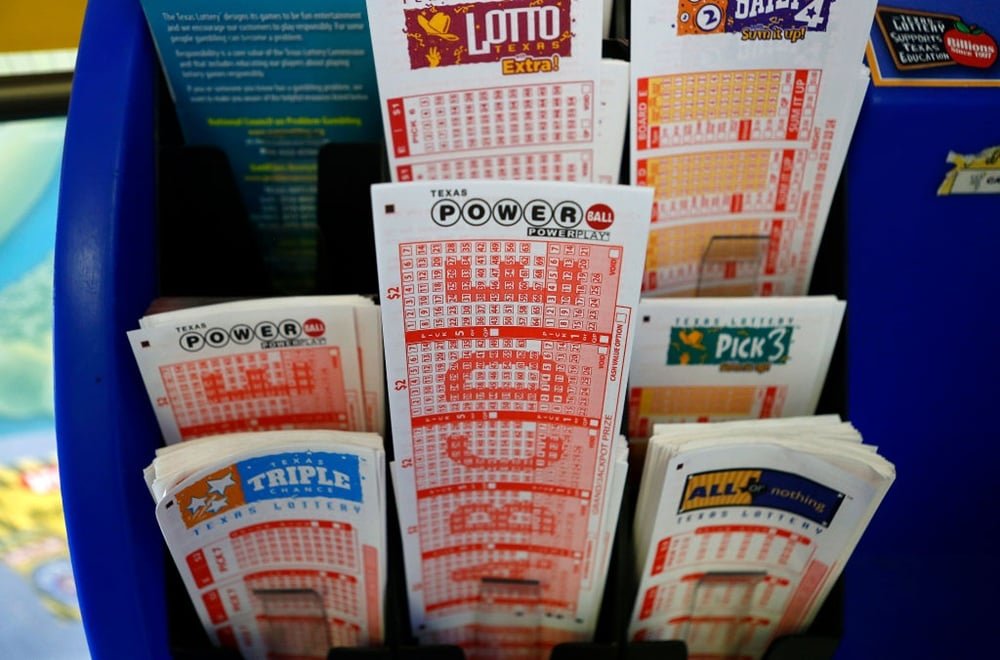
Over roughly 72 hours, the syndicate coordinated multiple licensed lottery couriers across Texas, set up dozens of terminals, and used pre-generated QR codes on phones and tablets to rapidly print tickets at a pace approaching 100 tickets per second.
Workers ran around the clock in improvised print sites (including a fishing shop and a former dentist’s office), cataloguing and boxing millions of tickets as they were produced.
By the final day, they had printed over $25 million worth of entries, all while racing against the draw deadline, managing logistics, staffing, hardware, and data tracking at scale.
Political Firestorm
News of the scheme sparked a political firestorm in Texas, ultimately leading to the dismantling of the Texas Lottery Commission, which was accused of enabling win by allowing bulk ticket purchases through lottery couriers. Texas Lt. Gov. Dan Patrick called it “the biggest theft from the people of Texas in the history of Texas.”
Marantelli is unconvinced by Patrick’s take.
“Calling it ‘robbery’ seems less an economic description and more a political framing,” he told SMH, “especially when the lottery itself is a state-run product designed to extract money from the Texan people.”
