
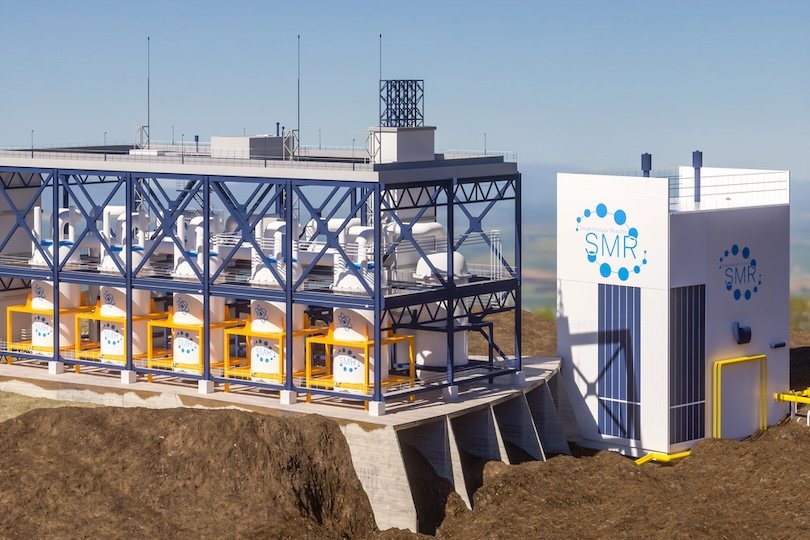
Advanced nuclear technologies are members of a larger class of innovative low- and zero-emissions energy technologies intended to expand access to low-cost, resilient, and sustainable electricity generation across diverse environments and communities. Among these technologies are tidal energy turbines, vertical axis wind turbines, green hydrogen plants, microreactors, and small modular reactors (SMRs). In an era of global supply chain disruptions, trade wars, and surging energy demand, SMRs are uniquely positioned to offer a climate-friendly solution in many regions, particularly those that would still be considered developing. The technical and operational design of SMRs makes nuclear energy more accessible and allows for a shift to an emissions-abating baseline load, regardless of demand or location. However, these modularized reactors are not without their drawbacks.
The drawbacks discussed are relevant to other advanced nuclear technologies, such as microreactors, which have power ratings of 10 MWe or less. However, this paper focuses exclusively on proliferation risks related to SMRs, as they are not only the most commercially viable advanced nuclear technology, but they will also be the most immediately relevant in global non-proliferation discourse.
The Novelty of Small Modular Reactors
SMRs offer greater accessibility, as well as financial and geographic flexibility, to host nations relative to conventional commercial nuclear reactors. However, current frameworks and industry standards were designed for an industry focused on a limited quantity of large-scale reactors, distributed across technologically and institutionally advanced nations, with a specific range of fuel types and lifecycles. As a result, these standards risk inadequacy for managing emerging SMR proliferation risks and are often perceived by operators as overburdensome and unnecessary.
Alongside these concerns in the fast-evolving nuclear power industry are the nations that dominate the sector. China and Russia are the primary suppliers of SMRs and microreactors, and they have become increasingly at odds with international institutions in recent years. Therefore, it is critical that the international community actively revises and implements additional safeguards to uphold non-proliferation measures in an era of advanced nuclear technologies. While the safeguards-by-design framework generally addresses many of the technical concerns associated with the proliferation of fuel from advanced nuclear technologies, the broadened international scope of SMR deployment challenges the effectiveness of these measures and introduces additional proliferation risks.
Small Modular Reactors
Small modular reactors are generally defined as nuclear reactors with a power rating of less than 300 MWe, yet too large to be considered microreactors. Their modularized design theoretically allows for the mass rapid production of the reactor and facility components, enabling standardized safety procedures while reducing the likelihood of catastrophic construction flaws. These components can then be assembled at the new facility’s site (Carelli, 2015). SMRs are not particularly unique in their power rating, given that small and mobile reactors were among the earliest nuclear facilities. However, their modularity, along with SMRs’ focus on mitigating the prohibitive financial uncertainty associated with conventional commercial nuclear reactors, makes them novel community-scale energy solutions.
Modularization is also inherently conducive to faster construction times with the mass manufacturing of reactor assemblies (Christoph et al., 2023). The infrastructure-agnostic operability of SMRs, given the relative output of these reactors and their utilization of passive safety and cooling systems, has allowed industry leaders to quell further global sentiments of “Not In My Back Yard”ism (NIMBYism). With lower decay heat and higher surface-to-volume ratio relative to conventional reactors, process heat can be more readily removed through the use of passive-air cooling systems, making the abundance of effective passive cooling options a competitive advantage for these reactors. Addressing NIMBY concerns is critical, as the community-scale applicability of SMRs will enable their expansion into more remote regions.
As of 2021, seven countries had designs for SMR facilities currently under exploration or development, with Russia and China leading in the construction of terrestrial power-producing and mobile marine propulsion reactors (Popov, 2021). The United States also planned to deploy a demonstration reactor by 2025, but those plans have since been cancelled due to cost overruns anticipated from the first reactor. A second reactor has recently been approved by the US Nuclear Regulatory Commission (NRC) and may soon be under construction, should the US Department of Energy’s (DOE) financing of the reactor remain uninterrupted (Department of Energy, 2025; Carelli, 2015). By 2035, the market potential for SMRs is estimated at around $500 billion at the current pace of global development, with the potential to install around 75 GW of capacity over the next decade. These estimates hinge on a sufficiently diffuse distribution of deployment over the next decade so that the maturity of the ancillary industries can facilitate a low enough levelized cost of electricity to make SMRs cost-competitive (Christoph et al., 2023).
Design-Specific Proliferation Risks
Much of the design-related risk of nuclear proliferation from SMRs stems from the use of higher-enriched uranium compared to that in pressurized light water and CANada Deuterium Uranium (CANDU) reactors. The more common use of high-assay uranium, ranging in enrichment from 5% to 20% U-235, makes the fuel, both fresh and spent, more enticing to clandestine actors with malicious intent to divert it (Virgili, 2020).
Sealed reactor cores are often regarded as a design safeguard against nuclear proliferation as they ensure that the fuel is not tampered with between leaving the manufacturing site and inspection. However, academics caution that sealed reactor cores and the long-term autonomous operability of reactors create monitoring conditions that undermine existing verification and inspection safeguards, placing excessive trust in manufacturers to guarantee the security of their fabrication process. For instance, this presealing prevents the various in-field inspections that host nations use to maintain compliance with International Atomic Energy Agency (IAEA) standards and guard against fuel diversion (IAEA, 2018). In a similar vein, the continuous operation of these reactors, sometimes for years or decades (World Nuclear Association, 2024), creates opportunities for non-state actors to divert nuclear material that goes undetected for extended periods. In addition, the use of high-assay fuel will require more specialized handling to prevent unintentional reaction catalysis when the reactors are not in use (Virgili, 2020). Together, these design features limit the inspectability of fuel in transit and during operation, creating opportunities for the undetected diversion of highly enriched uranium under existing safeguard implementation guidelines.
However, if one were to look past the possible inspection drawbacks associated with pre-fueled, sealed reactor cores, or if the issue were resolved through a series of innovative regulations, the non-proliferation safeguards offered by this modularized design would be substantial. Not only would the threat of fuel interception and diversion be significantly reduced, given that it is transported in the reactor core, but there would also be a lesser need for a distributed workforce capable of fueling nuclear reactors. This would alleviate the burdens associated with workforce relocation and assignment that currently plague the variable renewable energy sector, thereby reducing workforce shortages and geographic limitations on generation. Additionally, several SMR designs involve returning spent fuel cores to the manufacturer, allowing them to refuel the reactor before sealing it again (Christoph et al., 2023; Virgili, 2020). These safeguard-by-design features would substantially reduce the risk of on-site tampering through off-site refuelling and enhance the safety of fuel transportation (IAEA, 2019). Apropos of these trade-offs, subject matter experts are still balancing the potential benefits and pitfalls of these design features. As SMRs find their way into more remote regions with varying degrees of domestic security, the balance between these features and the risk of proliferation could shift.
As questions arise over the safety benefits of these design features, the international community must prepare to address the challenge of applying existing nonproliferation frameworks. These frameworks, which are based on large conventional pressurized water reactors, are often overprescriptive and ill-suited to SMRs.Waiting to adapt safeguards and regulations for SMRs and other advanced nuclear technologies until after a failure event could jeopardize both the geographic scope of deployment and the industry’s long-term viability, which depends on achieving economies of scale. While national and international safeguards continue to lag behind the pace of innovation with this technology, the industry itself has begun to step up to address these shortfalls. Among the safeguards offered by SMR fabricators are continuous onboard monitoring, integrated sensors and seals, and cyberattack detection systems, which are critical systems established through the safeguard-by-design framework engagement. Currently, this expanding fleet of technical features remains the primary means of mitigating the design-side proliferation risks of SMRs (Christoph et al., 2023; Virgili, 2020; Salehpour & Irfan Al-Anbagi, 2024).
Institutional and Geographic Risks
Given the ability of domestic regulators, intergovernmental organizations, and industry actors to readily address design-side proliferation risks through industry engagement under the safeguard-by-design framework, strategies to address these design shortfalls seem much more straightforward than those for the other proliferation risks associated with SMRs. One such risk, which is more nebulous to resolve, particularly as it concerns sovereign nations’ institutions, concerns the geography of SMR deployment. As mentioned previously, one of the principal use cases for small modular reactors is power generation in countries considered nuclear energy newcomers (NENs) (Kim & Chirayath, 2024). Given their modestly perceived governance, financial, and safety risks relative to conventional reactors, SMRs are increasingly seen by these NEN countries as a strong alternative energy source that can readily provide a baseline load of electricity with minimal associated emissions. While these NEN countries have not yet deployed operational SMRs, some have entered into contracts with supplier nations like Russia and China to acquire a number of facilities in the coming years (Popov, 2021). SMRs have the potential to play a significant role in providing zero-emissions energy to urban centers through facility clustering and rural communities with standalone facilities. However, concerns have been raised that many of these countries lack adequate institutional capacity, experience with nuclear energy technologies, and political stability to host SMRs.
With diffuse populations and envisioned networks of SMRs spread across countries in East Africa, Central Asia, and Southeast Asia, it remains worrisome that “Many of these NEN countries scored low on regulatory quality, government effectiveness, control of corruption, and political stability” (Kim & Chirayath, 2024, p.3155). To ensure that non-proliferation safeguards are robustly incorporated into facility management practices, fuel supply chain security procedures, and the handling of spent fuel, these nations require a degree of proactive regulatory oversight. In the absence of domestic institutions capable of deploying the layers of redundancy deemed necessary to ensure effective oversight, anti-corruption, and financial support for regulatory authorities, fissile material is at risk of diversion and clandestine enrichment. Given that many of these SMR designs use high-assay uranium fuel in their reactor cores (Virgili, 2020), minimal enrichment is required to achieve a grade sufficient for effective radiological dispersal devices or dirty bombs.
In addition to inadequate institutional capacity, academics have also taken issue with the lack of independence of existing regulatory authorities responsible for monitoring SMRs, should they be deployed. Non-proliferation safeguards are already recognized as difficult for more capable regulatory authorities to apply to SMRs, making these governance weaknesses particularly problematic in NEN countries (Trajano, 2024). The lack of independence calls into question these regulatory authorities’ ability to enforce safeguards, both international and domestic, in the face of internal political pressure, subversive activities, or financial considerations. Without assurances that these regulatory bodies can conduct themselves as they are chartered to, and are outwardly portrayed as being able to, the ability of these NEN countries to uphold safeguard frameworks should remain a point of discussion (Ramakumar, 2021).
Separate from both the robustness and sanctity of regulatory institutions in these NEN countries is the issue of workforce capabilities. While technological innovations allow remote technicians to supplant some on-site expertise, either from population centers or internationally, the technical experience and knowledge of facility operators to handle advanced nuclear technologies are essential (Sustainability Directory, 2025). Among critical investments in supporting industries, facility security, waste management, and core refuelling, workforce development and retention will be vital as SMRs begin to venture beyond cities into rural corners of developing countries, where attracting outside talent becomes a challenge. Ensuring that these NEN countries can develop and expand a nuclear energy workforce will have to supersede any financial interests in accelerating SMR deployment, in favor of recruiting individuals who can remain vigilant against proliferation risks and effectively execute contingency plans when necessary (Prah & Adu, 2024; Sustainability Directory, 2025).
The IAEA is responsible for setting the non-proliferation standards that signatory nations are required to abide by, shaping domestic regulations and industry standards to comply with safeguard frameworks. As such, the IAEA is the international body most capable of influencing the direction and focus of safeguard development. Beyond deploying the safeguard-by-design approach and advocating the reinforcement of a nation’s domestic monitoring and enforcement mechanisms to meet the needs of SMRs, the IAEA has not taken significant steps to rework existing frameworks. While it has acknowledged issues, such as multidecadal continuous operation, where verification methods may need to be revised to adapt to an SMR-dominant nuclear future (Boyer & Cca, 2016), it has yet to publish any updated guidelines or conditions for the sale of SMRs to host nations.
Supplier State Risks
As international authorities like the IAEA are limited in their ability to block the sale of SMRs to NEN countries, even where domestic institutional capacity is weak, supplier states like Russia, the United States, and China are frequently the last line of defence in ensuring that SMRs are not deployed under conditions that elevate the risk of nuclear proliferation (Sustainability Directory, 2025). While the United States is firm and transparent in the conditions it requires from host nations before providing material for nuclear energy facilities, including SMRs, under the Atomic Energy Act, China and Russia employ different tactics (Wondra, 2016).
Instead of imposing rigid approval requirements for material retransfers with automatic termination rights if non-proliferation terms are not met, as the United States does through 123 Agreements, China and Russia deal in more flexible bilateral agreements that outline the contractual obligations of both nations to uphold safeguards, with generally looser enforcement mechanisms (Congressional Research Services, 2025; Popov, 2021). This affords China and Russia, as supplier states, greater flexibility in determining which host nations are eligible to receive SMRs, as the safeguard thresholds can be changed on a contract-by-contract basis. Depending on the NEN host nations they deal with, and the respective institutional capacity and governmental quality of those nations, SMRs from Russia and China could be deployed under conditions that the international community would perceive as increasing proliferation risk, with no interventionary mechanisms to prevent these deals. While interventionary capacity was the same for large, conventional nuclear reactors built by Russia and China under these bilateral agreements, host nations were constrained by financial and infrastructural constraints that SMRs have largely circumvented, enabling a broader range of NEN countries to enter the nuclear energy industry.
Conclusion
Small modular reactors, as they are currently designed, are a novel technology that will enable a broader range of state actors to access a low-emissions baseline load of electricity previously limited by financial and infrastructural constraints associated with conventional nuclear reactors. Contributing to the ingenuity of modern SMR designs are integrated technologies and design features such as remote monitoring, manufacturer-sealed and longer-life fuel cores, and autonomous operation, all intended to make nuclear energy safer, more accessible, and a financially sound investment. While these design features have made SMRs a more agreeable and actionable conduit for decarbonization amid rising demand forecasts, they also entail unique proliferation risks.
Among these proliferation risks are technical risks related to current verification procedures; geographic distribution risks related to facility vulnerability, supply chain security, and domestic institutional capacity; and inadequate international controls on sales, a gap that was once mitigated by the high costs and infrastructure demands of conventional reactors but is no longer offset in the case of SMRs. This evolving risk environment demands concerted international pressure on the IAEA to recalibrate its safeguards to reflect the operational realities of SMRs. Until international safeguards can account for the capabilities of NEN nations to mitigate the proliferation risks associated with SMRs, further technological innovation from industry actors and safeguard-by-design industry engagement must continue to implement layers of redundancy that cannot be readily penetrated by clandestine organizations with malicious intent.
Bibliography
Boyer, B. (2016) Understanding the Specific Small Modular Reactors Safeguards Issues. INPRO Dialogue Forum on Legal and Institutional Issues in the Global Deployment of Small Modular Reactors, IAEA Headquarters, Vienna, 18-21 October. Available at: https://nucleus.iaea.org/sites/INPRO/df13/Presentations/028_Understanding%20the%20Specific%
20Small%20Modular%20Reactors%20Safeguards%20Issues.pdf
Carelli, M. D. and Ingersoll, D.T. (eds.) (2015) Handbook of small modular nuclear reactors. Oxford: Woodhead Publishing. Available at: https://www.sciencedirect.com/science/article/abs/pii/B9780128239162000096
Christoph, J., Saimum, O. and Amponfi, A. (2023) Small Modular Reactors and Nuclear Non- Proliferation; to What Extent will the Global Spread of SMRs Impact Nuclear Proliferation? Institute of Nuclear Materials Management. Available at: https://resources.inmm.org/sites/default/files/2023-07/finalpaper_278_0513034611.pdf
Congressional Research Services (2025) What Is a “Section 123” Agreement? Available at: https://www.congress.gov/crs_external_products/RS/HTML/RS22937.web.html
Department of Energy (2025) NRC Approves NuScale Power’s Uprated Small Modular Reactor Design. Office of Nuclear Energy, 30 May. Available at: https://www.energy.gov/ne/articles/nrc-approves-nuscale-powers-uprated-small-modular-reactor-design
International Atomic Energy Agency (IAEA) (2018) Safeguards Implementation Practices Guide on Establishing and Maintaining State Safeguards Infrastructure. IAEA Services Series No. 31. Vienna: IAEA. Available at: https://www-pub.iaea.org/MTCD/Publications/PDF/SVS_31_web.pdf
International Atomic Energy Agency (IAEA) (2019) Safeguards by design. Available at: https://www.iaea.org/topics/assistance-for-states/safeguards-by-design
Kim, P. and Chirayath, S. S. (2024) ‘Assessing the nuclear weapons proliferation risks in nuclear energy newcomer countries: The case of small modular reactors’, Nuclear Engineering and Technology, 56(8), pp.3155-3166. https://doi.org/10.1016/j.net.2024.03.016
Popov, A. (2021) ‘Russian Vision of the Problems and Prospects of the International Legal Framework in the Context of Small Modular Reactors and Transportable Nuclear Power Units’, in Nuclear Law. The Hague: T.M.C. Asser Press, pp. 45–54. https://doi.org/10.1007/978-94-6265-495-2_3
Prah, C. and Adu, S. (2024) Multifaceted Challenges and Opportunities Associated with Small Modular Reactors in Africa: A Nonproliferation Perspective. Conference paper, 1 May. Oak Ridge National Laboratory (ORNL), United States. OSTI ID: 2538417 Available at: https://www.osti.gov/biblio/2538417
Ramakumar, K. L. (2021) ‘Realising small modular reactors, issues of concern to developing countries: what we understand from published literature’, International Journal of Nuclear Governance, Economy and Ecology, 5(1), pp. 24-36. https://doi.org/10.1504/ijngee.2021.116290
Salehpour, A. and Al-Anbagi, I. (2024) ‘Digital Substations: Cyberattack detection system for small modular reactor-based power plants’, IEEE Electrification Magazine, 12(4), pp. 57–67. https://doi.org/10.1109/mele.2024.3473329
Sustainability Directory (2025) What Role Does Policy Play in SMR Proliferation? 24 April. Available at: https://energy.sustainability-directory.com/question/what-role-does-policy-play-in-smr-proliferation/
Trajano, J. C. (2024) ‘Deploying Small Modular Reactors in East Asia: Implications on Nuclear Governance’, International Journal of Nuclear Security, 9(1), Article 9. https://doi.org/10.7290/ijns09125181
Virgili, N. (2020) The Impact of Small Modular Reactors on Nuclear Non-Proliferation and IAEA Safeguards. Vienna Center for Disarmament and Non-Proliferation. Available at: https://www.nonproliferation.eu/wp-content/uploads/2020/08/Virgili-Nicole_SMR-Paper_Final.pdf
Wondra, N. (2016) ‘The Power of Attraction: Comparing US and Russian Nonproliferation Policies’, Centre for Strategic Studies, 25 Mar. Available at: https://www.csis.org/blogs/post-soviet-post/power-attraction-comparing-us-and-russian-nonproliferation-policies
World Nuclear Association (2024) Small Modular Reactors. Available at: https://world-nuclear.org/information-library/nuclear-fuel-cycle/nuclear-power-reactors/small-nuclear-power-reactors
Further Reading on E-International Relations
