
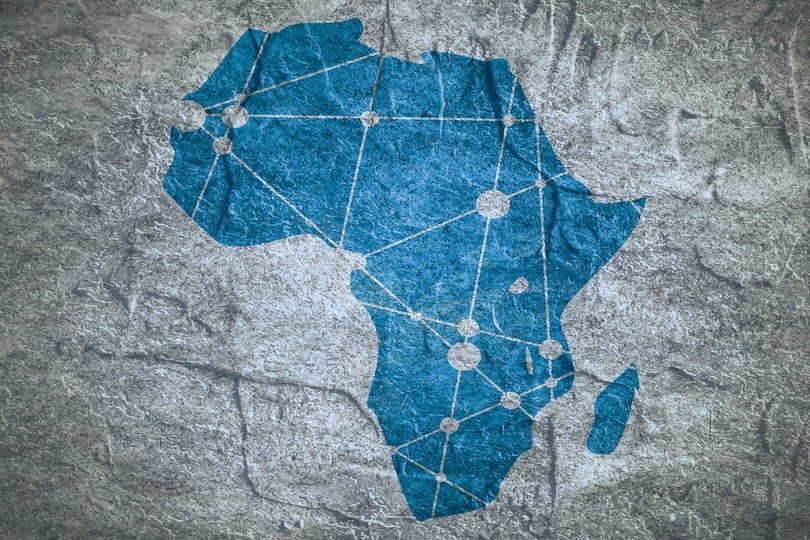
It is unsettling to see history repeat itself in precisely the same way. At the end of the 1800s, during the Berlin Conference, European countries divided up the African continent among themselves, with no Africans present to represent their people. Today, tech companies are dividing up the digital future of Africa, and again, very few Africans are present to represent their interests at the negotiation table. In the colonial era, colonial powers built railways to transport raw materials from Africa to factories in Europe. Today, high-tech companies are building data centers and laying fiber-optic cables to move data generated in Africa to servers located in Silicon Valley. The method of extraction remains the same, only the type of raw material has changed.
Take into account the fundamental mechanics. Facebook’s Free Basics program is being marketed as a philanthropic initiative throughout Africa and offers limited internet access to users exclusively via the Facebook service. This program markets itself as providing everyone with accessibility to information and services, but its structure speaks otherwise. While you may be able to use some applications on your mobile phone, you do not have full access to all of the applications and websites on the internet. This is more of a digital enclosure, as the user is limited to only what the company has chosen to allow through their product. In 2016, when India banned Free Basics due to issues with net neutrality, it illustrates how the infrastructure determines the nature of the dialogue based on the identity of the provider.
At the core of the philosophical analysis of Digital Colonialism is the same question that has historically been asked about traditional colonialism: Who has the authority to define what constitutes progress? Colonial officers believed at their core that they brought “civilization” to Africa, while executives from Technology companies believe at their core that they bring “connectivity” to the continent. Both colonial officers and executives from Technology companies believe that the model of development they have successfully implemented in their home countries (London or Silicon Valley) will be equally successful in Africa (Lagos or Nairobi). This assumption is what Michael Kwet, the person who first coined the phrase “Digital Colonialism,” identifies as the primary source of the problem. The problem is not based on any idea that technology itself is “bad.” However, because technology is developed in one part of the world and then transferred to another, it inevitably comes with the inherent power relations of the original place of development.
The disparity created by the data economy exacerbates the existing asymmetry between wealth and power worldwide. For example, when a farmer in rural Kenya uses an app to research local crop prices, he creates a data footprint that is uploaded through the internet to a server located in the United States (VR or OR). The server then uses algorithms to analyze this data, extract incremental knowledge from it, and return this knowledge to the farmer, typically at a significant markup. In this model, the farmer provides the raw material (labor) and market but captures none of the value created by the new knowledge. This is the purest form of extraction. During the colonial period, companies extracted gold and rubber; digital companies now extract personal behavior and attention.
The unique characteristic of digital colonialism is that it is invisible. Traditional colonialism was very much the opposite of that; you could see the soldiers, the bureaucracy, and the forced laborers all working for Europe. In the case of digital colonialism, the same invisible mechanisms of exploitation used in traditional colonialism are employed, albeit in the context of service agreements and algorithmic fate. TikTok’s algorithm selects content for an African user, as colonial censors did before; the only difference is that it does so through an opaque mechanism and has no physical entities controlling it. Therefore, while the app may present the user with a neutral representation of the content based on an algorithm, it is still in control through code and therefore has no visible means by which to view it.
Tech companies often make counterarguments that they are accelerating the rate of development in Africa. For instance, they will point to mobile money in Kenya as evidence, or argue that the rate of entrepreneurial growth demonstrated by the numerous startups developing in Lagos and Nairobi shows that technology may be alleviating poverty levels for millions of people. Although this argument has merit, it is worth noting that while mobile money has certainly changed the economy of Kenya, it was developed based on local expertise about Kenyan needs by Safaricom, a company that is partially Kenyan-owned. The critical difference between the development of infrastructure in Kenya based on local societies and use, compared to foreign companies that may enter those same societies with prepackaged technological solutions from an entirely different context, is that there are some success stories amongst the latter. Nonetheless, these represent the exception that proves the rule; i.e., foreign technology can be successful when created, owned, and developed by individuals or groups residing within the geographic area where the technology will have the most impact.
There are also deeper philosophical issues regarding the autonomy to impose technological expectations on other parts of the world and the concept of technological determinism. When a particular society adopts foreign technology without modification, it also adopts the values and assumptions inherent in that technology. Artifacts, according to Langdon Winner, carry with them distinct political ideologies. Take, for example, an electronic surveillance system originally developed for use by law enforcement agencies in the United States, which will continue to embody the political ideologies of policing, privacy, and the authority of the government, regardless of where that surveillance system is utilized. These assumptions may be incompatible with local values or legal traditions, but they are still imported because they’re embedded in the code.
The scramble metaphor is fitting because, like the original Scramble for Africa, digital colonialism is creating artificial dependency relationships between colonial powers and colonized nations. Colonial powers purposefully stunted the growth of independent industrial abilities in their colonies in order to keep them dependent on European goods; in the same way, today, African nations are kept dependent on non-African cloud infrastructures, non-African platforms, and non-African AI infrastructures.
This dependency is not by chance; it is structural. When a company like AWS (Amazon Web Services) or Microsoft Azure dominates the African marketplace for cloud services, it forces African developers to build their applications on AWS or Azure infrastructure, making it cost-prohibitive to transfer their applications to any other provider. The technical term for this occurrence is “lock-in,” but the economic reality is one of dependency.
Some scholars propose to differentiate between digital colonialism and what they term “data colonialism.” Nick Couldry and Ulises Mejias argue for this distinction, declaring data colonialism as a broader term that includes data extraction within wealthy nations. However, while this analytical distinction between the two forms of colonialism may be useful to scholars, it also risks obscuring the particular vulnerabilities that exist within the African context. For example, while Facebook extracts user data from Americans, the vast majority of Americans have access to governmental regulatory frameworks, legal systems that safeguard against antitrust activity, and a domestic technology industry that provides for competition and alternative means of purchasing goods and services. In contrast to their American counterparts, most users in Africa lack these buffers. Therefore, the data extraction from African users occurs in a regulatory vacuum, exacerbating its impact.
The intensification of the AI revolution exacerbates these dynamics through digitized machine learning systems that rely on large volumes of data to train effectively; technology companies are increasingly sourcing data from Africa to develop products to be used globally, meaning that your name and personal identifier might serve to develop a facial recognition product that is eventually used by governments and for purposes unknown to you. Data and algorithms flow in a northern direction away from the point of data collection, while the utility of algorithms developed from African data resides in the northern hemisphere; conversely, when these algorithms are executed on members of the African continent, the output of these algorithms often provides little value since they were primarily trained using North American data. Africans become both the source of the data and victims of algorithmic bias (double extraction).
The question of sovereignty is inevitable in this context; can one be digitally sovereign when they have neither ownership over any aspect of their digital infrastructure, nor do they hold ownership of any data associated with their citizens? Can a Sovereign Authority exist when all data generated by citizens resides on servers located outside of their territory? Can such an authority exist where all algorithms that shape the information environment around citizens originated from a different place? Traditional theories of sovereignty place tremendous emphasis on territorial control; however, with respect to digital systems, the territory has an increased level of porosity. The physical location of the servers that hold this data may be somewhat inconsequential compared to who has control over the code that runs on those servers.
Africa’s resistance to digital colonialism is beginning to take shape. For example, Nigeria has put laws in place around the Data Protection Regulation, which means that it requires certain types of information to stay in Nigeria. Rwanda is building its own tech infrastructure and investing in local tech companies. South Africa is looking into how certain companies dominate the market and have launched an investigation into how those companies operated. All of this is a start, but these efforts have been challenged by the significant amount of money foreign companies are willing to spend on new technology and businesses. Almost every American company that competes against an African company has a market capitalization larger than the combined economies of most African countries, which makes it difficult for them to regulate their competition.
Colonialism is a historical precedent for this type of problem. When Europe colonized Africa, it extracted Africa’s natural resources. This extraction left Africa without the ability to create products, so the economies of many African countries were built on exporting raw materials to Europe rather than manufacturing finished products. After independence, even when African nations became “independent”, they had no way of creating products. Throughout the 1960s and 1970s, many of the economies of the United States, Canada, and other industrialized nations were based on exporting finished products (mainly manufactured goods). However, due to the lack of infrastructure, trade networks, and investment, African economies were structured in the opposite manner.
Digital colonialism is likely to force African economies back into the same situation; therefore, if Africa does not develop digital services and build their own digital industries, then it will remain dependent on foreign companies for everything that comes from the Internet, including all the devices that connect to it. This is a poignant and ironic point in Africa’s young demographic. The median age across Africa is less than twenty years old; in other words, Africa’s youthful population represents an opportunity to capitalize on the digital economy through innovation. The potential for this wealth of resources will go unrealized, however, as young people continue to generate digital products and be paid in data and digital labor, yet the compensation for which will be funneled into platforms they do not control and algorithms they do not design. Rather than creating their own digital environment and building the future of Africa’s digital economy, this generation simply replicates the digital environments of others.
Digital sovereignty is not about rejecting foreign technology; rather, it is about establishing one’s own agency. The ability to determine how technology is utilized within one’s society, to develop local alternatives to foreign technology where appropriate, and to regulate platforms for the benefit of society as a whole. This will involve investment in local technology education, support of African start ups, the establishment of regional cloud computing infrastructures, and the creation of regulatory frameworks capable of limiting the influence of platforms.
Achieving digital sovereignty is a challenge because the digital colonialism of today systematically robs digital sovereignty of the resources it needs, just as traditional colonies faced industrial capacity limitations due to the extraction of resources associated with colonialism. Recognizing the cycle of extraction and the development of industrial capacity, along with an understanding of the role that digital colonialism plays in this cycle, is a critical step in breaking the cycle. Digital colonialism should not be viewed as a metaphor, but rather as a system of material extraction that shares many similarities with historical colonial systems, albeit without necessarily employing the same infinite number of methods.
Just as the Berlin Conference outlined Africa’s physical boundaries, today’s technology corporations are similarly identifying such digital boundaries across Africa. African nations are in a unique position to witness the digital mapping of their continent as it unfolds. Africans are increasingly gaining access to the internet and developing their own digital infrastructure. Therefore, Africans are in a position to create alternative solutions, establish a regulatory framework, and pursue the development of genuine digital sovereignty. Whether Africans will be able to accomplish this remains uncertain. However, history shows that recognition of colonialism is a necessary first step toward achieving something better and ensuring that Africans will have a seat at the table where the maps are drawn.
Further Reading on E-International Relations
