
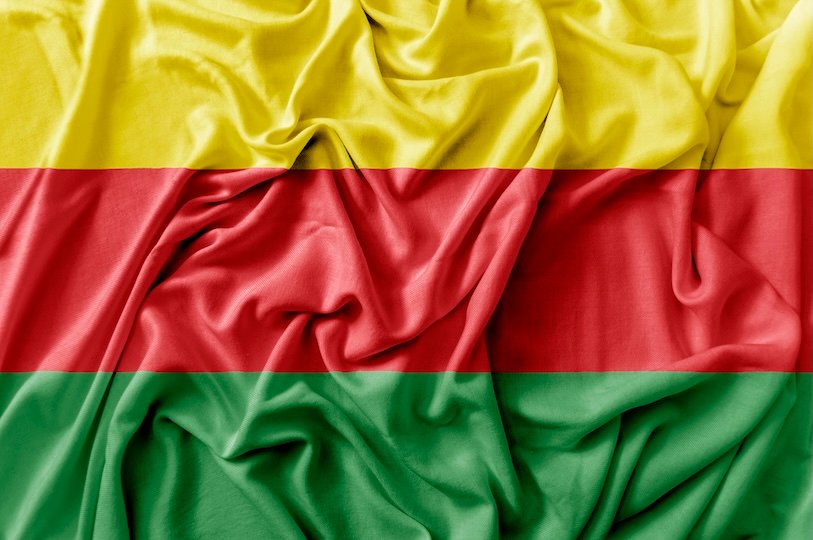
In recent days, global attention has turned toward Iran’s Kurdish regions. Amid escalating tensions between Iran, Israel, and the United States, Kurdish opposition groups inside Iran have reemerged as potential geopolitical actors, prompting renewed speculation about the role Kurdish movements play in moments of regional upheaval. The prospect of Kurdish mobilization inside Iran has quickly captured headlines and revived longstanding debates about the strategic significance of Kurdish politics in the Middle East. Yet this renewed spotlight has had an unintended consequence. While Iranian Kurds dominate the strategic conversation, the future of Syria’s Kurds arguably the most politically organized and institutionally developed Kurdish movement in the region has largely faded from view. This is striking because Syria is currently undergoing one of the most consequential experiments in postwar state-building in the contemporary Middle East.
Syria’s future will not be decided simply by whether the country is unified, but by the terms on which unity is constructed and the political order it produces. At the center of that struggle is a gamble by Ahmed al-Sharaa, better known as Abu Muhammad al-Jolani. Confronted with a fragmented landscape of militias and hollowed-out institutions, he is wagering that Syria can be reconstructed not through decisive battlefield victory but through a classic strategy of state formation: incorporating rival armed forces into the state’s coercive apparatus.
That strategy is most clearly reflected in Damascus’s recent agreement with the Kurdish-led Syrian Democratic Forces (SDF). The deal establishes a ceasefire and outlines a phased process of military, security, and administrative integration. In principle, state authorities would reassert control over territory, border crossings, and public institutions, while SDF fighters would be integrated individually into the Syrian army rather than preserved as a parallel military force.
Beyond security arrangements, the agreement also envisions bringing the Autonomous Administration of North and East Syria into national institutions while recognizing Kurdish civil, cultural, and educational rights. It gestures toward the return of displaced populations and toward the consolidation of a single Syrian authority. Whether those commitments can ultimately be enforced remains uncertain. What is clear, however, is that the agreement signals a shift away from territorial fragmentation and toward negotiated incorporation as a model of postwar consolidation.
At its core, Jolani’s strategy rests on a fundamental contradiction. He seeks to build a centralized Syrian state while leading an armed coalition that remains structurally non-statist. The forces aligned with him form a loose assemblage of Islamist factions, tribal militias, elements of the former regime’s security and administrative apparatus, and opportunistic war entrepreneurs. His authority therefore does not derive from consolidated institutions. It rests instead on a fragile alignment of armed actors whose cooperation remains contingent.
Against this backdrop, negotiating a ceasefire and phased integration with the Syrian Democratic Forces (SDF) represents a departure from the dominant logic that has shaped Syria’s civil war. The terms of the bargain are relatively clear. Military integration and the dismantling of parallel governing structures are exchanged for recognition of Kurdish cultural rights, civil status, and property claims.
This arrangement should not be confused with reconciliation in the liberal sense of recognition described by Charles Taylor, in which states affirm the equal dignity and cultural identity of minority communities. Rather, it reflects a more basic effort to resolve a problem of statehood. No Syrian government can plausibly claim sovereignty while a disciplined armed force controls roughly a quarter of the country’s territory, dominates much of its energy infrastructure, and administers detention camps holding tens of thousands of ISIS fighters and their families. Attempting to eliminate the SDF through direct military confrontation would carry enormous risks. Delegating the task to Turkey or to the Turkish-backed Syrian National Army would likely provoke ethnic violence, destabilize the northeast, and empower jihadist militias with little stake in a stable Syrian state.
For Kurdish actors, the stakes are existential. The SDF and its civilian counterparts did not emerge as a separatist project but as a response to state collapse, the rise of ISIS, and decades of systematic exclusion. As the Syrian state withdrew from large parts of the northeast, Kurdish organizations constructed security forces, courts, municipal administrations, and women’s institutions capable of sustaining local governance. Autonomy in this context was less an ideological aspiration than a strategy of survival.
Viewed from this perspective, the Syrian government’s gamble becomes clearer. Jolani is wagering that incorporation can achieve what repression would likely prolong: the gradual restoration of political order in place of perpetual war.
Integration, then, is not an act of generosity. It is an attempt to rebalance power within the state’s coercive apparatus. The SDF remains one of the few armed forces in Syria that is disciplined, bureaucratically organized, and oriented, however imperfectly, toward governance rather than sectarian revenge. Incorporating such a force into the national military offers Jolani something he currently lacks: a potential counterweight to Islamist militias whose loyalties are ideological rather than institutional.
The strategy is also directed outward. Prospects for reconstruction financing, diplomatic engagement, and security coordination depend heavily on demonstrating a credible break with jihadist governance and sectarian rule. Integrating the SDF, a force that partnered closely with the United States against ISIS and developed quasi-statist governing institutions in northeastern Syria, serves that purpose. It allows Damascus to present itself not merely as the victor of a civil war, but as a government capable of absorbing a United States-aligned armed actor without resorting to annihilation. Such a move does not require trust between the parties. It is fundamentally a reputational maneuver aimed at making continued international isolation increasingly difficult to justify.
If the gamble succeeds, the potential rewards for Syria’s new rulers could be considerable. A reconstituted national military incorporating SDF fighters could dilute the influence of jihadist factions, stabilize the northeast, and reduce Turkey’s leverage exercised through its support for the Syrian National Army. Reasserting control over oil and gas infrastructure would also provide a rare source of revenue for a devastated economy, reducing dependence on foreign patrons. Even partial success could strengthen the case for sanctions relief and gradual diplomatic normalization.
More broadly, such an outcome would establish an important precedent. Postwar Syria would be governed through incorporation rather than annihilation, marking a modest but meaningful departure from the sectarian logic that has shaped the conflict for more than a decade. In principle, it could also open space for a more plural and decentralized political order within the Syrian state.
The risks, however, are equally significant.
For Kurdish actors, integration carries the danger of collapsing into subordination in the absence of credible institutional safeguards. Dispersing SDF fighters into predominantly Arab units would expose them to harassment, marginalization, or selective purges. Female combatants in particular, especially members of the Women’s Protection Units (YPJ), represent a direct ideological challenge to Islamist factions embedded within the emerging order. Long associated with Kurdish autonomy and gender equality, their presence within a newly unified military could become a focal point of internal conflict. Without robust enforcement mechanisms, integration risks functioning less as inclusion than as a gradual process of disarmament followed by repression.
The Syrian government also faces serious internal constraints. Many factions within Jolani’s coalition have strong incentives to see the agreement unravel. Elements aligned with the Syrian National Army, for instance, benefit from Turkish patronage, wartime predation, and the persistence of fragmented authority. A unified national military capable of sidelining such actors would directly threaten their political and economic position.
Hanging over this entire process is a darker reality that no amount of strategic framing can obscure. Since Assad’s fall, Syria has already witnessed major episodes of mass violence against minority communities, including Alawites and Druze. These campaigns, often carried out by forces nominally operating under state authority, have involved collective punishment, humiliation, and extrajudicial killings. Whether such abuses are directly ordered from Damascus or simply tolerated by it, they expose the central weakness of Jolani’s project. He does not fully control the men who fight in his name.
This is where the gamble becomes most dangerous. State-building ultimately depends on the consolidation of a monopoly over legitimate violence, yet Jolani currently presides over a fragmented and competitive landscape of armed power. Silence in the face of abuses, or selective enforcement against only certain perpetrators, risks being interpreted as tacit approval. Each episode further erodes trust among minority communities whose cooperation is indispensable to any durable political settlement.
Within this context, the Kurdish question, understood as the longstanding problem of how Middle Eastern states govern a large stateless Kurdish population seeking recognition, rights, and varying degrees of autonomy, cannot be treated as a peripheral issue. It is a test of whether postwar Syria can break with a long and bitter pattern in which Kurdish cooperation is solicited in moments of crisis and abandoned once power consolidates. Syrian Kurds know this history well. From decades of citizenship denial under Ba’athist rule, to abandonment following the territorial defeat of ISIS, to repeated international acquiescence to Turkish incursions, Kurdish political memory is shaped by promises extended and withdrawn.
It was within this historical conjuncture that the Democratic Autonomous Administration of North and East Syria (DAANES), commonly referred to as Rojava, emerged alongside the formation of the SDF. The project was not conceived as a utopian separatist experiment but as a pragmatic effort to institutionalize self-defense, pluralism, and gender equality in the absence of any credible guarantor of rights. By agreeing to dissolve themselves into a state that still lacks effective control over its own coercive apparatus, the SDF and the Autonomous Administration have themselves undertaken a profound political gamble. Historical precedent offers little reason for confidence that such arrangements will restrain sectarian violence or reliably protect minority communities.
Sympathy for Rojava, therefore, is not an exercise in ideological romanticism. It reflects recognition of a political project forged under conditions of abandonment, one that understands perhaps more clearly than any actor in Syria that survival depends not on declarations or goodwill but on enforceable power. If this integration ultimately ends in betrayal, it will not only extinguish Kurdish aspirations. It will signal to every minority community in Syria that autonomy is not merely a negotiating position but the only rational response to a state that promises unity without yet possessing the authority or legitimacy to sustain it.
Further Reading on E-International Relations
