
(RNS) — Christian nationalists are sounding a bit panicked these days. I can’t say I am surprised.
On Saturday (March 28), 8 million Americans of diverse faiths and beliefs joined together in streets and squares around the world for No Kings protests. The next day, the Christian holy day of Palm Sunday, thousands more came out again. All of these people were rejecting the rising autocracy of our current moment, and many of them were Christians.
No wonder, then, that the late James Dobson’s Family Institute recently published an article blaring an alarm: “The Left Wants to Hijack Jesus! Don’t Let Them.” The essay, written by longtime religious right activist and failed Republican presidential candidate Gary Bauer, warned that the “secular left” is out to take away “the Jesus we know.”
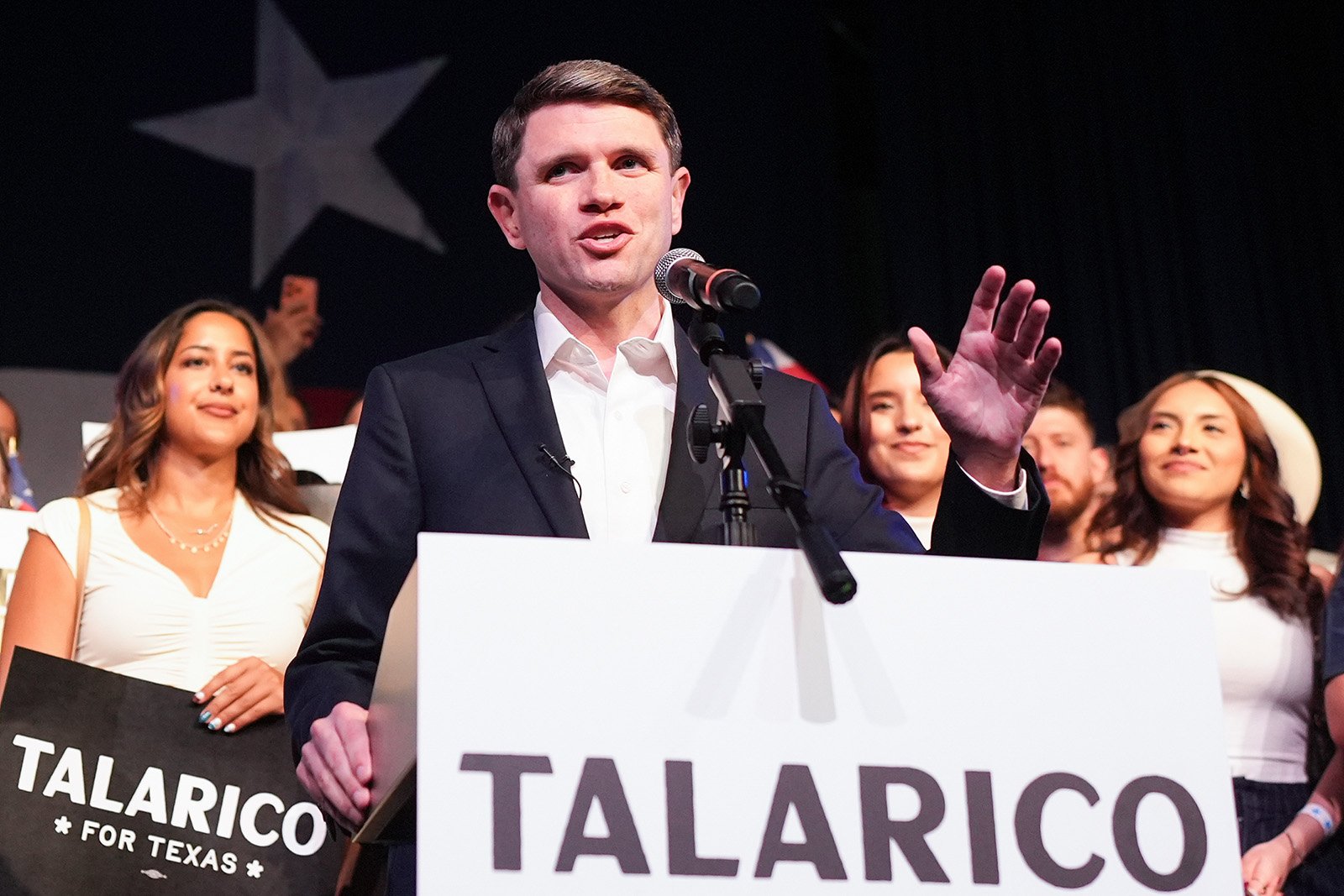
These arguments break down quickly, however, as Bauer focuses on the Democratic candidate for U.S. Senate in Texas, James Talarico, and Kentucky Governor and possible presidential candidate Andy Beshear, whom Bauer attacks for supporting full dignity of transgender people and for their faithful conviction that abortion should be a right.
Bauer is joined by the wider political and Christian right, which has pounced on these positions with horror and outrage. Pete Hegseth’s pastor, Brooks Potteiger, was so incensed by Talarico’s faith and politics that he went so far as to wish for his death. Others have tried to paint Talarico and Beshear’s faith convictions as deviant, completely out of step with Christian thought.

In reality, they aren’t. According the Pew Research Center and the Public Religion Research Institute, the majority of Christians actually support LGBTQ+ equality and abortion rights. Meanwhile PRRI’s most recent survey shows that only a third of Americans sympathize with Christian nationalism, and two-thirds of Americans are skeptical or outright reject the ideas and goals of Christian Nationalists. The majority of Christian nationalists are white evangelical Protestants, a group that, Robert P. Jones, president of PRRI, says is shrinking. “Today (they) only make up 13% of the public — that’s it. And that’s down from a quarter of the public 20 years ago. So they’ve shrunk by half. And I actually think that shrinking is one reason … As they’ve shrunk, they’ve gotten older and more extreme and more desperate.”
Christian nationalists’ preferred framing of American politics as “secular left vs. Christian” is false. For one thing, while humanists and atheists rightfully take their place in the public square, Christians have been joined by Muslims, Jews, Hindus, Buddhists, Sikhs, Indigenous and many other faith traditions in our body politic. None of them fit neatly into partisan lines, and none of them are secular.
To try to paint the left as entirely secular, and the right as entirely Christian, is to choose to be willfully ignorant of 250 years of history of Christian thought in America. Much of this thought can broadly be described as progressive, insofar as it has inspired the country toward broader liberty and justice for all. Virtually every era in American history has seen diverse Christians on opposing sides of political and social issues such as slavery, the rights of workers, the rights of women, the environment, civil rights and LGBTQ+ equality.
It’s clear why Christian nationalists are trying to drown out this segment of religious America. The Christians who are currently most visible and resonant with the American people are those who are resisting the Trump administration’s cruelty and chaos. Episcopal Bishop Mariann Budde of Washington, Pope Leo XIV and the Catholic bishops, Christian leaders on the ground in Minneapolis and the millions of Christians protecting their neighbors against ICE — these are the people demonstrating the kind of Christian witness that America not only needs but wants right now.
I recently spoke to the historian and writer Rebecca Solnit for an upcoming show on the “State of Belief” podcast. Solnit is not a Christian, but she commented on how clearly she is hearing the Christian voice rising up for democracy: “In Minneapolis, with our fabulous new pope from Chicago, Pope Leo, I’m seeing a kind of progressive Christianity really showing up and standing up — standing up in the streets, trying to go into the ICE gulags to give Mass and minister to the people inside. So I’m really seeing a deeply humane, anti-authoritarian, progressive Christianity, and I feel like something incredibly exciting might be happening in this moment.”
This developing trend extends to many Democratic politicians. There are Christian clergy serving as elected officials, including the Rev. Raphael Warnock, the senator from Georgia; the Rev. Emmanuel Cleaver, who represents the Kansas City, Missouri, area; as well as Talarico, who earned a theology degree from Austin Seminary in 2025.
President Donald Trump said at the National Prayer Breakfast in February that he doesn’t know how people of faith can vote for Democratic candidates. He is ignoring millions of Americans and the legacy of Christians who have held the presidency before, most notably President Jimmy Carter, who was arguably the most religiously observant president of the post-World War II era.
As the president of Interfaith Alliance, I strongly support the constitutional guarantee that there should be no religious test for public office. People of every faith and belief should be equally welcome to participate in government. As for Christianity: no person nor political party owns Jesus. At the same time, as a Baptist minister from a tradition of progressive Christianity, I am glad when politicians and religious leaders alike are inspired by their faith to insist on the rights of my trans neighbors and the right to abortion — because I believe that, too.
These leaders reflect the will of millions of voters — citizens who are mobilizing to uphold democracy not in spite of their faith, but because of it. Christian nationalists are right to panic, because their narrow ideology and repressive morality is facing a tidal wave of faith-inspired solidarity and love for our neighbor — just like Jesus taught us.
(The Rev. Paul Brandeis Raushenbush is the president and CEO of Interfaith Alliance. The views expressed in this commentary do not necessarily reflect those of Religion News Service.)
