
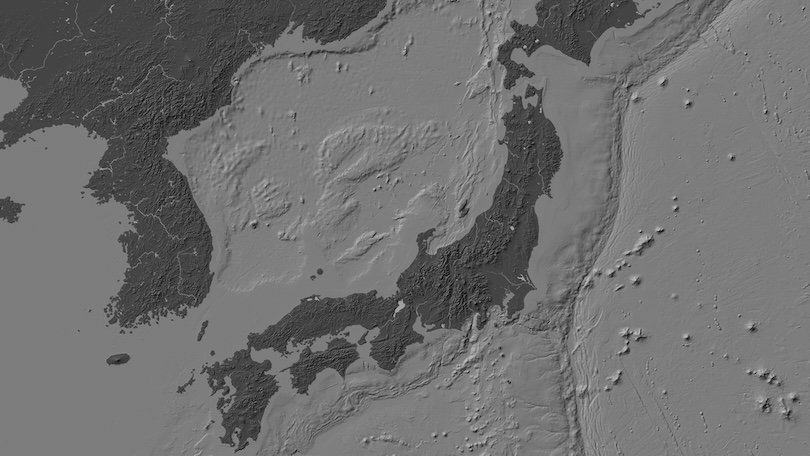
A win by the Liberal Democratic Party-Japan Innovation Party coalition, led by Prime Minister Sanae Takaichi, in the election of the Lower House on 8 February 2026 was well predicted before the election day. However, what caused surprise was the scale of the victory; her ruling coalition has won over a two-thirds majority or ‘supermajority’ of the seats. It will give her government a ‘monopoly’ to implement her domestic and foreign policy agenda because the ruling coalition now has enough votes to override dissent from the Upper House, in which the coalition is a minority. Takaichi’s election victory was the result of a convergence of multiple factors rather than any single decisive cause. Nevertheless, China featured prominently in Japan’s electoral politics, as her approach to managing China-Japan bilateral relations, especially on critical minerals, became a salient campaign issue. A less-known ordinary exploration exercise in the waters surrounding a small remote island in the Pacific Ocean was skilfully ‘hijacked’ by her for election purposes.
After becoming Japan’s Prime Minister on 21 October 2025, she managed to meet Xi Jinping on the sidelines of the APEC Economic Leaders’ Meeting in South Korea at the end of the month. However, bilateral relations began to sour a week later. Three events, in particular, warrant our attention. They are (in chronological order): The break-up of the 26-year alliance between the Liberal Democratic Party and Komeito (announced on 10 October 2025); Takaichi’s remarks on Taiwan in the context of collective self-defense on 7 November 2025, and China’s announcement of banning exports of dual-use goods, including critical minerals, to Japan on 6 January 2026.
The restrictions on the export of dual-use goods resembled the unofficial embargo on Chinese exports of rare earth elements to Japan in September 2010 in the wake of the territorial dispute over the Diaoyu/Senkaku Islands. After Takaichi’s remarks on a possible Taiwan contingency and explicitly linking Japan’s security to it under the logic of collective self-defense, China implemented tighter, restrictive exports of critical minerals and rare earths to Japan in December 2025 and January 2026. However, what differs between the 2010 and 2025 trade restrictions is that Takaichi has learned from her mentor, Shinzo Abe, about the ‘China threat’ and is acutely aware of the dangers of over-dependence of critical mineral supplies from China and supply-chain vulnerabilities.
Amid the diplomatic feud with China over critical minerals, Japan’s Finance Minister Satsuki Katayama called for stopping China from using critical minerals as an ‘economic weapon’.
On 19 January Takaichi announced a snap election scheduled for 8 February. Without the moderating force of Komeito, which calls for continued engagement with China, Takaichi has been given a free hand to deal with China on her own ideological terms. As Japan’s first female prime minister and an admirer of Margaret Thatcher, she has been called Japan’s ‘Iron Lady‘. She has adopted a hardline nationalist policy towards China, refusing to retract her remarks about a Taiwan contingency, despite intense diplomatic pressure from Beijing.
A key theme of her election campaign was economic and mineral security from the China threat. A sparsely populated outlying island called Minamitori Island (or Minamitorishima, also known as Marcus Island) has become a focus of Japan’s mineral security policy. In the northwestern Pacific Ocean, Minamitori Island is about 1,850 km (or about 1,000 nautical miles) southeast of Tokyo. In the run-up to the election day, her government announced in a high-profile manner the exploration of Minamitori and its success. In effect, she told the voters a ‘story’ that her government has now found a viable strategy to manage China’s bullying and enhance Japan’s economic security.
On 12 January 2026, a week before the announcement of the snap election, Japan’s flagship deep-sea drilling vessel, Chikyū, embarked on a month-long voyage to Minamitori Island to conduct exploratory drilling of deep-sea mud. On 2 February, a few days before the election, the Cabinet Office and the Japan Agency for Marine-Earth Science and Technology (JAMSTEC) announced that the vessel had successfully retrieved 350 metric tonnes of rare-earth-rich mud from a depth of 6,000 meters on the deep-sea floor. The extracted mud contained high level of rare-earth elements and yttrium (REY). It is estimated that the seabed surrounding Minamitori Island contains rare earth reserves of more than 16 million tonnes, sufficient to meet the global demand for relevant rare-earth elements for more than 700 years. It may be the world’s third-largest rare-earth deposit.
This mission itself was not new; it followed earlier exploratory campaigns in the same area. Japan plans to construct a deep-sea mud processing facility on Minamitori Island by 2027, and Chikyū, operated by JAMSTEC, has already been undertaking preparatory operations there. With ‘full-scale exploration’ reportedly scheduled for February 2027 – at a projected rate of up to 350 metric tonnes of rare-earth-rich mud per day – and a commercial feasibility report including mining costs following the full-scale exploration by March 2028, Japan aims to become the first country to pursue commercial mining of the deep-sea floor.
However, according to deep-sea mining (DSM) experts whom the author has recently interviewed in Japan, DSM is not yet commercially viable, nor does Japan currently possess any environmental impact assessment framework capable of adequately addressing the associated environmental risks. According to the informants, commercial viability remains a long-term prospect. At present JAMSTEC has the technical capacity to extract approximately 350 tonnes of REY- rich mud per day. However, for operations to be commercially viable, extraction rate would need to increase by at least 10 times, i.e. 3,500 tonnes per day. Besides, the location of any future refinery plants remains undecided, largely because of Minamitori Island’s remoteness from Japan’s main islands. It took five days for the drilling vessel Chikyū to reach Minamitori Island from Shimizu Port in Shizuoka prefecture, a major Japanese port. It will pose significant logistical challenges if thousands of tonnes of REY-rich mud are involved. At present, Chikyū is Japan’s only drilling vessel capable of lifting rare-earth-bearing seabed mud from depths of up to 6,000 meters.
In addition, the environmental impact of deep-sea mining is still an unknown. Although in 2022, Japan amended its Mining Act to incorporate rare-earth minerals into its mineral list in order to facilitate the development of extracting REY-rich mud in the seabed within its exclusive economic zone (EEZ). However, the Act focuses on mining rights and their use without covering environmental protection. On the other hand, although Japan’s Environmental Impact Assessment (EIA) Act (Act No. 81) was adopted as early as 1997 and has been amended several times since then, it does not cover seabed resources.
Given the financial and environmental uncertainties and risks, DSM is not around the corner. Merely for election purposes, the Takaichi administration tended to exaggerate the promising prospects of Japan’s DSM within its territory, creating an impression that her government managed to establish a China-free critical mineral supply chain. Her government highly boasted the success of the Chikyū exploration and went to great lengths to frame it as ‘a meaningful achievement both in terms of economic security and comprehensive maritime development’. Takaichi has also extensively hailed the successful, government-led, deep-sea mining test as a ‘world first’. In her statement posted on X (formerly Twitter)on 2 February, she referred to the success to as a ‘first step toward industrialisation of domestically produced rare earth in Japan’; and it could establish ‘resilient supply chains for rare earths and other critical minerals to avoid excessive dependence on a particular country’. Obviously, that ‘particular country’ is China.
Despite the ‘success’ in the last exploration around Minamitori Island, it will be far too sanguine to conclude that exploitation with commercial viability – very different from scientific exploration – can be undertaken in the foreseeable future. During the interviews with the author, scientists in Japan argue that it would take at least another decade, if not more, for the country to reach the stage of full-scale extraction of deep-sea mud within Japan’s EEZ. The story that Japan’s DSM has achieved a major breakthrough was ‘constructed’ to aid Takaichi’s election campaign which, among others, aimed to counter a looming China threat to the supplies of critical minerals. Takaichi capitalised on the exploration result and China’s re-use of coercive economic statecraft to narrate that she would be the right and capable leader for the country, amid strained relations with China.
This analysis suggests that after the election, detailed DSM exploitation plans will be left to professionals to work out. What is certain is that her government is determined to proceed with diversifying the supply chain of critical minerals and that deep-sea mining in Minamitori Island’s EEZ is one of those channels that Japan is keen to develop as soon as possible. An implication of this mining policy would be that conflict with China around Minamitori Island may be intensified. In June 2025 the Chinese aircraft carrier, Liaoning, was seen to enter into the EEZ of Minamitori Island with specialists were speculating the political motive behind the entry. This island, albeit small, deserves our great attention in the years to come.
Further Reading on E-International Relations
