
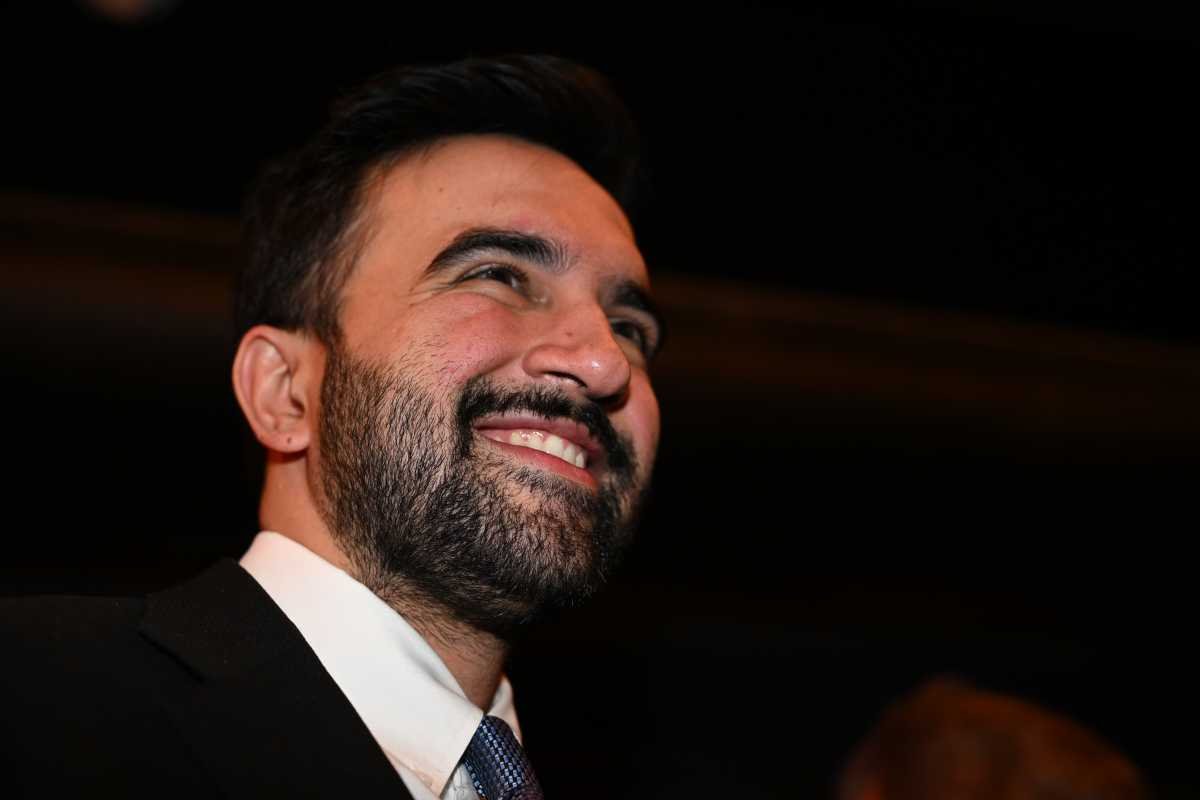
Mayor Zohran Mamdani’s proposed property tax hike tells working families to dig deeper into pockets that are already turned inside out.
Let’s be honest about who actually ends up paying when City Hall reaches for more: not the consultants, not the hedge fund class, not the people insulated from the day-to-day grind. It’s homeowners in Queens, Brooklyn, Staten Island, and the Bronx — people who bought modest houses because they believed in stability, in equity, in passing something down besides stress.
Specifically, this hike hits working- and middle-class New Yorkers with household incomes around $122,000 — a number that might sound high on paper, but in New York City it’s nowhere near rich.
New Yorkers are already navigating rent spikes, childcare costs that rival college tuition, grocery bills that feel like ransom notes, and insurance premiums climbing like they’re chasing the skyline. For homeowners — many of them first-generation buyers — property taxes aren’t an abstract policy debate. They are the difference between staying and selling. Between keeping the house and losing it. Between building wealth and watching it evaporate.
The first question in budgeting should never be: “How do we collect more?” It should be: “Are we spending smarter?”
City government’s reflex cannot be to reach for the taxpayer every time there’s a gap. That gap exists for reasons. We have ballooning overtime costs. We have agencies that chronically underspend on capital projects while overcommitting on operating budgets. We have programs that persist long after their effectiveness has been called into question. Before we ask a nurse in Bayside or a retiree in Far Rockaway to pay more, City Hall needs to prove it has exhausted every other avenue.
And let’s talk about fairness.
Property taxes in New York City are already inequitable. The system disproportionately burdens homeowners in communities of color and in outer-borough neighborhoods where property values have not skyrocketed like Manhattan luxury towers. Middle-class Black and Brown homeowners often pay a higher effective tax rate than owners of high-value brownstones in wealthier ZIP codes. Raising rates inside a flawed structure doesn’t fix injustice — it deepens it.
Many families scraped and sacrificed for decades to buy their homes. They endured redlining. They were locked out of wealth-building opportunities. For them, homeownership wasn’t about status — it was about security. It was about creating something permanent in a city that can feel temporary.
A tax hike chips away at that permanence.
In this city, costs stack up fast. Add water bills, school fees, insurance hikes, utility increases — and suddenly “manageable” becomes suffocating.
When government overreaches on property taxes, it triggers ripple effects. Landlords pass costs to tenants. Small businesses operating out of mixed-use buildings face higher overhead. Seniors on fixed incomes are squeezed. The housing market tightens. And the very communities we say we want to stabilize start to hollow out.
There is a better path.
Before reaching into the pockets of working families, City Hall should conduct a serious review of its own house. That means examining contracting practices that routinely balloon in cost, reducing redundancies across agencies running overlapping programs, tightening procurement timelines, and cracking down on excessive overtime that drains hundreds of millions from the budget annually. Fiscal responsibility is not austerity: it is stewardship.
We should also be looking at progressive revenue options that ask the wealthiest New Yorkers and the most profitable corporations to contribute more, particularly those who have benefited most from the city’s growth. At the same time, true property tax reform must correct a system where luxury developments and high-value properties often pay a lower effective rate than working-class homeowners in Queens or the Bronx. Fairness means modernizing the structure so every household pays its fair share, not doubling down on inequity.
Raising property taxes now sends the wrong signal at the wrong time.
It tells New Yorkers that when City Hall miscalculates, they must compensate. It tells homeowners who did everything right that their stability is a bargaining chip. It tells families hoping to pass down a house — not debt — that the ladder is getting shakier.
We should be expanding opportunity, not taxing it.
New York is strongest when its neighborhoods are stable. When families can plan. When seniors can age in place. When working people can build equity instead of bracing for the next bill.
The answer to fiscal pressure is not reflexive taxation. It’s responsible governance.
Before the mayor asks New Yorkers to pay more, he should prove he’s done more with what he already has.
