
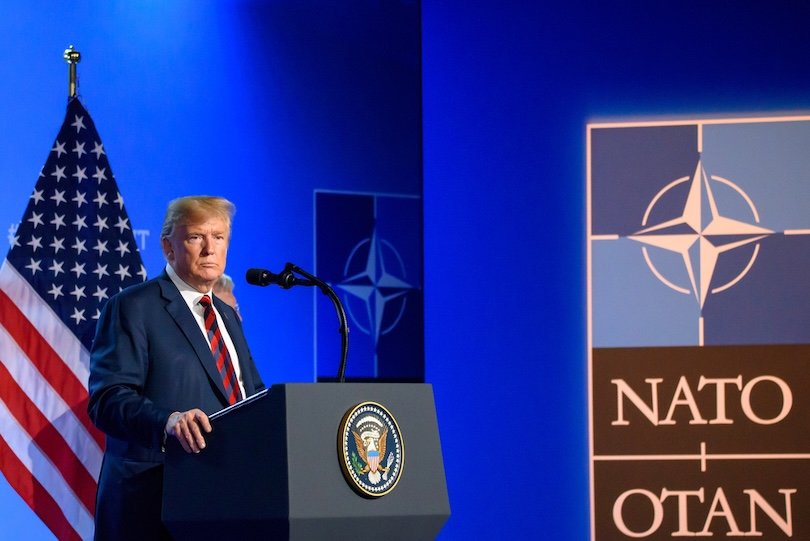
By the end of the first year of President Donald Trump’s second term in the White House, descriptions of systemic crisis in – or even predictions of the end of – the transatlantic security alliance were commonplace. And yet NATO had not only survived, but by January 2026 was taking on new roles and responsibilities – playing a more important role in facilitating continuing western (including US) military assistance to Ukraine, and potentially also with regard to Greenland, and perhaps wider Arctic security. It was certainly true that Trump’s brusque and unpredictable approach to international diplomacy led to some bruising encounters with allies and partners. These proved short-lived, however, and were managed short of inflicting serious or durable damage on the core NATO institution. The analysis here seeks to explain how and why.
NATO’s Enduring Institutional Strengths
The 1949 North Atlantic Treaty (NAT) places no automatic obligation on its signatories to offer military assistance to allies under attack. Article 5 merely requires each signatory to take “such action as it deems necessary”, leaving the door open in theory for them to take no enforcement action. Its content nevertheless suggested that signatories wanted something more solid and permanent than a traditional military alliance. There, little or nothing might be done to provide collective military resources, but the wording of the NAT’s Article 3 states that “in order more effectively to achieve the objectives of this Treaty, the Parties separately and jointly by means of continuous and effective self-help and mutual aid, will maintain and develop their individual and collective capacity to resist armed attack” [emphases added]. The treaty also provided for the creation of the intergovernmental North Atlantic Council (NAC), in which each signatory would be represented.
Nicholas Henderson, a British diplomat involved in negotiating the NAT, recalled the “overriding presence of … common purpose” animating western leaders at the time. This was institutionalised in agreements by member states in 1952 to create international political and military staffs, and a process for continuously reviewing national defence plans. A seminal 1957 study by Karl Deutsch et al later called this review process “an unprecedented performance” in the degree to which sovereign states opened up their defence planning processes to multilateral scrutiny and recommendation.
Neither the force-planning process nor any other aspect of NATO’s institutional development involved formal supranationalism. There are no legal or institutional means to compel member state compliance with its procedures or recommendations. Nevertheless as they developed, the force-planning process – overseen by a Defence Planning Committee (DPC) – together with wider political and diplomatic consultations in the NAC, increasingly influenced the decision-making of member states. As they did so, NATO ‘matured’ into a significant international security institution. The concept of international institutions is most closely associated with American scholar Robert Keohane, who defined them as “involv[ing] persistent and connected sets of rules (formal or informal) that prescribe behavioral roles, constrain activity and shape expectations” among member states. Drawing on insights from the academic regime theory paradigm, it can also be argued that the development of a ‘consultative regime’ among member states informally but vitally helps regulate and shape the way in which they conceptualise, formulate and implement policies on issues within an institution’s remit.
Historical Challenges to NATO’s Cohesion
During the Cold War, there were few occasions when national governments felt able to ignore collective recommendations from NATO altogether. Even the most powerful members, including the United States, were willing to defer or modify planned reductions in response to intra-institutional pressures. NATO’s consultative and behavioural regimes had developed substantial robustness by the 1980s. Thus, as the scholar Glenn Snyder noted in 1984, “because the alliance itself is fundamentally stable … [specific] policy divergences may develop and persist”. However Snyder added a caveat: “the alliance is stable because it is essentially a product of the structure of the system and of the common security interests generated thereby. So long as that structure and those interests persist the allies are free to disagree”.
NATO was thus stable within the systemic context of Cold War bipolarity, but would this survive that order’s demise in 1989-1991? Virtually all member states did make significant defence budget cuts during the 1990s in response to the disappearance of the Soviet threat and the resultant quest for a ‘peace dividend’. These reductions took place within parameters agreed in NATO however. The established force-planning process, together with the behavioural and consultative regimes surrounding it, were maintained as the key framework for ongoing discussions about force levels and commitments.
Prior to Trump’s first term, the most significant questions posed to NATO’s continued viability came during George W. Bush’s presidency in the early years of the present century. During the 2000 election campaign, Bush had pledged to withdraw American troops from Bosnia and Kosovo, where they were stationed as integral parts of the stabilisation forces deployed in the wake of conflicts there during the 1990s. These deployments had assumed a pivotal importance in the minds of many European leaders: embodying the success of NATO’s post-Cold War evolution into a core security provider in the wider European context.
Shortly before Bush’s first inauguration in January 2021, allied defence ministers had commissioned reviews into force levels in both Bosnia and Kosovo. These apparently innocuous decisions subtly increased the potential political and diplomatic costs to the incoming administration of proceeding with Bush’s withdrawal pledge. If he announced unilateral withdrawals, and effectively short-circuited an ongoing intra-NATO review process, this might undercut the reputation of the US as a reliable leader and ally per se, damage NATO’s credibility, and undermine European members willingness to shoulder military responsibilities themselves.
Against this backdrop, Bush started hedging on his campaign commitment even before he was inaugurated. In a January 2001 interview he stated that there were no “deadlines in mind” for beginning withdrawals, also saying that “I honor the agreements that … our country has made”. Concurrently, senior American officials and military officers attuned to NATO’s institutional processes, quickly mobilised, most prominently then Secretary of State Colin Powell. Senior military officers assigned to NATO command and planning structures weighed in by voicing support for the conclusions of the review process – that there should be no change in existing US troop levels in either Bosnia or Kosovo.
Their concerns evidently had influence. Bush took an early high-profile opportunity to address them, on his first visit to Europe in June 2001. He announced at NATO headquarters in Brussels that “I’m going to commit to the line that Colin Powell said: “We came in together, and we will leave together.” It is the pledge of our Government, and it’s a pledge that I will keep”. Bush kept his pledge. When American troops eventually did withdraw from Bosnia in December 2004, this was managed within NATO and in coordination with the European Union which took command of the ongoing mission. The Kosovo commitment remains ongoing.
The epoch-defining terrorist attacks on the US on 11 September 2001 saw a collective NATO response invoking, for the first time, Article 5. Later arguments that the Bush administration effectively disregarded this move do not hold up. By early October 2001, the NAC had agreed a package of eight measures of practical support for Bush’s impending ‘Global War on Terror’. Some of these, such as overflight rights, could have been arranged bilaterally between the US and individual European states, but they were purposely negotiated and agreed within and through the NATO framework. Two collective NATO-led military operations were also announced. One involved the deployment of AWACS surveillance aircraft to help patrol US airspace (Operation Eagle Assist), and the other a naval task force to undertake counter-terrorism patrols in the Mediterranean (Operation Active Endeavor). Then NATO Secretary-General Lord Robertson noted that both had been “requested by the United States” and that together they had “operationalise[d] Article 5” for the first time. Suggestions that intra-alliance arguments over Iraq, particularly in 2002-2003, strained NATO “to the breaking point” were exaggerated. It is well-known that deep divisions over the wisdom of attacking Saddam Hussein’s regime did exist among the NATO allies, but these were largely – and purposely – kept out of the deliberations that took place within the institution itself.
Trump and NATO
The rhetorical antipathy towards NATO displayed by Donald Trump, during his 2016 election campaign and after taking office, is well-known. Despite this, the degree of policy continuity with his predecessors on NATO issues was striking during his first term. Since 2015, NATO’s Enhanced Forward Presence (EfP), i.e. the ongoing rotation of allied military units through Poland and the Baltic States, has been designed to reassure vulnerable members and act as a ‘tripwire’ deterrent to further Russian military adventurism. Originally set in place as the European Reassurance Initiative (ERI) by the Obama administration, the US contribution to EfP – renamed the European Deterrence Initiative (EDI) – continued under Trump. Indeed, its annual funding was increased, from under $1bn to over $6bn, during his first term. An outbreak of angst amongst European allies, caused by an apparent announcement of an impending withdrawal of American troops from Germany, was stilled when it emerged that following consultations at NATO headquarters, most of them would actually be redeployed to NATO duties in Poland, and thus contribute more directly to the EfP. The Trump administration had ended up doing little more than “adjust the military furniture” in Europe.
In explaining the policy continuity, two restraining factors and one facilitating factor can be identified. The first two emerged primarily from within the US system of government itself. The first was internal to the Administration. Analogous to the influencing role played by Colin Powell and others in the early George W. Bush presidency, senior Trump officials asserted from early 2017 that American commitment to NATO remained unaltered. Then Defense Secretary James Mattis – a former head of NATO’s Allied Command Transformation (ACT) – played a particularly prominent role in this reassurance effort, but it also included officials with little or no previous background in international affairs, such as then Secretary of State Rex Tillerson.
The second and probably more significant source of restraint on Trump was Congress, reflecting the legislature’s responsibility within the American constitutional system for funding the Federal Government and, in the Senate’s case, ratifying international treaties. Basic bipartisan consensus on maintaining support for NATO, and avoiding unilateral policy actions that might undermine it, was evident throughout Trump’s first term. It was seen in declaratory statements by senators and congressmembers, unprecedentedly strong congressional delegations visiting Europe and most importantly, the introduction in 2019 of the NATO Support Act (NSA). Legislators from both parties strongly opposed any move to withdraw the US from NATO either formally, or de facto by reducing contributions to its “structures, activities or operations”. The bipartisan support for the NSA was striking. By the end of 2019, the act had passed overwhelmingly in the House of Representatives and unanimously in the Republican-led Senate Foreign Relations Committee. This context perhaps explains the relative quietening of even rhetorical antipathy towards NATO and ‘free-riding’ European members, on Trump’s part, during the last year of his first term.
The facilitating factor derived from evidence that Trump’s robust criticisms of defence burden-sharing had actually helped strengthen the NATO force-planning and review process. Strategic studies analyst John Deni has shown that during the first Trump administration, all identified capability targets were picked up by member states, with none left on the table. In return for the US demonstrating a continuing commitment to working with and through established NATO processes, European allies committed to sharing the burden by meeting all their identified targets. This was the first time such a complete success had been achieved since the end of the Cold War in 1991. Deni shows convincingly that the US achieved this outcome not through presidential threats, but by working vigorously within and through the established multilateral force-planning framework.
During the first year of Trump’s second term, from January 2025, there were periodic concerns, evident especially in the months leading up to the NATO summit in The Hague in June that year, that the re-elected president might provoke a fresh crisis over defence spending levels (criticism of which had been a theme of his 2024 election campaign). His options were constrained, however. The NSA forbade a president from seeking to withdraw the US from NATO without the consent of two-thirds of the Senate. Since being first introduced in 2019, the legislation had been tightened to prevent use of federal appropriations to fund a potential US withdrawal. Congress also maintained a second ring of restraint on the Administration’s potential room for manoeuvre. In December 2025, the National Defense Authorization Act (NDAA) for the next fiscal year amended the priorities outlined in the Trump Pentagon’s initial budget proposals. It increased funding for the US contribution to the EfP, and to Ukraine’s defence. It also mandated a floor for the number of US troops deployed to NATO-Europe overall.
Further, the NDAA prohibited any move to relinquish the post of Supreme Allied Commander Europe (SACEUR), NATO’s senior operational commander and a post traditionally held by an American four star officer. This was in direct response to speculation in Spring 2025 that internal Pentagon deliberations were considering that possibility. This prompted a public rebuke from the Republican Chairs of both the House and Senate Armed Services Committees. Their statement was couched in nominally supportive language but its intent was clear:
“We support President Trump’s efforts to ensure our allies and partners increase their contributions to strengthen our alliance structure, and we support continuing America’s leadership abroad. As such, we will not accept significant changes to our warfighting structure that are made without … collaboration with Congress.”
As this statement suggested, senators and congressmembers were not simply doing a favour to NATO and its European members. In addition to reasserting congressional prerogatives, they sought evidence of enhanced willingness to resource agreed NATO commitments and capabilities on the part of the latter. Agreement at the Hague summit, where all member states (bar Spain) committed themselves to raise core defence spending to 3.5 per cent of national income by the mid-2030s, with an additional 1.5 per cent going on more loosely defined ‘security related’ spending, was thus a pivotal event.
The Hague summit agreement also represented a genuine success for the president, and one with roots in his first term. As analysts pointed out, when Trump took office for the second time, a trend was already evident. At the start of his first term in 2017, fewer than a quarter of NATO governments were meeting the then extant spending target of 2 per cent of national income. Eight years later this had risen to two thirds. Increased European take-up of specific capabilities targets generated within the NATO force-planning process had also continued since the early 2020s.
The outcome was a compromise, mitigating Trump’s statements during the 2024 campaign, that he would demand that all NATO allies commit to spending a minimum of 5 per cent of national income on defence (around 1.5 per cent more than the US itself was spending). An important meeting between Secretary of State Marco Rubio and new NATO Secretary-General Mark Rutte at NATO headquarters in April 2025 set the tone for an essentially co-operative process in managing this. Their meeting prefigured the vital role that Rutte would play in brokering the eventual compromise. The basic idea behind this – 3.5 per cent core defence spending, with the additional 1.5 per cent drawn from repurposed or relabelled spending elsewhere – was reportedly his, and agreement was negotiated in a series of meetings with Trump, other senior Administration officials, and European leaders in the Spring and early Summer of 2025.
Given NATO’s lack of supranational competence, his approach required significant balance and tact on Rutte’s part. He could not formally coerce or compel any member government to sign on to his suggested compromise. Nevertheless, appeals to NATO unity, cohesion and ongoing efficacy were highly effective in convincing virtually all national governments that there was no viable alternative to acceding to his suggestions. The Spanish government, the sole outlier, did indicate a degree of sensitivity at apparently having its sovereign decision-making rights encroached upon. The others however, including leading European NATO powers such as the UK, were politically and diplomatically “forced” to accede to Rutte’s plan, particularly when it became clear that Trump was on board with it.
Consequentially for both settling the immediate issue and over the longer term, Trump was happy with the new burden-sharing agreement and the process used to secure it, relying on Secretary-General Rutte as his main point of contact in brokering agreements and compromises. Reflecting this, he repudiated his notorious 2016 assertion that “NATO is obsolete”, stating that it was now “becoming the opposite of that” in an interview with the BBC in July 2025.
The president also adopted a similar method in managing other challenges during 2025 and early 2026. Rutte was again the key interlocutor in brokering a July 2025 deal for the US to sell weapons to Ukraine within a NATO framework, with European allies purchasing the weaponry on Ukraine’s behalf. Trump saw this as another example of using NATO as the framework to improve burden-sharing outcomes. Reflecting this view, Under Secretary of Defense Elbridge Colby wrote of the deal that “our alliances have to be fair and equitable. This is eminently reasonable but was treated for many years as heresy … now with the historic NATO commitment we see that it can work”.
The NATO Secretary-General also played an instrumental role in de-escalating the brief but intense transatlantic argument over the future of Greenland in January 2026. He co-ordinated a position among European members (while making clear that he was “not negotiating on their behalf”) which Trump was willing to accept. Under this deal, NATO would again be used as a co-ordinating framework, this time for planning enhanced European military contributions to the Greenland’s security against alleged Russian and Chinese threats. Rutte announced that this would be one of two “workstreams” to be taken forward for urgent consultation and discussion within NATO (the other being direct negotiations between US, Danish and Greenlandic representatives on future trilateral relations).
Conclusions
As the American baseball legend and part-time philosopher Yogi Berra wisely observed, making predictions is tough, especially about the future. This is most especially the case when considering Donald Trump, who has elevated unpredictability into a political art form. Nevertheless following five years of Trump in the White House, there are grounds for suggesting that the president has reached an accommodation with NATO, that will mitigate possibilities of a terminal rupture in transatlantic relations. This view is based on Trump’s appreciation, stemming from negotiations in 2025, that the NATO collective framework is a useful means of promoting a fair division of costs and responsibilities, as he sees it, over defence spending, military assistance to Ukraine, and latterly potential new security responsibilities in Greenland.
Further reinforcing this are restraints, formal and informal, that serve to prevent Trump from seriously undermining NATO, or withdrawing altogether. It is this mixture of durable restraining factors and positive facilitators that incentivises the president to prevent serious or terminal damage to NATO’s cohesion and effectiveness. Notwithstanding apocalyptic predictions about ‘the end of the western alliance’, it can be seen that NATO – the primary institutional embodiment of that alliance – is entering the sixth year of Donald Trump’s presidency in surprisingly good shape.
Further Reading on E-International Relations
