
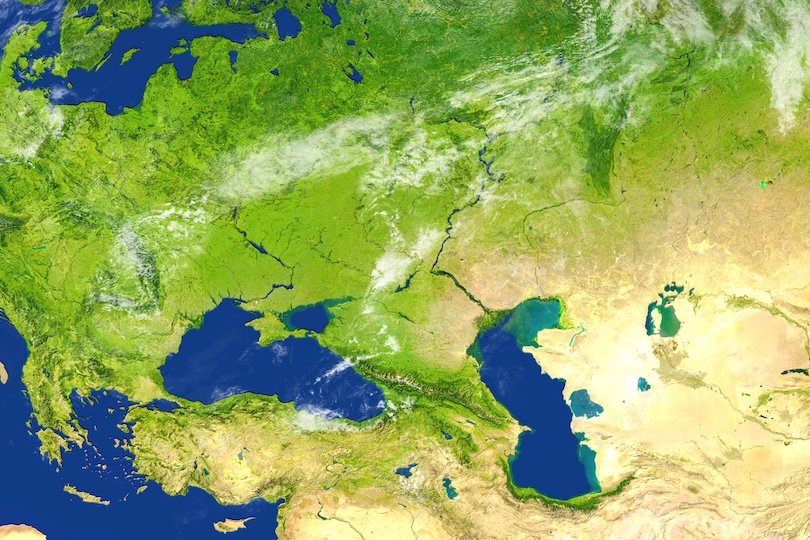
Kazakhstan will host the Regional Ecological Summit this April. The high-level event will address areas like climate transition, adaptation, and economic resilience; food security; sustainable management of water resources; and combating air pollution. This is a great opportunity for Kazakhstan to consolidate its regional leadership by addressing Central Asian and Eurasian environmental challenges. For the Summit to truly have an impact, however, it must include tangible programs and policies, not just conceptual talking points. Water security is a sensitive issue for landlocked Central Asia. Climate change, population growth, and the mismanagement of water resources make the Summit even more important and timely, as water resources need to be protected and responsibly shared.
The loss of the Aral Sea is a cautionary tale about a worst-case scenario, particularly if Central Asian governments do not work together. Hence, the upcoming Summit must conclude with projects and agreements to protect another regional body of water that is gradually shrinking: the Caspian Sea. The idea for the Summit was first raised at the Astana International Forum (AIF) in 2023: Kazakhstani President Kassym-Jomart Tokayev proposed holding a Regional Climate Summit in Kazakhstan in 2026 under the auspices of the United Nations (UN) and other international organizations. The goal of the high-level meeting would be to facilitate dialogue and find adequate solutions to climate change, the head of state explained at the time.
The Summit will have eight key areas, including the Sustainable Management of Natural Resources. A critical focus of the event will be the Aral and Caspian Seas, with discussions of “joint efforts to protect ecosystems, preserve biodiversity, manage water resources, and address the environmental challenges of the Aral and Caspian Seas.” Moreover, the expected outcomes include joint climate action decisions, a regional finance mechanism, new transboundary projects, the launch of a Regional Program to support ecological research, strengthened interstate cooperation, and a common framework for implementing environmental solutions across the region.
Preparations are underway: on August 1, 2025, the Kazakhstani city of Aktau hosted a meeting of Central Asian ministers of environmental agencies to prepare for the Summit. The session presented and adopted the updated Concept of the 2026 Regional Ecological Summit, along with a draft Joint Declaration of the Heads of State of Central Asia. There will be several side meetings during the Summit, most notably, the Central Asia Climate Change Conference (CACCC), organized by the Central Asia Regional Economic Cooperation (CAREC).
The Summit’s focus on the Caspian Sea is not surprising, as it is one of Kazakhstan’s most important bodies of water. The Caspian Sea is a source of life for the natural ecosystem and the peoples of the five countries that border it: Azerbaijan, Iran, Kazakhstan, Russia, and Turkmenistan. Moreover, the Caspian Sea is a primary artery of the Trans-Caspian International Transport Route, commonly known as the Middle Corridor, which links Kazakhstan with the Caucasus (via Azerbaijan’s Baku port) and, from there, to Turkiye and other European and global markets. Hence, the importance of the Caspian Sea cannot be underestimated.
Legal frameworks exist to protect this body of water, such as the Framework Convention for the Protection of the Marine Environment of the Caspian Sea, which was signed in 2003. After its ratification by all five Caspian states, the Convention, also known as the Tehran Convention, entered into force on August 12, 2006. In 2018, another landmark treaty was signed: the five Caspian states signed the Convention on the Legal Status of the Caspian Sea. The goal of the Convention is to put an end to territorial disputes among the five states. Article 3 of the Convention explains that the parties will ensure “protection of the environment of the Caspian Sea, conservation, restoration, and rational use of its biological resources.”A new protocol to protect the Caspian Sea, the Protocol on Environmental Impact Assessment, entered into force in November 2025. It is a legally binding document, so whenever major new infrastructure projects are planned in the Caspian Sea region, they must meet transboundary environmental standards.
Despite the previously mentioned documents, the situation in the Caspian Sea region is alarming and dangerous. Satellite imagery shows how this body of water is disappearing, particularly on its northern shores, affecting Kazakhstan and Russia. The reasons for the situation are diverse. States bordering the Caspian Sea are diverting flows that feed the body of water or are building dams, which limit the amount of water that reaches the sea. The water that reaches the Caspian cannot keep up with evaporation. Other problems include desalination, pollution, offshore oil projects, and greenhouse gas emissions. Climate change is another factor to consider. Even if climate change mitigation efforts limit global temperature rise to 2 degrees Celsius, water levels in the Caspian Sea will still likely drop by 4.8 to 9.75 meters.
According to scientific research carried out by the University of Leeds “the exposed dry seabed is likely to release dust containing industrial contaminants and salt, posing serious threats to human health, as previously occurred with the drying of the Aral Sea.” The natural environment and the wildlife that depend on it will suffer, as the Caspian Sea is home to a variety of species, including sturgeon, carp, catfish, Caspian salmon, and the endangered Caspian seal, as well as migrating birds. A declining water level will also alter the region’s climate. With less water, rainfall would likely decrease, which could affect agricultural projects. Moreover, a drop in water levels “could seriously impact trade routes vital to the economies of these countries, as low water levels could prevent ships from docking.” This worst-case scenario will affect the Middle Corridor, industrial plants, coastal human settlements, and beyond.
Unfortunately, some Caspian Sea governments have not indicated a thorough understanding or concern for the severity of this problem. Iran is a good example; Tehran has a documented history of failing to prioritize environmental protection and water security, such as in the case of Lake Urmia in northern Iran. The disappearance of this lake is hurting the communities of ethnic Azerbaijanis that depend on it, and due to Tehran’s historical tendency to treat them as second-class citizens, their situation is especially precarious. Turkmenistan has an equally troubling record of environmental protection, as exemplified by the leaking of methane in 2022 from fossil fuel fields and state inefficiency in addressing an ongoing water crisis. Therefore, the Regional Ecological Summit is an ideal venue for discussing how to protect and save the Caspian Sea. The situation is challenging, and the loss of the Aral Sea suggests there is a valid reason to be pessimistic. Astana regularly raises the issue of protecting the Caspian Sea: President Tokayev discussed it with Russian President Vladimir Putin during their November 2025 meeting.
Astana must secure regional cooperation and interest in protecting the Caspian. Further loss of the Caspian Sea would be a terrible catastrophe for the wildlife and coastal populations that depend on it and would also negatively impact transport routes like the Middle Corridor, which are critical sources of revenue and economic development for Central Asian and Caucasus states. The Regional Ecological Summit in Astana must not end with just another declaration, but with solid and visible actions, specifically short-, medium-, and long-term protection projects. Kazakhstan has an ideal opportunity to cement its role as an international leader on environmental issues by hosting not only a successful Summit but also leading a movement to protect and save the Caspian Sea.
This article is based on a presentation given by the author titled “The Caspian Sea at the Regional Ecological Summit 2026” for the webinar Water Security and Transboundary Cooperation in Central Asia organized by George Washington University’s Central Asia Program and Civitas University in December 2025.
Further Reading on E-International Relations
