
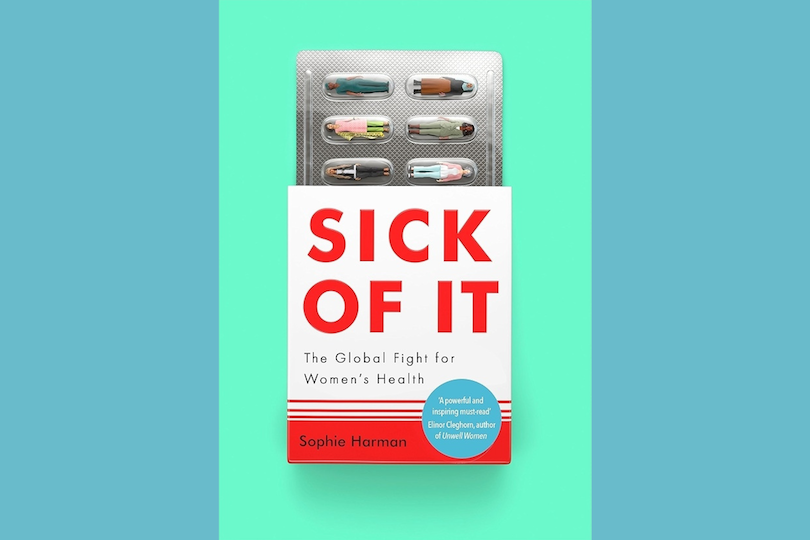
Sick of It: The Global Fight for Women’s Health
By Sophie Harman
Virago Books, 2024
Harman’s Sick of It is an important examination of inequalities in healthcare for women across the world. It demonstrates how women’s health is simultaneously sidelined and mobilised as a tool for political gain, and the devastating consequences of this globally. The book not only outlines the problems shaping women’s (lack of) healthcare in an accessible manner, but it also provides readers with practical advice on how to address health inequalities. These are no small feats. The strength of the book lies precisely in the fact that it is insightful not just for academics, policymakers, and practitioners but for anyone interested in global health and women’s health. Indeed, the Epilogue, which includes advice on how to foster health equality, begins by outlining the “easy stuff” readers can do (p. 248) before moving to more complex challenges like how to “rethink foreign aid” (p. 266). So, whether you’re a casual reader with little background in global health or a gender and health advisor at a major NGO or government body, Sick of It will likely provide valuable insights.
The core puzzle at the heart of the book is how, despite the growing wealth of resources and attention invested in women’s health, women continue to have worse health outcomes and are notably disadvantaged in healthcare contexts. Harman highlights, “[w]omen die when they don’t have to, not because of a lack of attention, science or evidence […] but because of the exploitation of women’s health as a means of attaining and sustaining power in the world” (p. 5). She demonstrates how women’s health inequalities are deeply connected to global inequalities, such as racial inequalities. Hence, Sick of It is as much about the fight for women’s rights globally as it is about women’s access to healthcare.
Drawing on interviews, observations, and her years of expertise working on global health and gender, Harman outlines the challenges shaping women’s (lack of) access to healthcare. She explores various challenges, such as the genocide in Gaza and the related choking of healthcare facilities by Israeli authorities (Chapter 4), the repeal of abortion rights (Chapter 3 and Conclusion), the abuse and violence against women healthcare workers (Chapter 7), and the Russian invasion of Ukraine (Chapter 4). Harman also problematises practices of the “good guys” in global health. For example, Chapter 5 examines the use of visual imagery by humanitarian actors, demonstrating how women, particularly those from the Global South, are expected to package and present their “traumas” in order to access healthcare and ensure that services are provided to others in similar situations.
The book is organised into three parts: 1) how women’s health is used for political power; 2) the exploitation of women in healthcare and aid settings; and 3) the solutions typically proposed to address health inequalities. The book concludes with a guide that provides pathways for tackling the challenges highlighted. So, while the book deals with the grim reality of women’s health globally, it is a hopeful call to action — one that recognises both the complexities of the challenges and their associated solutions, in addition to highlighting the power of activism and political engagement.
Sick of It has four contributions that deserve particular attention. First, it outlines, especially in Chapter 12, the need to believe women, regardless of whether they are reporting misconduct and exploitation or when they say they are in pain. The call to believe women continues to be radical and timely precisely because women, particularly black and brown women, continue to be sidelined and ignored in healthcare settings and beyond. The second key strength is the book’s ability to consider women’s inequalities at the global level without flattening the complexities of (global) hierarchies between women. Throughout the book, she demonstrates that women have some shared experiences in terms of their generally inadequate access to healthcare. But Harman also underscores the differences in access and how these differences are shaped by the structures of, for instance, race, class, ability, and heteronormativity. For example, Harman stresses that black women are notably more likely to die from pregnancy-related complications than their white counterparts (p. 3), that black women have consistently mobilised to highlight and challenge their (health) inequalities (p. 238), and that women in the Global South are often sidelined in comparison to (white) women in the Global North (p. 117). These contributions are important not just for policymakers and practitioners but for all who are concerned with women’s rights, including their right to healthcare.
Moreover, Harman rejects the usual reasons given for the promotion of women’s (health) equality, which emphasise their roles in society more broadly. This is another key contribution, as calls for the rights of women often still centre on their ‘value’. Harman underscores that while it is undeniable that women and girls are crucial to the functioning of life and politics around the world, promoting their access to rights and equality because they, for instance, play important (gendered) roles as caregivers, works to obscure the reality that women’s lives and rights matter in and of themselves. Accordingly, she stresses “[w]hen we say women’s health matters for any other reason than women themselves, we devalue the lives and health of women” (p. 48). This contribution is critical for those who are working to promote women’s health equality; Harman demonstrates how to discuss and promote women’s health without instrumentalising women’s needs and lives.
Lastly, Sick of It highlights the rights and lives of women in general, rather than focusing on mothers or motherhood in particular. In Chapter 2, Harman outlines the rise in concern and funding for women’s health globally. She demonstrates how often women who are not mothers, who are unable to become mothers, who are past reproductive age, or who do not want to become mothers, were and continue to be overlooked. Relatedly, Harman goes on to emphasise the need to go beyond a focus on women’s sexual and reproductive health (and breast cancer) (p. 30). The emphasis on women in general, rather than mothers in particular, is necessary, considering the increasing number of women choosing not to have children or choosing to have children in later life, and the backlash against this. Such backlash more recently and famously includes American Vice President JD Vance arguing that America, and the Democratic party specifically, is run by “childless cat ladies who are miserable at their own lives and the choices that they’ve made and so they want to make the rest of the country miserable too.” While Vance attempted to walk back his comments, such comments (re)produce the age-old gendered sentiment that women’s lives are, and ought to be, centred on their role as mothers.
Harman’s Sick of It not only provides insight into women’s health globally, it also opens up new avenues of research. Building on Harman’s work, one avenue that could be especially insightful is examining the role of gender experts. In Chapter 11, she details how gender experts are important actors in recognising, highlighting, and addressing women’s health inequalities. She emphasises how gender experts are rarely adequately funded or listened to. Future research needs to examine whether the emphasis on gender experts (and the experts themselves) risks sidelining women who have experienced health inequalities, particularly black and brown women in the Global South who, as Harman emphasises, tend to be sidelined. Understanding the role and work of gender experts is necessary, as research has indicated how expertise itself can be racialised. The book demonstrates how the “good guys” can challenge and sustain women’s health inequalities in complex ways; as such, there is a need to explore how gender experts connect to this complex relationship. Ultimately, Sick of It is an important intervention, especially considering the backlash against women’s rights, including trans women’s rights, feminism, and widening global inequalities.
Further Reading on E-International Relations
