
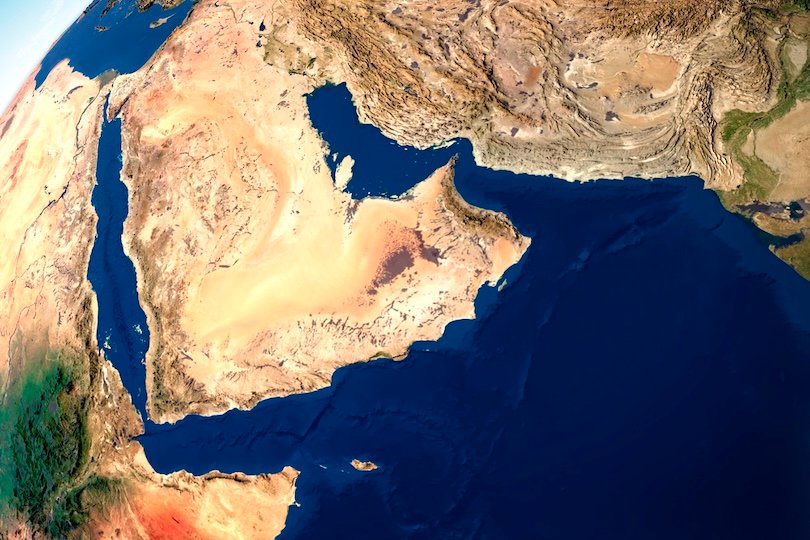
Following the events of October 7, 2023 and the outbreak of the Gaza War, Israel made a conscious geopolitical reevaluation when it recognized Somaliland on December 26, 2025. Strategic diversification across several key locations in the Horn of Africa was required due to the growing Houthi attacks and the susceptibility of Israel’s sole military base in Eritrea to regional unrest. This decision embodies operational insights derived from reliance on single forward operating bases: While the Iranian-backed Houthi rebels have demonstrated an unparalleled ability to conduct asymmetric disruption operations through drone and missile attacks on commercial vessels, the Israeli strategic assessment has shifted toward reducing geographic dependence and establishing operational platforms capable of facilitating intelligence gathering, logistical coordination, and maritime surveillance independently of Eritrea’s unstable political alliances. As a result, Israeli intelligence intensified its covert contact with the political leadership in Somaliland throughout 2024, culminating in formal diplomatic recognition, a move openly acknowledged by Israeli Prime Minister Netanyahu as a direct result of years of clandestine intelligence cooperation designed to establish Israel’s alternative access to the Red Sea.
Somaliland gained recognition from over thirty-five states, including Israel, on June 26, 1960. However, it united with the former Italian Somali territory at the end of the same month. This early, short-lived independence marked the beginning of Somaliland’s longe and uneven journey to recognition. Since the unilateral declaration of independence in 1991, Hargeisa has sought to revive that lost legal status by promoting itself as both an island of relative pluralism and electoral competition in a turbulent region, as well as a key security partner against Al-Shabaab and other jihadist groups that continue to destabilize southern Somalia. This struggle for recognition is demonstrated by Ethiopia’s January 1, 2024, Memorandum of Understanding (MOU), which exchanges future recognition for access to 20 km of Red Sea coastline near Berbera, and concurrent efforts in Washington to position Somaliland as a strategic asset in Red Sea security and great-power competition. The question today is no longer whether Somaliland has a case for recognition, but rather which capitals will go from de facto to de jure first. The question that arises here is what comes next, and what scenarios might reshape the regional security architecture in the Horn of Africa and the broader Middle East. We can identify four main scenarios:
Israeli diplomatic recognition of Somaliland would establish what could be termed the “Taiwan model” of a de facto state supported by external powers. This model allows unrecognized political entities to maintain their operational capacity as a state and their international presence through strategic partnerships with external sponsors, thus bypassing formal United Nations (UN) membership and global recognition. The practical effectiveness of this paradigm is demonstrated by comparing Taiwan and Somaliland, which reveals that consistent sponsor engagement is significantly more important than the quantity of official diplomatic recognitions. Upon Israeli recognition, Somaliland would become a quasi-state with operational capabilities backed by military support, intelligence cooperation, and diplomatic channels, solidifying its position as an aspirational separatist movement within this framework.
According to research on de facto states, these entities establish their legitimacy and operational capacity through three main mechanisms: providing public services such as security, financial transfers, and representation; mobilizing civil society to support the national cause; and upholding institutional stability, including ministries, courts, and security services. Through the first and third mechanisms, signaling international acceptance of Somaliland’s legal status and incorporating it into Israel’s developing security architecture in the Red Sea and Horn of Africa region, Israeli recognition of Somaliland would surely solidify its existence.
Israel’s recognition of Somaliland is a component of a larger geopolitical plan to counter competitor nations like Iran and Turkey while increasing its influence in East Africa. To establish a security partnership in the Horn of Africa, this approach encompasses intelligence sharing, military cooperation, and development assistance. Israel positions itself alongside regional heavyweights, such as Saudi Arabia and Egypt, by establishing a diplomatic presence near the Bab el-Mandeb Strait and key maritime routes. Some of the strategic objectives are expanding diplomatic outreach in Africa, particularly in the aftermath of the Abraham Accords, enhancing military capabilities in the Indian Ocean, and participating in security accords in the Red Sea. Therefore, rather than being a unilateral diplomatic action, this recognition plays a significant role in Israel’s competition with other regional influences.
Israel’s recognition of Somaliland is likely to sharply escalate the border conflict between Somalia and Somaliland, fundamentally destabilizing the regional security architecture in the Horn of Africa. With armed clashes in Lasanod in 2023, the long-standing political and legal dispute between Hargeisa and local forces loyal to the federal government, which had lain dormant since the fall of the Somali state in 1991, resurfaced, drawing attention from regional organizations and explicit intervention from the UN Security Council.
This escalation mechanism operates through what can be termed the “spillover effect”, in which internal conflicts tend to spill over into neighboring states, destabilizing them through reciprocal security dilemmas and military responses. Israeli recognition will solidify Somaliland’s position as a proxy battleground for competing regional and international powers seeking influence and access to maritime navigation, particularly given the strategic location of the port of Berbera as a transhipment hub controlling access to the Gulf of Aden and the vital trade corridor between the Red Sea and the Indian Ocean. This rivalry manifests itself in conflicting patronage arrangements: the UAE has substantial investments in Somaliland and Ethiopia, while Turkey has positioned itself as a “protector of Somalia’s coasts” in a direct counterbalance. Egypt, for the first time in four decades, has also provided direct military assistance to Somalia under a joint defense agreement. Due to these unequal patron-client ties, Somaliland’s secession is being exploited by outside powers to advance their own geopolitical objectives, largely unrelated to those of the governments in the Horn of Africa. An example of this dynamic is the above-mentioned MOU that Ethiopia and Somaliland signed in 2024.
Israel’s recognition of Somaliland would set a historic precedent for legitimizing disputed secessionist movements, directly undermining the fundamental principle of territorial integrity (uti possidetis juris) upon which the African Union’s (AU) institutional order rests. Beyond the immediate conflict between Somalia and Somaliland, this recognition would create an implicit framework that would allow secessionist movements throughout the Horn of Africa and across the continent, notably Puntland’s demands for autonomy, the Oromo Liberation Front’s regional claims in Ethiopia, and the potential Tigray secession scenarios that remain frozen due to international non-recognition standards.
The cascading effect operates through two mechanisms: First, it demonstrates that Israel, a non-African power, is willing to violate the AU’s categorical prohibition against recognizing subnational entities regardless of their territorial control or administrative capacity, suggesting that external support transcends African institutional consensus; Second, this creates a normative legal vacuum that allows other ambitious secessionist movements to invoke similar justifications, such as statehood, distinct governance capacity, and international security interests, to seek recognition from sympathetic external powers. This fragmentation trajectory would significantly weaken Somalia’s already fragile regional cohesion and incentivize Ethiopia, Eritrea, and other regional actors to pursue compensatory territorial claims or form secessionist alliances for protection, leading to a competitive dynamic that has historically preceded interstate conflict in the Horn of Africa.
At the same time, Israeli recognition would effectively nullify the already fragile regional multilateral institutions, the Intergovernmental Authority on Development (IGAD) and the emerging Red Sea Forum, by accelerating the replacement of binding multilateral frameworks with bilateral security arrangements that reflect great-power rivalry rather than collective African interests. IGAD currently operates under severe institutional constraints: it lacks independent financial resources, has limited human capacity, and crucially, lacks a regional development infrastructure; there is no IGAD Development Bank, nor does its Secretariat have enforcement powers. Member states maintain divergent strategic interests: Ethiopia seeks regional hegemony, Somalia challenges Ethiopian influence, Eritrea remains isolated after opting to withdraw from the organization for the second time, and Kenya and Uganda are embroiled in conflicting support relationships. Israel’s recognition of Somaliland would exacerbate these divisions by creating a new axis of alliance. States that accept Somaliland’s recognition would establish separate bilateral security agreements, focusing on maritime control of the Red Sea and anti-Iran coordination, thus institutionalizing parallel security structures that circumvent IGAD’s consensus mechanisms.
This division reflects the broader pattern of Iranian-Israeli rivalry extending into the Horn of Africa, where Israel is increasingly aligning itself with some regional powers as part of an informal anti-Iran alliance seeking to control vital sea lanes and project influence across African coastal regions. The result will be the de facto obsolescence of multilateral African institutional governance in favor of bilateral, patronage-based arrangements, where regional security is privatized through great-power alliance structures that prioritize external geopolitical competition over African collective action and institutional conflict resolution.
The Taiwan model, in which Somaliland operates as a de facto state, is likely to become entrenched. This model of mutual recognition with other marginalized states and specific external powers may bolster diplomatic legitimacy without requiring support from the UN or the AU. Taiwan’s recognition of Somaliland, which both maintain their diplomatic ties and governmental operations despite being excluded from official international organizations, is a clear example of this strategy.
Further Reading on E-International Relations
