
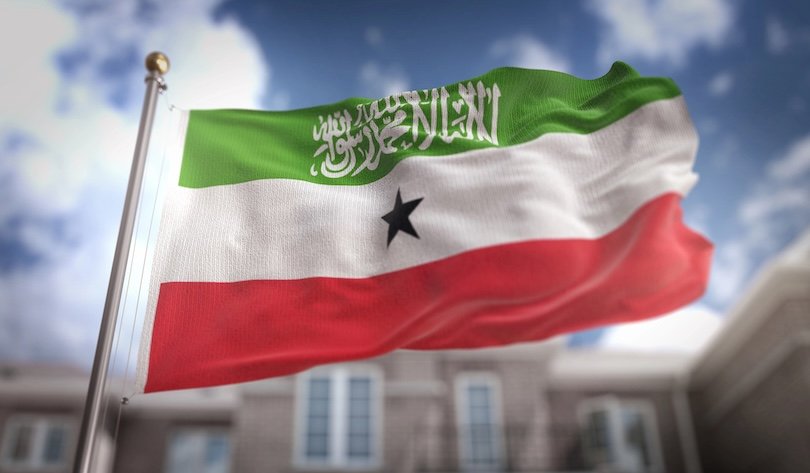
On 26 December 2025 Prime Minister Netanyahu of Israel announced the official recognition of Somaliland by his government. This sparked international debates. Some support Somaliland’s 35 years long quest for recognition. Others reject it. Jamal Abdi, a Somali analyst with ties to Somaliland, recently stressed that those commentators arguing that recognizing Somaliland could destabilize the Horn of Africa were not convincing. He added that Somaliland was stable, in contrast to Somalia, where Islamic terrorists would still wield considerable influence. Regarding Africa as a whole, which tends to reject the recognition of secessionist movements, Jamal Abdi mentioned that “Somaliland enjoyed de jure recognition of sovereignty prior to merging with Somalia. Recognizing Somaliland is therefore a restoration of the borders established during colonial rule, making Somaliland a unique legal case.”
Yet, Jamal Abdi fails to mention that the Somaliland recognised by Israel recently is not the same as the one which was let into independence by the British in June 1960. The British and the Italian administered territories united on 1 July 1960 to form the Somali Republic. The latter fell apart in 1991, as result of escalating civil war. Simultaneously, Somaliland unilaterally was declared independent at a conference in Bur’o under the auspices of northern Somalia guerrillas. Yet, not everyone in the northwest accepted the secession from collapsing Somalia. In fact, until today (early 2026) Somaliland is internally deeply divided over the question of (aspired) independence. This makes the recognition by Israel a complicated affair that indeed could lead to renewed civil strife in northern Somalia.
The “birth-defect” of Somaliland was that the secession was only preferred by one part of the population of the northwest. The members of the Isaaq-clan family, who also supported the rebels against the military dictatorship of Mohamed Siyad Barre (1969-1991) in the 1980s, were in favour of it. They had suffered from hard counter-insurgency measures including, in 1988, the bombardment of the cities Hargeysa and Bur’o, killing thousands and displacing hundreds of thousands. Isaaq constitute roughly two thirds of the local population and reside in central Somaliland. However, members of other clan-groups inhabiting the far west (Gadabursi and Ise) and the east (Dhulbahante and Warsangeli) of Somaliland plus some smaller groups residing all over the north had supported the Barre regime against the rebels and in 1991 were reluctant about secession. They agreed to it, however, for the sake of peace in the north. Many continued to hope for the renaissance of a (united) Somalia.
Over the following decades, Somaliland emerged as de facto state (featuring important aspects of statehood but lacking recognition) only in central Somaliland inhabited by Isaaq and, partly, in the west of the region inhabited by Gadabursi clan members, who eventually accepted Isaaq overrule in exchange for some participation in government and economic development. A multi-party system was introduced in 2001 and subsequently elections had been held. Somaliland also attracted increasing external investments, in particular Dubai-Port-World’s 450 million UA dollar investments (starting 2016 and running over several years) in the port of Berbera. This intensified trade with land-locked Ethiopia along the son called “Berbera corridor”. Trade increased prosperity but also competition for power in Somaliland. However, these political and economic developments mainly took place in Isaaq-inhabited central Somaliland.
In the eastern regions inhabited mainly by members of the Dhulbahante, Warsangeli and Fiqishini clans, which constitute some 30 per cent of the territory once included in the British Protectorate of Somaliland, the government in Hargeysa never exercise much control. People there, as a rule, adhered to the idea of united Somalia. They tended to side with Puntland which was established in north-eastern Somalia in 1998 and pursued the plan to re-establish Somalia as federal state. In late 2007, Somaliland forces moved into Lasanod, pushing out Puntland forces that had controlled tis strategically important town in Dhulbahante territory in Sool region. Locals partly resisted what they considered as “occupation” by Somaliland forces. Over some years, clashes between local clan militias and troops sent by Hargeysa ensued. Between 2015 and 2022 Somaliland managed to exercise more stable rule over Lasanod and surroundings, facilitating moderate investments into the local infrastructure. However, some insecurity continued to haunt Lasanod. Over many years, local elites were assassinated and the Somaliland administration in charge did not comprehensively investigate the murders. Eventually, in December 2022, locals staged big demonstrations against insecurity in Lasanod. The Somaliland troops opened fire killing dozens of civilians. In early 2023 an armed uprising started that eventually led to the overthrow of Somaliland rule and to the establishment of an autonomous Dhulbahante administration in Lasanod in mid-2023. Since then the whole east is out of Hargeysa’s control again. In mid-2025 a new federal State was established there called North-East State of Somalia. It includes all Dhulbahante territories and enjoys some support also among Warsangeli, who otherwise are integrated in Puntland. Since mid-2023, Somaliland effectively ends where Isaaq-inhabited land ends in the east (in Oog some 150 kilometres east of Bur’o).
This outline shows: Somaliland today is not simply the entity that, as Jamal Abdi argued, enjoyed “de jure recognition of sovereignty prior to merging with Somalia”. It is a much different and internally contested entity. Against this backdrop, the question is: what does Israel’s recognition of Somaliland mean?
Scenario 1: The government of Somaliland only controls around 70 per cent of the territory it claims. The recognition of Somaliland in the boundaries of the former British Protectorate would include those people resisting the independence of Somaliland. This means: They do not accept being ruled by Hargeysa; and they have their own militias. Recognition coupled with attempts by Hargeysa to implement its rule over all the territory included in the former British Protectorate of Somaliland would therefore likely lead to civil strife in northern Somalia.
Scenario 2: Alternatively, the government in Hargeysa would refrain from seeking to subjugate non-Isaaq opponents in the east. Instead, Somaliland would draw its boundaries anew and only claim sovereignty over the territories inhabited by Isaaq and, possibly, the far west (Gadabursi and Ise lands). The east would remain with Somalia. In this way, conflict in the region could possibly be avoided. Yet, it is unlikely that such a rather complex operation of drawing new state boundaries across clan-territories would be accepted by people in the region and the African Union – albeit it happened in South Sudan already.
Scenario 3: The independence of Somaliland is also against the will of the majority of Somalis inhabiting Somalia but also Kenya, Ethiopia and Djibouti in the Horn of Africa. For many Somalis separating Somaliland from Somalia is a return to colonial partition, which they reject. In the long run, it is possible that a newly emerging Somalia will seek to integrate Somaliland again, if necessary by force (which would mean an “Ethiopia-Eritrea scenario”).
Further Reading on E-International Relations
