
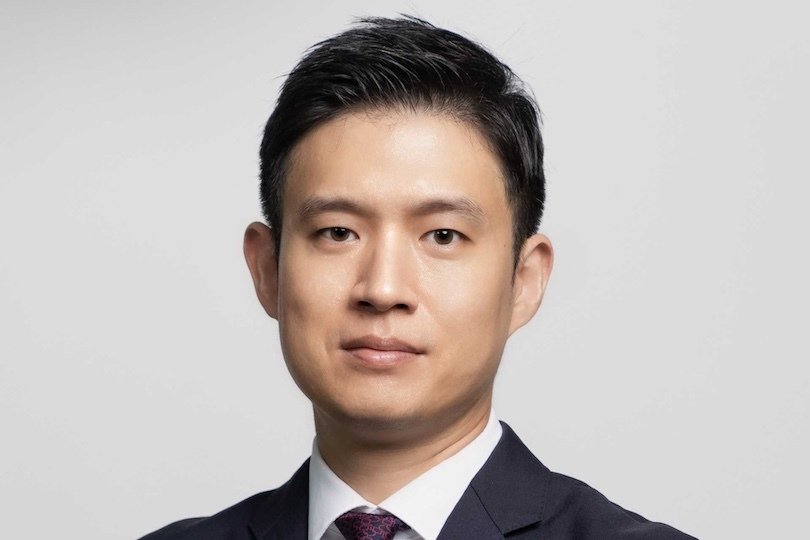
This interview is part of a series of interviews with academics and practitioners at an early stage of their career. The interviews discuss current research and projects, as well as advice for other early career scholars.
Jaehan Park is an Assistant Professor at the S. Rajaratnam School of International Studies (RSIS) at Nanyang Technological University in Singapore and a Non-Resident Fellow with the Asia Program at the Foreign Policy Research Institute. His research interests include international relations theory, East Asian security, and U.S. foreign policy. Previously, Park held fellowships at the Albritton Center for Grand Strategy at Texas A&M University, the Clements Center for National Security at the University of Texas at Austin, and the Notre Dame International Security Center, among others. He was also a David Rockefeller Fellow with the Trilateral Commission from 2020 to 2023 and consulted with various organizations in both the U.S. and South Korea, including the Office of Net Assessment.
What (or who) prompted the most significant shifts in your thinking or encouraged you to pursue your area of research?
The first and foremost was my military service. I always thought I would become a businessman. During my time in the army, however, I had the opportunity to travel to different places assisting senior military leaders. The world I saw in that capacity was very different from the world I had known. In particular, I was shocked by the fact that the concept of market which I had thought universal was in fact an “institution” standing on a very fragile premise of external and internal security. In many places around the world, this was and still is not a given.
So, I decided to change my career. I had the good fortune of being admitted to the Johns Hopkins School of Advanced International Studies (SAIS) where I spent the next decade – first as a graduate student and later as a lecturer. Being at the heart of Washington D.C., SAIS offers an exceptional educational experience on international affairs. I immersed myself in various theoretical and historical writings. I also learned how to think and write about policy issues. Most importantly, I met wonderful teachers and colleagues who profoundly shaped my thinking on international affairs. To them, I owe everything.
As for the intellectual influence, I would say two authors really stand out: Thucydides and Nicholas Spykman. At the risk of sounding cliché, Thucydides’ History of the Peloponnesian War is one of the deepest and richest books on international affairs dealing with some of the most important questions in politics – perhaps due to his own personal experience as an unsuccessful general of Athens – such as human nature, good governance, and war and peace. It is also a profoundly misunderstood text. Many only quote certain parts, but omit the master’s narration of the complex interplay between human passions and broader structural forces or what followed the infamous Melian Dialogue. Some might think a 2,000-year old book might not have much to offer for time. If you think so, think again: Thucydides wrote about the impact of what we now believe was bubonic plague – especially how it was psychological effects, more so than the mortality of the disease itself, that really put a heavy toll on the Athenian society.
Nicholas John Spykman was a Dutch-American political scientist who wrote in the tradition of what one might call “geopolitical realism.” Presaging Kenneth Waltz, Spykman saw the absence of a government as the fundamental cause of international conflicts. Basing his analysis on geography and the balance of force, he identified the vast littorals of the Old World stretching from Western Europe to East Asia by way of the Indian subcontinent – what he would call the “Rimland” posthumously – as the prime real estate in international politics contested by land and sea powers vying for the supremacy of Eurasia. The objective of American foreign policy, he argued, is to maintain the balance of power in this zone, thereby maintaining geopolitical pluralism of the Old World and preventing the encirclement of the New World. This line of thinking has much relevance to today’s strategic environment, too. Understandably, Spykman and classical geopolitics more broadly are making a comeback in recent years.
Could you briefly outline the recent developments in East Asian politics and security? What do you see as important issues and events?
Historically, the driving force in the international relations of East Asia was the Sino-Japanese rivalry. Most systemic wars in the region were between the two leading land and sea powers in Asia: the Imjin War (1592-1598), the Sino-Japanese War (1894-1895), and the Second Sino-Japanese War (1937-1945). This basic structure persists with a twist. We all know China has become the hegemonic contender in the eastern flank of Eurasia. At sea, the United States has replaced Japan as Asia’s dominant offshore power in our time. Hence, the region will be defined largely by the U.S.-China rivalry.
What Beijing and Washington do respectively, therefore, will be of utmost importance to the region. Other big players, such as Japan and Russia, or flashpoints, like the Korean Peninsula and Taiwan, should not be overlooked. One should note, however, the expanding geographic scope of their competition – departing from the traditional focus of the Sino-Japanese rivalry on East Asia. The Belt and Road Initiative, for instance, seeks to connect the Chinese mainland with different resource centers across the Eurasian landmass and outlets to the Indian Ocean. It is not surprising that the Department of Defense re-named the Pacific Command to the Indo-Pacific Command. Washington is also creating a web of smaller, functionally oriented groups along the putative “Island Chains.” In this context, countries across the region will have to re-define their strategic visions and foreign policy roles.
The article you co-authored in 2019 argued that geopolitical tensions were the primary reason behind the deteriorated relationship between Seoul and Tokyo. How would you describe the current state of this relationship and what developments do you foresee in the coming years?
It is true that (and we made this argument) Seoul and Tokyo have different strategic priorities due primarily to their locations and neighbors – that is, geography. Also, South Korea has deep economic ties with China which is regarded as a major strategic challenge by Japan.
However, Seoul’s stance on Beijing has been evolving over time. There are several structural reasons. The first and most often cited reason is China’s response to the deployment of the Terminal High Altitude Area Defense system, or more commonly known as THAAD. This is not the only reason. Younger generations are more wary of Beijing, especially regarding non-traditional issues, such as cultural appropriation or air pollutions. Also, South Korea’s investments in technology and capital-intensive capabilities to compensate for its shrinking population will occur largely in the air and sea domains. This will galvanize Beijing’s response. My colleague and I made this case in 2022.
Our anticipation has largely born out. The newly president of South Korea, Lee Jae Myung, chose Tokyo as the destination for his first overseas trip, even before paying a visit to Washington D.C. By all accounts, the meeting between President Lee and Prime Minister Ishiba was collegial, continuing the previous administration’s cooperative relationship with Japan.
More importantly, the competition between the United States and China is intensifying with the world being divided into two competing blocs led by the two powers. This trend has been accelerating since Russia’s invasion of Ukraine and was on full display during the recent victory parade in Beijing to commemorate the 80th anniversary of World War II. Notwithstanding the persistence of several sensitive issues and uncertainties surrounding domestic politics of Japan and Korea, therefore, I expect the two countries to collaborate closer at least in the foreseeable future.
Given ongoing U.S.–China rivalry, the strategic importance of East Asia for Washington remains high. What options could the current U.S. administration adopt to strengthen its influence in the region?
There can be many different ways across multiple functional areas. I will focus on one aspect, however: strategic geography. It is true that East Asia remains a key theater containing two flash points: the Korean Peninsula and Taiwan. However, the arc of competition between the United States and China is substantially wider in our time as I have mentioned earlier. From Beijing’s standpoint, the two putative flash points are covered by the Northern Theater Command and the Eastern Theater Command, respectively. The remaining two theater commands – the Southern and the Western – cover larger geographic areas rife with potential dangers. Also, China’s economic security is dependent to a great extent on the openness of the Strait of Malacca. To wit, China has many soft spots where the United States can apply pressure. And this is a key theme of my ongoing research project.
How would the newly imposed U.S. tariffs shift political and security landscape in East Asia?
I’m not an expert on international political economy, but it seems that the effects of tariffs are much less pronounced than what many analysts expected on the “Liberation Day.” Perhaps the shift in America’s immigration policy has a larger impact. For instance, the recent detention of South Korean workers or the increase in H-1B visa application fee will make America a much less attractive destination for Asian businesses and talents. Most importantly, the intensifying rivalry between the United States and China will force the region to start picking a side.
What are you currently working on?
There are several different projects. First, I am completing my book manuscript, which is tentatively entitled The Geographical Pivot of Empires: Explaining Where Rising Powers Expand. It develops a theory of how great powers determine their geographical orientation and tests it against three historical cases: Japan’s, Russia’s, and the United States’ involvement in the Far East between 1895 and 1905 – a critical decade in East Asian history demarcated by the Sino-Japanese War (1894-1895) and the Russo-Japanese War (1904-1905). There is an unmistakable (albeit incomplete) parallel between Russia’s Trans-Siberian Railway and China’s Belt and Road Initiative. It was also a period of rapid changes in technology and the broader balance of power in world politics. Theoretically, it is an attempt to bring back classical geopolitics to the International Relations scholarship.
The second project I am working on draws insights from my book project. It looks at China’s strategic geography, especially its access routes to the outside world. While many analysts are understandably focused on the maritime domain (especially Taiwan), China has land borders longer than coastlines and its sea lines of communication (SLOC) remain vulnerable. Not surprisingly, its historical access routes, especially when it was under duress, lay mostly on land.
The third project is cut from the same cloth but somewhat different. It examines Korea’s place in world politics from a geo-historical perspective. It argues that while Korea was the main focal point between competing land and sea powers in the region for centuries, its relative importance has been diminishing over time due to the expanding geographic scope of their rivalry.
Finally, I am turning a class I have taught at both the Johns Hopkins School of Advanced International Studies (SAIS) and the S. Rajaratnam School of International Studies (RSIS) into a book: “Geography and Foreign Affairs.” I look at how geography influences foreign policy. Specifically, the class is organized thematically – that is, how geography influences the ends (e.g., geography and power) and means (e.g., strategic domains, such as land, sea, and air) of statecraft, and human factors influencing those relationships (e.g., technology, culture, etc.). The book itself will have a few chapters on “newer” issues, such as cyber, undersea, nuclear, and the like.
What is the most important advice you could give to other early career or young scholars?
I am not sure if I have much (if any) wisdom to give proper and substantive career advice to my younger colleagues, so I will focus on something more tactical: a reality check. Pursuing a career in international affairs is not easy. There are not many relevant positions in the private sector. Foreign services or multilateral organizations recruit only a small number of people. Serving one’s nation in armed forces is rewarding yet potentially dangerous. So is becoming a war correspondent or an aid worker. Academic job market is a dead-end. It will only get worse with the development of technologies, such as Artificial Intelligence (A.I.). The risk-to-reward ratio in terms of financial and professional compensations is not very high. Also, you may have to move around a lot, which makes it difficult to be close to your loved ones much less start a family.
But it can also be a very stimulating and rewarding one, especially if you’re curious about the world and want to make an impact through the power of ideas. If you’re one of them, I have only one advice. As Winston Churchill said, “Never give in – never, never, never.”
Further Reading on E-International Relations
